Can You Use Oxiclean On Upholstery – Here’s the Answer
You can use OxiClean on some upholstery, but it may fade, stain, or damage incompatible fabrics and finishes. Check the care label first: W allows water-based cleaners, S requires solvents, WS permits both, and X means vacuum or brush only.
Choose a product labeled for your upholstery, then test a diluted solution on a hidden spot and let it dry completely. If the fabric looks unchanged, apply sparingly, blot without soaking, and follow the label’s directions.
The steps below can help you clean more safely.
Can You Use OxiClean on Upholstery?
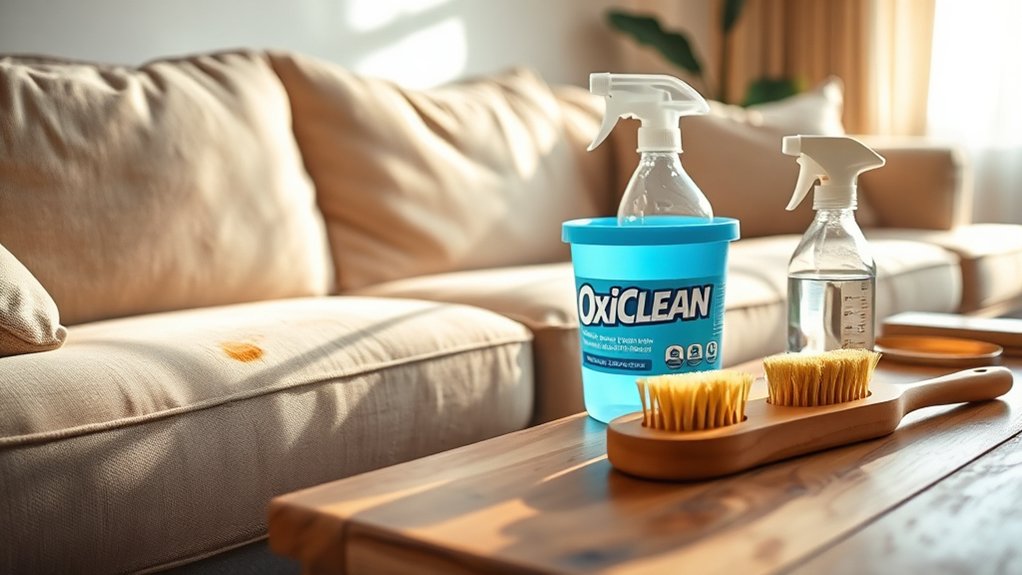
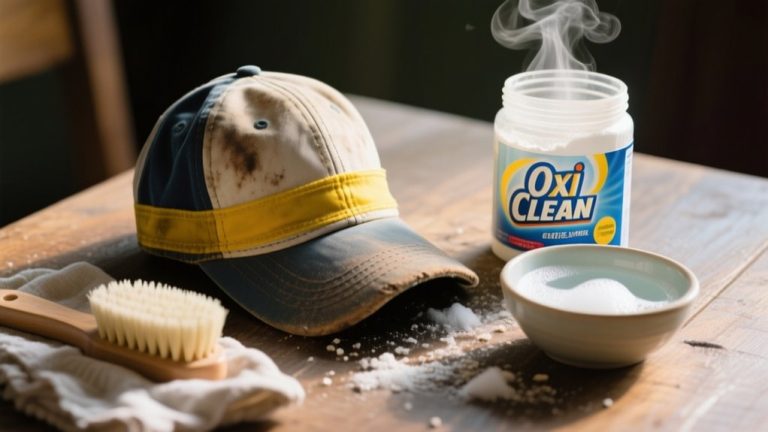
Can you use OxiClean on upholstery? Sometimes. OxiClean can help lift certain stains from some upholstery, but it isn’t suitable for every fabric or finish.
OxiClean may lift some upholstery stains, but its suitability depends on the fabric and finish.
Its oxygen-based formula may brighten or remove discoloration, yet it can also cause fading, water marks, or damage if you use it incorrectly.
You’ll get the safest results by choosing an OxiClean product whose directions specifically allow upholstery use and following its mixing and application instructions.
Don’t assume that a product made for laundry or carpets works on your sofa.
Before treating a visible area, test the solution on a small, hidden spot and let it dry completely.
Check for color changes, texture damage, or rings. If the fabric reacts poorly, stop and consider a cleaner designed for that material or contact an upholstery professional.
Check the Upholstery Care Label First
Before using OxiClean, check the upholstery care label for cleaning instructions. You’ll usually find it beneath a cushion or on the furniture’s frame. The label’s code tells you which cleaning methods the manufacturer allows, so read it carefully before treating a stain.
- W: Water-based cleaners are permitted.
- S: Use solvent-based cleaners only; water may damage the fabric.
- WS: Water-based or solvent-based cleaners are allowed.
- X: Vacuum or brush only; liquid cleaners aren’t permitted.
Follow any additional directions on the label, too. If it’s missing, unclear, or doesn’t mention OxiClean, don’t assume the product is safe.
Check the manufacturer’s care guidance or contact customer service before proceeding.
Using a cleaner against the label’s instructions could cause discoloration, shrinkage, or lasting damage, and may affect your warranty.
Choose a Cleaner for Delicate Upholstery
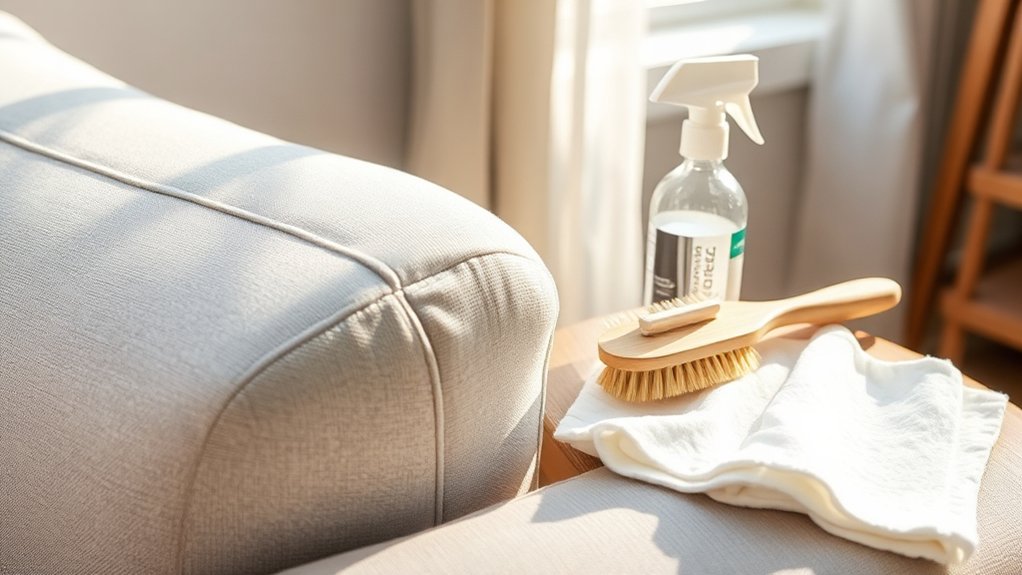
For delicate upholstery, choose a cleaner specifically labeled as safe for the fabric rather than assuming OxiClean is suitable. Your fabric’s fibers, dyes, and finish can react differently to cleaning ingredients, so match the product to its care needs. Check the label for upholstery use and follow its directions.
| Fabric or need | Cleaner to evaluate |
|---|---|
| Silk or wool | Fabric-approved, pH-neutral cleaner |
| Velvet | Velvet-specific upholstery cleaner |
| Leather | Leather cleaner, not fabric detergent |
| Synthetic blends | Upholstery cleaner labeled for synthetics |
Avoid bleach, harsh solvents, and products that don’t identify compatible materials. If you’re unsure what a cleaner contains or whether it suits your upholstery, contact the manufacturer or a professional cleaner. Use the gentlest option that addresses the stain, and follow the product’s instructions for application and removal.
Test OxiClean on a Hidden Upholstery Spot
Once you’ve confirmed the cleaner suits your upholstery, test it on a hidden spot, such as the back or underside of a cushion.
Choose an area that matches the visible fabric, since different panels may react differently.
Test a hidden area that matches the visible fabric, as different panels may react differently.
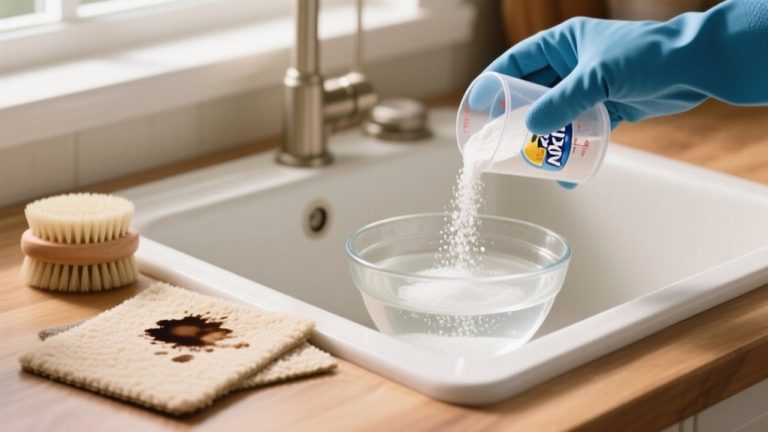
Apply a small amount of diluted OxiClean with a clean, white cloth, following the product label’s directions.
Don’t rub or soak the material; you’re checking compatibility, not treating a stain.
After the label’s recommended wait, blot the spot with a damp white cloth and let it air-dry completely.
Check for changes in color, texture, or finish before using the cleaner elsewhere.
Look for fading, darkening, or color transfer.
Feel for stiffness, roughness, or weakened fibers.
Check for rings or water marks after drying.
If you notice damage, stop and choose another method.
Clean Upholstery With OxiClean Safely
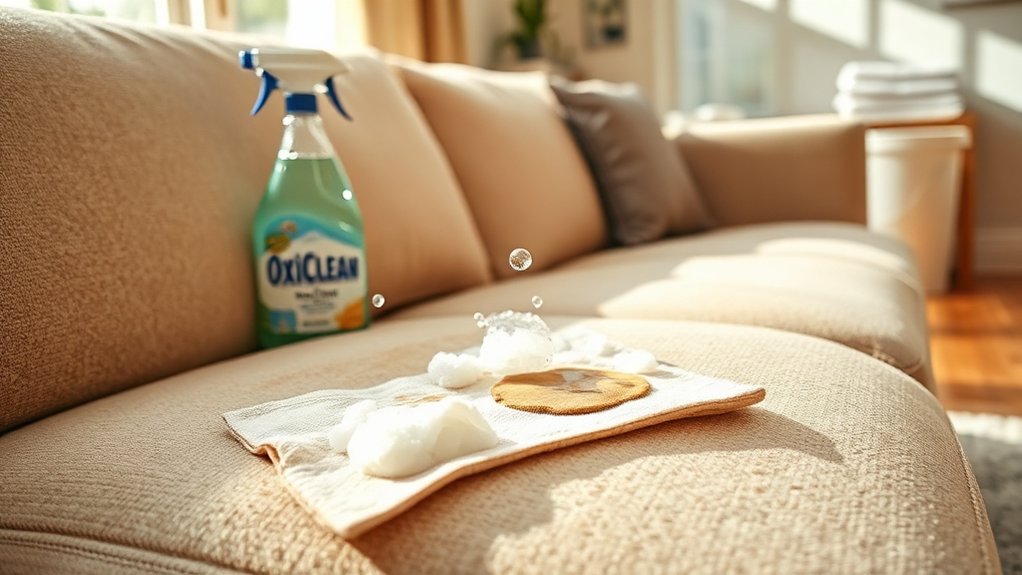
If the hidden-spot test shows no damage, treat the stain with diluted OxiClean according to the product label.
Blot up spills first with a clean, dry cloth, working from the outside toward the center to avoid spreading the stain.
Apply the solution sparingly with a clean cloth or sponge; don’t soak the upholstery or pour cleaner directly onto the fabric.
Gently blot the stain, and avoid scrubbing, which can damage fibers or push soil deeper.
Follow the label’s contact-time directions, then blot with a cloth dampened with clean water to remove residue.
Press with a dry towel to absorb moisture, and let the area air-dry completely.
Keep children and pets away while you clean.
Don’t mix OxiClean with other cleaners, and stop if you notice color transfer or fabric damage.
Frequently Asked Questions
Can Oxiclean Remove Old Stains From Upholstery?
Yes, OxiClean may remove some old upholstery stains, but results depend on the stain, fabric, and how long it’s set.
Check your upholstery’s care label first, and test the product on a hidden spot to prevent fading or damage.
Use only a formula labeled safe for your fabric, and follow its directions.
Blot gently rather than scrubbing, then remove residue as instructed.
For delicate or dry-clean-only upholstery, contact a professional cleaner.
Does Oxiclean Leave a Residue on Upholstery?
Yes, OxiClean can leave residue on upholstery if you use too much or don’t rinse the area thoroughly.
Apply sparingly, blot gently, and rinse by dabbing with a clean cloth dampened with plain water.
Blot again with a dry towel, then let the fabric air-dry completely.
Don’t soak the upholstery, and test the cleaner on a hidden spot first.
Always follow the product label and your furniture’s care instructions to avoid damage.
How Long Does Upholstery Take to Dry After Cleaning?
Upholstery usually takes 4–12 hours to dry after cleaning, though thick fabric, heavy moisture, and humid rooms can stretch that to 24 hours.
You can speed things up by opening windows, running fans, or using air conditioning or a dehumidifier.
Avoid sitting on damp cushions since pressure can trap moisture and cause marks.
Check the manufacturer’s care instructions, and don’t use heat unless the fabric label says it’s safe.
Can Oxiclean Damage Upholstery Colors?
Yes, OxiClean can damage or fade upholstery colors, especially on delicate, dark, or non-colorfast fabrics.
Before using it, check the care label and test the diluted solution on a hidden spot.
Wait until the area dries completely, then check for fading, discoloration, or texture changes. If you see any, don’t use it.
Follow the product directions, avoid soaking the fabric, and consider a cleaner made specifically for your upholstery type.
Is Oxiclean Safe to Use Around Pets?
OxiClean can be safe around pets when you use it as directed, but keep animals away during cleaning.
The product’s ingredients may irritate skin, eyes, or stomach if pets touch or ingest the solution.
Store it securely and prevent licking. Also, ventilate the area well.
Let treated upholstery dry completely before allowing your pet back.
Check the product label for specific precautions, and contact your veterinarian or a poison-control service if exposure occurs.
Conclusion
You can use OxiClean on some upholstery, but check the care label and product directions first. Choose a cleaner suited to delicate fabric, then test it on a hidden spot and let it dry to check for color changes.
If the label says “S” or “X,” avoid water-based cleaning and consult a professional. Upholstery fabrics vary widely, so one cleaner won’t suit every couch.
Clean gently, use as little solution as possible, and stop if the fabric reacts.