How To Whiten Whites With Oxiclean – Easy Method
To whiten whites with OxiClean, check care labels and sort garments by fabric and washing instructions. Treat visible stains, then dissolve the package-recommended amount of OxiClean in warm water that’s safe for your clothes.
Fully submerge the whites and soak them for the time listed on the package. Wash with detergent using the warmest water the labels allow. Check for remaining stains before drying, since dryer heat can set them.
A few simple precautions can help you get better results.
Gather What You Need to Whiten Whites With OxiClean
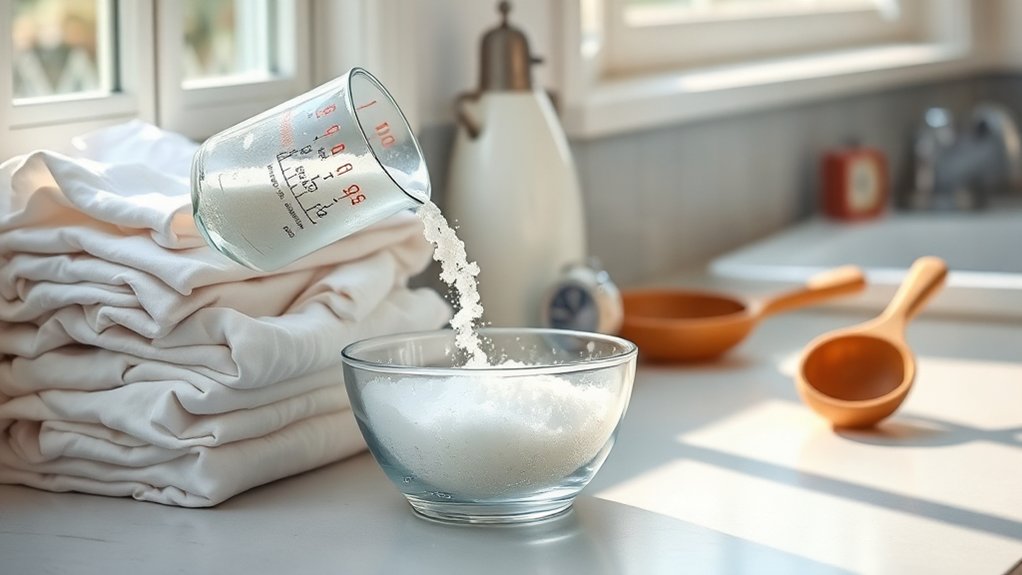
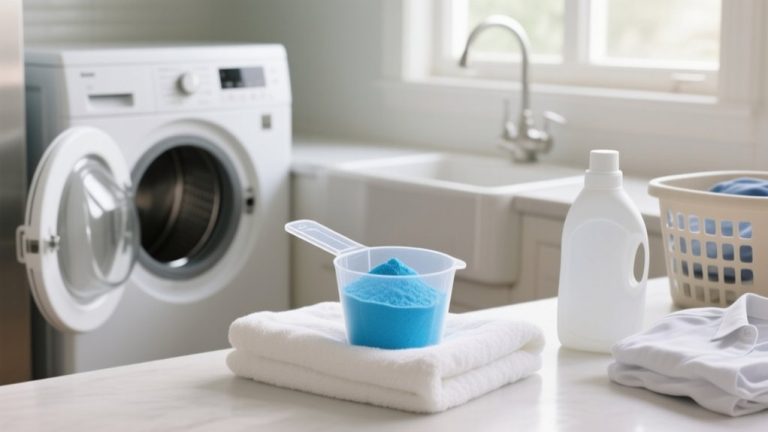
Before you begin, gather OxiClean White Revive or another OxiClean product labeled for whites, a basin or clean sink for soaking, and warm water. You’ll also need a measuring scoop, a spoon for stirring, and a clean towel for handling wet garments.
Keep a laundry detergent you normally use nearby if you plan to wash the items after soaking. Check that your basin has enough room for the garments to move freely without overflowing. Use a container made from a material suitable for warm water, and set it on a stable surface near your washing machine.
Read the product package before measuring; scoop sizes and directions can vary by formula. Don’t substitute an OxiClean product unless its label indicates it’s appropriate for white laundry. Having these supplies ready makes the process easier and helps you follow the package directions.
Check Labels and Sort White Laundry
Before you use OxiClean, take a moment to check the care label on each garment. This helps make sure it can safely be washed with oxygen bleach.
Next, sort your whites by fabric type and washing instructions. This step keeps everything looking its best.
And don’t forget to keep colored items separate to avoid any dye transfer. That way, your whites stay bright and your colors stay true!
Check Care Labels
Start by checking each garment’s care label to confirm it can handle oxygen bleach and the water temperature you plan to use.
Look for instructions about bleaching, washing, and drying before adding OxiClean.
Oxygen bleach is different from chlorine bleach, but some fabrics and finishes still need special care.
If a label says “non-chlorine bleach only,” oxygen bleach may be suitable; follow the product directions and test a hidden area first.
Avoid using OxiClean on wool, silk, leather, or garments marked “dry clean only.”
Check for symbols that indicate cold-water washing or a low-temperature limit, and choose a compatible wash setting.
If a label is missing or unclear, check the manufacturer’s care guidance rather than guessing.
Following these instructions helps protect fibers, color details, and garment shape.
Sort White Laundry
Sort whites into separate loads by fabric type, soil level, and care-label instructions.
After checking each label, group sturdy cottons, delicate items, and towels separately. This keeps rough fabrics from rubbing against lightweight garments and helps you choose a suitable wash cycle for each load.
Separate heavily soiled pieces from lightly worn whites, too. Mud, grease, and food stains can transfer during washing, so give those items their own load or pretreat them first.
Don’t mix whites with colored clothing, even if the colors seem pale. Dyes can bleed and dull your whites.
Check labels for water-temperature limits and any warnings about oxygen bleach. Keep items that require handwashing or dry cleaning out of the machine.
Sorting carefully lets OxiClean work effectively while protecting your fabrics from damage, fading, and unwanted residue.
Treat Stains and Protect Delicate Whites
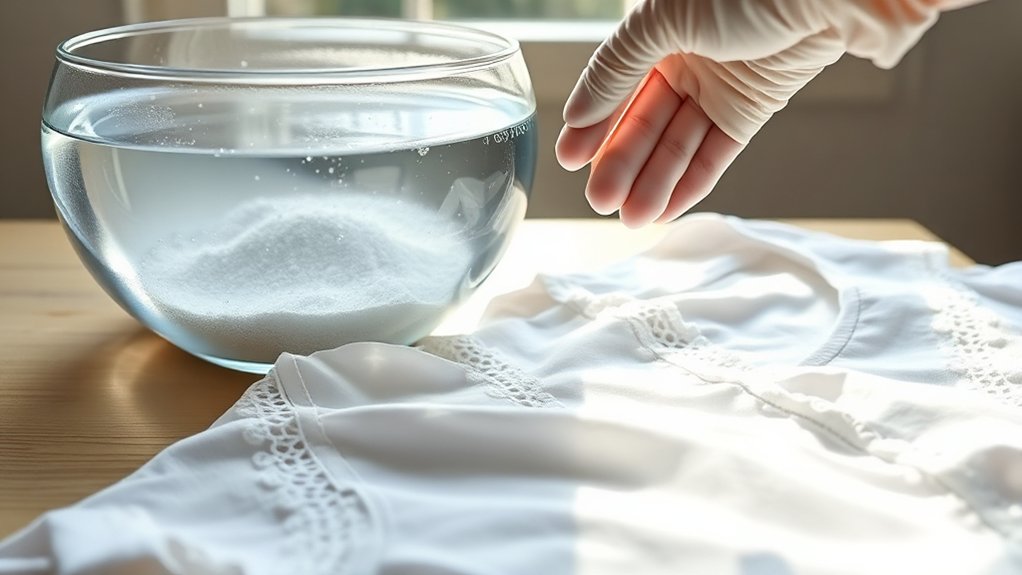
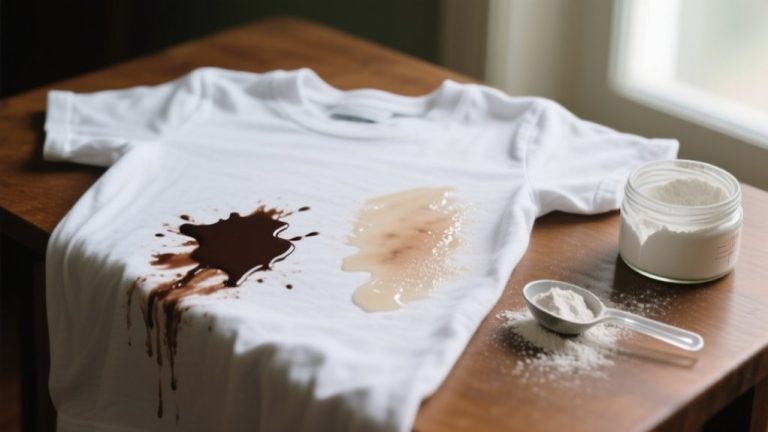
Before soaking whites in OxiClean, treat visible stains and check each garment’s care label. Blot fresh spills with a clean cloth instead of rubbing, which can push stains deeper into the fibers.
Before soaking whites, blot fresh spills and treat visible stains to keep them from setting deeper into the fibers.
For food, makeup, or grass marks, apply a suitable stain remover and gently work it in with your fingers or a soft brush. Follow the product’s directions, and test it on a hidden area first.
Check labels for washing instructions, fabric restrictions, and warnings against bleach or soaking. OxiClean isn’t chlorine bleach, but delicate materials may still need special care.
Protect wool, silk, leather, and garments labeled dry-clean-only by keeping them out of the soak. For lace, embroidery, or fragile trims, handle the fabric gently and consider spot-treating only.
Don’t use hot water on stains that may set.
Mix Your OxiClean Soak
First, measure the OxiClean as the package says.
Then, pour it into some warm water in a basin or bucket.
Give it a good stir until the powder completely dissolves.
Measure OxiClean
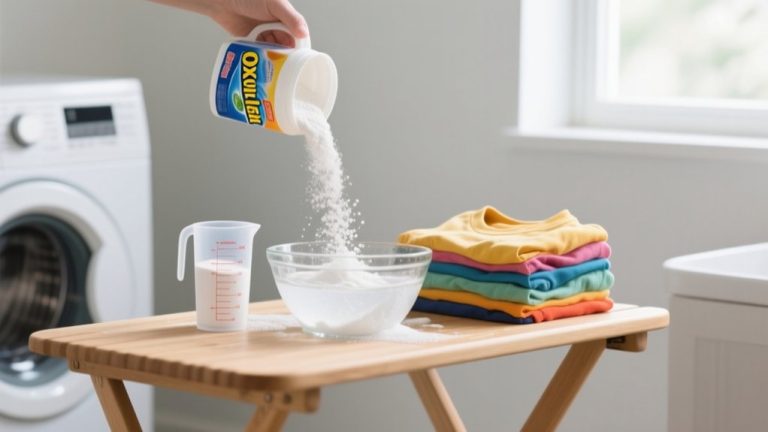
Once your whites are sorted, check the OxiClean package for the soak instructions and use the scoop to measure the recommended amount. The right dose depends on your product and the amount of laundry, so don’t guess or assume every scoop is the same. Read the label carefully, especially if you’re using a concentrated formula.
| Your load | What to check |
|---|---|
| A few items | Follow the package dose for a small soak |
| A full batch | Use the listed amount for that quantity |
| Stubborn stains | Don’t exceed the label’s recommended dose |
Keep the scoop dry between uses so the powder stays easy to handle. If you’ve misplaced it, use only a measuring tool the package identifies as suitable. Otherwise, get a replacement scoop. You’ll be ready for the next step.
Add Warm Water
Add warm water to a clean basin, following the temperature and water amount on the OxiClean label. Choose a basin large enough to hold your whites with room for them to move freely.
Check the care labels on your garments, too; some fabrics can’t handle warm water, even when the oxygen bleach instructions allow it. If an item requires cold water, use that instead and follow the product directions for your chosen temperature.
Measure the water carefully so you don’t dilute the soak or leave too little liquid to cover the laundry. Keep the basin on a stable, water-safe surface, and protect nearby materials from splashes.
Don’t add boiling water or guess at the temperature. Once you’ve prepared the water, you’re ready to add the measured OxiClean.
Stir Until Dissolved
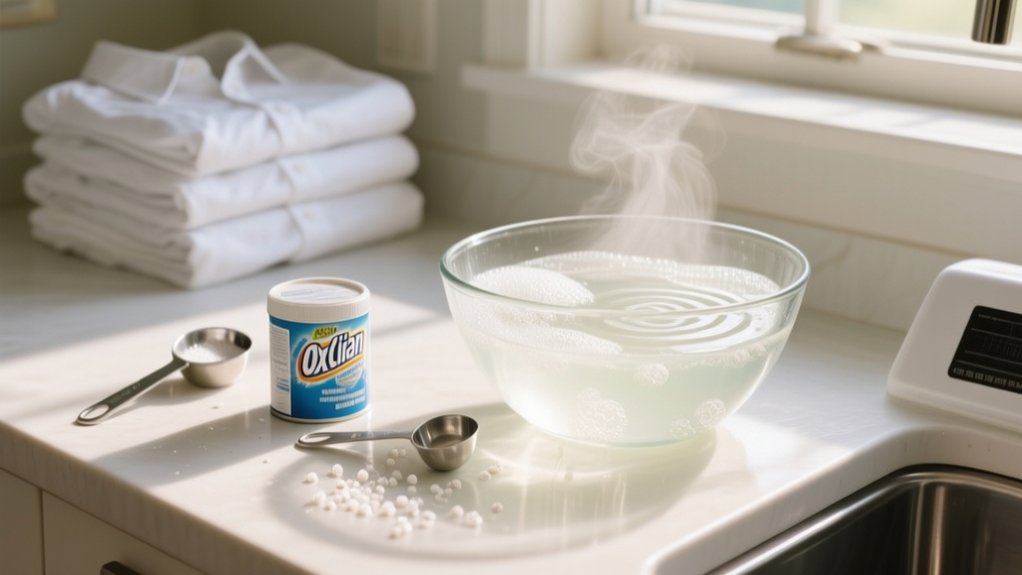
Stir the measured OxiClean into the water until the powder dissolves, following the product label’s directions. Use a clean spoon or laundry stick to move the water steadily, reaching the bottom and sides of your basin. Don’t add clothes until you’ve mixed the solution evenly.
| What you notice | What to do | Why it helps |
|---|---|---|
| Powder remains | Keep stirring | Disperses cleaner |
| Granules cling below | Scrape the basin | Clears settled powder |
| Water looks even | Stop stirring | Ready for soaking |
Check the solution before adding whites. If you still see granules, continue stirring briefly rather than letting them settle onto fabric. Undissolved cleaner may leave residue or create uneven contact.
Keep your hands protected if the label recommends gloves, and avoid splashing. Once the powder has dissolved, move directly to the soaking step and follow the label’s time and temperature guidance.
Soak Whites for the Recommended Time
Let your whites soak for the time listed on the OxiClean package, usually one to six hours depending on the product and stain level.
Keep each item fully submerged so the solution can reach every stained area. If fabric floats, place a clean, colorfast object on top to hold it beneath the water.
Check the care labels before soaking, and don’t leave garments in the solution longer than the package directs.
For delicate fabrics or uncertain colorfastness, test a hidden spot first and follow the product’s fabric guidance.
Set a timer so you can track the soak and avoid forgetting the clothes.
If stains remain after the recommended time, don’t extend the soak beyond the label’s limit.
Once the time is up, move promptly to the next care step.
Wash the Soaked Clothes as Usual
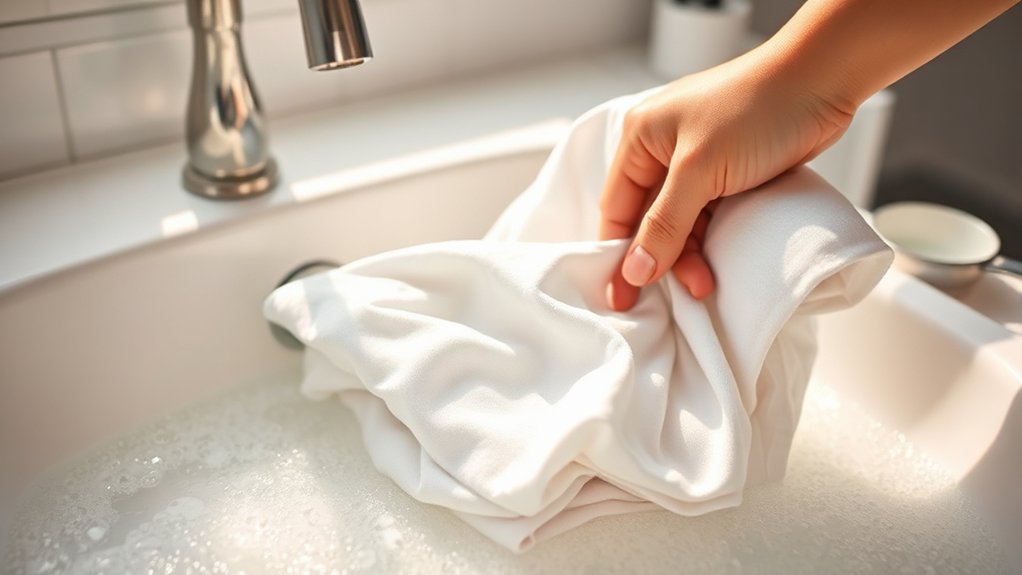
Once the soak is complete, transfer the clothes to your washing machine without rinsing them first. Add your regular laundry detergent, following the label’s dosage for your load size and soil level.
Choose the warmest water temperature allowed by each garment’s care label, and select a normal cycle suitable for the fabrics. Don’t add extra OxiClean unless its package directions recommend it for machine washing.
| Load detail | What you should do | Why it helps |
|---|---|---|
| Detergent | Use the labeled amount | Cleans without excess residue |
| Water temperature | Follow care labels | Protects fabric |
| Cycle | Choose a suitable normal cycle | Washes thoroughly |
Avoid overcrowding the washer; clothes need room to move freely. If the load is large, divide it into smaller batches so detergent and water can circulate evenly.
Start the cycle and let the machine complete its wash and rinse stages.
Check Whitening Results Before Drying
Before drying, inspect the whites in good light to see whether the stains have lifted and the fabric looks brighter. Heat can set remaining marks, so take a moment to check each piece while it’s still damp.
Compare stained areas with nearby fabric, and look for yellowing, dullness, or discoloration you may have missed in the wash.
Hold each garment near a window or under bright, neutral lighting. Check collars, cuffs, hems, and other spots where stains often linger.
Turn garments inside out to inspect both sides and seams. Separate pieces that still need attention from those that look clean.
If you spot a remaining mark, don’t put that garment in the dryer. Set it aside and decide whether it needs another treatment.
Once you’re satisfied with the results, dry the whites according to their care labels.
Avoid These OxiClean Soaking Mistakes
After checking your whites, avoid common soaking mistakes that can damage fabric or reduce OxiClean’s effectiveness.
Don’t use hotter water than the garment’s care label allows because high heat can shrink or weaken fibers. Check the label before soaking and skip items marked dry-clean-only or not suitable for oxygen bleach.
Never mix OxiClean with chlorine bleach, ammonia, or other cleaners since combinations can create hazardous fumes or reduce cleaning power.
Measure the product according to its package directions rather than adding extra. Too much won’t whiten clothes faster and may leave residue.
Dissolve the powder fully in water before adding garments, then keep each item submerged for the recommended time.
Don’t let clothes soak indefinitely or allow the solution to dry on fabric. Rinse thoroughly and wash promptly after soaking.
Frequently Asked Questions
Can Oxiclean Whiten Colored Clothes Without Fading Them?
Yes, OxiClean can brighten colored clothes without fading them when you use it as directed, but results depend on the fabric and dye.
Check the garment’s care label, test a hidden spot first, and follow the product’s package instructions.
Don’t use it on wool, silk, or leather, and avoid soaking colors longer than recommended.
If the dye bleeds during your test, skip OxiClean to protect the garment.
Is Oxiclean Safe for Septic Systems?
Better safe than sorry: OxiClean is generally considered safe for septic systems when you use it as directed.
Its oxygen-based ingredients break down, and normal laundry amounts shouldn’t disrupt the beneficial bacteria in a properly maintained tank.
Don’t pour large quantities or concentrated product into drains, though, and avoid combining it with other cleaners.
Check your product label, since formulas can vary, and follow your septic system’s care recommendations.
Can I Use Oxiclean With Bleach?
No, you shouldn’t mix OxiClean with chlorine bleach. OxiClean’s oxygen-based ingredients can react with bleach and potentially release harmful gases or cause splashing and irritation.
Use one product at a time and follow the label directions. Never combine cleaning products.
If you’ve already mixed them, leave the area immediately. Avoid breathing the fumes and ventilate the space from a safe distance if you can.
Contact poison control or emergency services if anyone shows symptoms.
Does Oxiclean Expire or Lose Effectiveness Over Time?
Yes, OxiClean can lose effectiveness over time, though it doesn’t suddenly turn into a laundry disaster overnight.
Its oxygen-based ingredients gradually break down, especially when moisture, heat, or air gets in.
You’ll get the best results by storing it tightly sealed in a cool, dry place and checking the package for a date or guidance.
If it’s old, clumpy, or no longer dissolves well, replace it for reliable cleaning.
Can Oxiclean Cause Skin Irritation?
Yes, OxiClean can irritate your skin, especially if you have sensitive skin or handle the powder or concentrated solution.
Wear gloves when mixing or using it, and avoid direct contact.
If it gets on your skin, rinse the area thoroughly with plenty of water.
Stop using it if redness, itching, or burning develops.
Seek medical advice if irritation persists or becomes severe, and always follow the product label’s safety instructions.
Conclusion
Whitening whites with OxiClean is simple when you check care labels, follow the package directions, and inspect clothes before drying. A useful reminder: the American Cleaning Institute recommends washing clothes at the warmest temperature their care labels allow, since temperature can affect cleaning results.
Still, fabric safety comes first. Don’t use a hotter wash or longer soak than the label permits. With a little care, you can brighten laundry while protecting your favorite whites.