How To Get White Shoes White Again With Oxiclean? – Guide
To get white shoes white again with OxiClean, first check the care label. Use it only on washable canvas or suitable synthetics, not leather, suede, or nubuck. Remove the laces, brush off loose dirt, and test the mixed solution on a hidden spot.
Soak washable shoes only if their care instructions allow it. Otherwise, gently spot-clean stains with a soft brush or cloth. Follow the package directions, rinse away residue, and air-dry away from heat and sunlight.
The steps below explain how to choose the safest method.
Check Whether Your White Shoes Can Use OxiClean
Before you reach for OxiClean, check your shoes’ care label and material. The label may warn against bleach, soaking, or certain cleaning agents. Follow its instructions since the wrong treatment can damage the finish or weaken the shoe.
OxiClean is generally better suited to durable, washable materials, such as canvas and some synthetic fabrics. Use caution with leather, suede, nubuck, wool, and shoes with delicate dyes or coatings. Oxygen-based cleaners can discolor, dry out, or otherwise harm them.
OxiClean is best for durable, washable fabrics; avoid using it on leather, suede, wool, or delicate finishes.
Don’t assume every white shoe can tolerate the same treatment, even if its upper looks like fabric. If you can’t find care instructions, check the manufacturer’s website or contact the brand before proceeding.
When the material remains uncertain, choose a cleaner specifically approved for it rather than risking permanent damage.
Gather OxiClean and Shoe-Cleaning Supplies
First, grab your OxiClean and take a quick look at the label to see how much you’ll need.
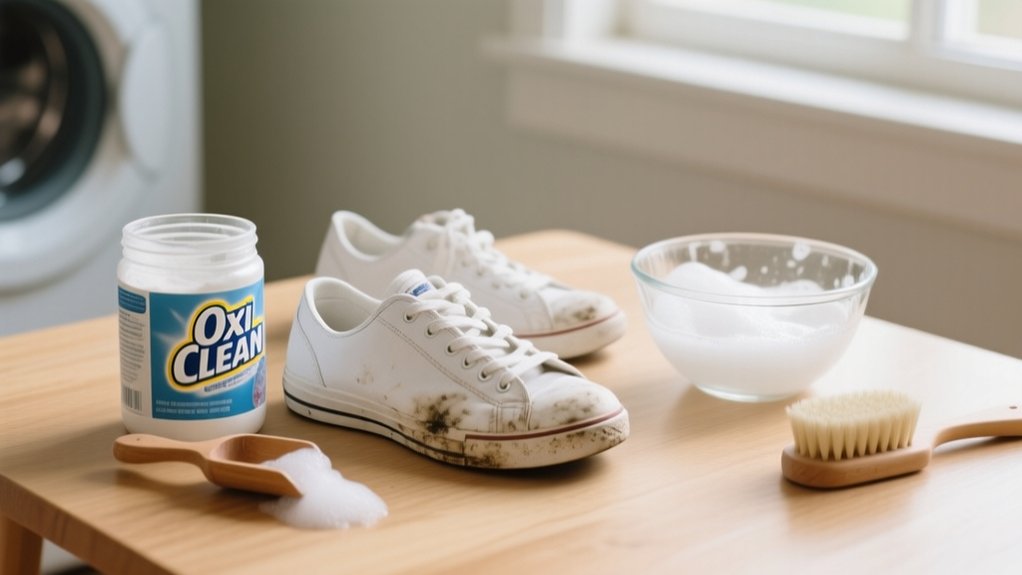
Then, get your cleaning supplies ready—like a soft brush, a cloth, and a basin—so you can treat your shoes gently.
Oh, and don’t forget to protect your workspace by laying down a towel or some waterproof covering before you mix up the solution.
OxiClean Essentials
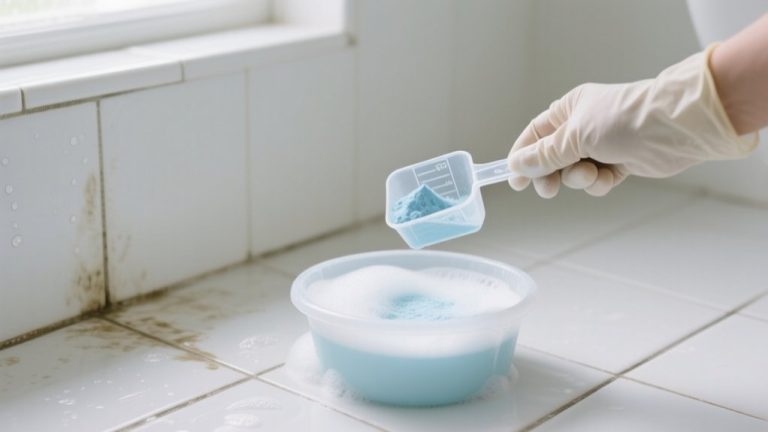
For a simple OxiClean shoe-cleaning setup, you’ll need OxiClean, a basin of warm water, a soft brush or cloth, and clean towels.
Choose an OxiClean product whose label allows use on your shoes’ materials, and read its directions before mixing.
The powder’s oxygen-based stain-fighting action can help lift dirt and brighten washable white fabric, but it isn’t suitable for every finish.
Check your shoe-care instructions first, especially for leather, suede, or delicate details.
Use a basin large enough to hold the solution without crowding your shoes, and keep the water warm rather than hot.
Set out towels to absorb moisture after rinsing.
Measure the product as directed on its packaging; don’t guess at the amount or combine it with other cleaners.
With supplies ready, you can prepare a suitable solution.
Cleaning Tools
Set up a small cleaning station with OxiClean, a basin of warm water, a soft brush or cloth, and clean towels.
Choose a brush with gentle bristles so you can loosen dirt without scuffing fabric, canvas, or other delicate uppers.
Keep a second cloth handy for wiping away loosened grime and checking your progress. You’ll also need a spoon or measuring scoop to portion the OxiClean according to its label; don’t guess at the amount.
If your shoes have removable laces, gather a small bowl for soaking them separately.
Check the care instructions and confirm that OxiClean suits your shoe materials before mixing it with water.
Having these supplies ready lets you work steadily and clean each area with the right tool, without interrupting the process to search for something.
Protecting Your Workspace
Before mixing OxiClean, protect your work surface with an old towel or waterproof covering to catch drips and loosened grime.
Choose a spot near a sink with good airflow, and move anything that could stain or get splashed.
Put on gloves to protect your hands, especially if you have sensitive skin.
Keep the OxiClean package nearby and follow its label for safe handling and mixing; don’t combine it with other cleaners.
Gather a soft brush or old toothbrush, a clean cloth, a small bowl, and lukewarm water.
Remove the shoes’ laces and insoles if they’re washable, then set them aside.
Keep a second cloth and a rinse container within reach so you can wipe away residue promptly.
Check the shoe care label before cleaning, and test the solution on a hidden area first.
Choose Between Soaking and Spot-Cleaning
If your shoes have overall grime or widespread stains, soaking is the way to go.
But if you’re dealing with small, isolated marks, spot-cleaning works best.
Just make sure to check what your shoes are made of first—some materials don’t do well with soaking.
When to Soak
Soak white shoes when dirt covers a large area or stains have set in; for a small scuff or isolated spot, spot-cleaning is quicker and gentler. Choose soaking when grime has spread across the uppers, laces, or fabric panels, or when repeated wear has left the material uniformly dull. First, check the care label: OxiClean’s oxygen-based cleaner suits many washable fabrics, but leather, suede, and delicate trims may be damaged by immersion.
| Shoe condition | Soaking decision |
|---|---|
| Widespread fabric grime | Soak if care instructions allow |
| Set-in stains across panels | Soak washable shoes |
| Delicate or nonwashable materials | Don’t immerse |
Remove laces and loose dirt before mixing the solution. Use the product’s label directions, cool or lukewarm water, and the recommended soak time. Then rinse thoroughly and air-dry away from direct heat.
When to Spot-Clean
Spot-clean white shoes when dirt is limited to a scuff, a small stain, or one dirty panel. This focused approach lets you treat the mark without wetting the entire shoe. It’s especially useful when the rest of the upper looks clean, or when you’ve just noticed a fresh spill before it spreads.
You can also spot-clean delicate areas that shouldn’t be soaked, such as glued trim or sections with mixed materials. Check the shoe’s care label first, and test your cleaner on a hidden spot to make sure it won’t discolor the fabric.
Work gently around seams and printed details, where excess moisture or scrubbing could cause damage.
If dirt covers much of the shoe or several panels, a small targeted treatment may leave uneven results. In that case, consider broader cleaning.
Choose the Right Method
The best method depends on how much of the shoe is dirty and what it’s made of. Choose spot-cleaning when you see a few marks, muddy edges, or stains on delicate materials. It lets you target the problem without soaking the whole shoe, which can loosen glue or damage certain finishes.
Use a soft brush or cloth and test your Oxiclean solution on a hidden area first.
Soaking works better when canvas shoes have widespread grime and their care instructions allow it. Remove the laces and insoles, then follow the product label’s dilution and soaking directions.
Don’t soak leather, suede, or shoes with fragile construction. If you’re unsure, spot-clean instead.
After either method, rinse away cleaner as directed and let your shoes air-dry completely, away from direct heat.
Soak White Shoes With OxiClean Safely
For stubborn grime on washable canvas or fabric shoes, an OxiClean soak can help lift stains without harsh scrubbing.
An OxiClean soak can help lift stubborn grime from washable canvas or fabric shoes without harsh scrubbing.
First, check the care label and OxiClean package directions. Don’t soak leather, suede, or shoes with materials that aren’t water-safe. Remove laces and insoles, then brush off loose dirt.
Fill a basin with cool or warm water as directed, and dissolve the recommended amount of OxiClean completely. Submerge the shoes, keeping them covered, and soak only for the time listed on the product label.
Don’t use hotter water or extra powder because that could damage fabric or leave residue.
When the soak’s done, rinse the shoes thoroughly with clean water. Press out excess moisture with a towel, then air-dry them away from direct heat and sunlight.
Don’t put them in a dryer.
Spot-Clean Delicate White Shoes With OxiClean
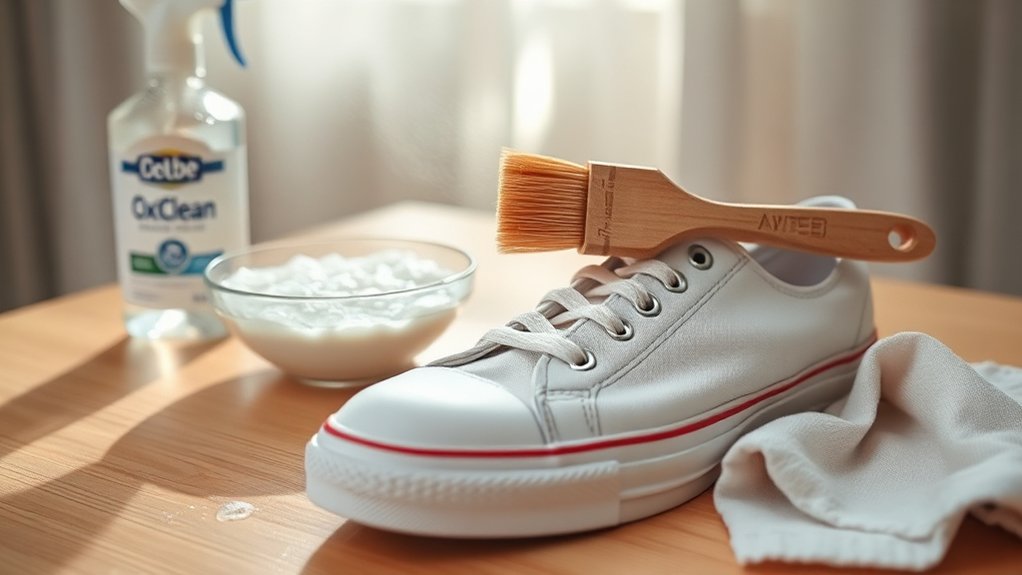
If your white shoes are delicate or can’t be soaked, test OxiClean on a hidden spot first.
Mix a small amount of OxiClean with water according to the package directions, and dab the solution onto an inconspicuous area with a cotton swab. Wait a few minutes, then check for color changes, fading, or damage. If the material looks unchanged, spot-clean the stain.
Dip a soft white cloth or soft-bristled toothbrush into the solution, then gently work it over the mark. Use only enough liquid to dampen the area; don’t saturate leather, suede, or glued seams.
For mesh or canvas, brush lightly to avoid roughing up the fibers.
Treat one small section at a time, and use a fresh part of the cloth as dirt lifts. Keep the solution off colored trim and hardware.
Rinse, Dry, and Remove Stubborn Scuffs
After cleaning, wipe away any OxiClean residue with a clean, damp cloth, taking care not to soak the shoes. Rinse the cloth often so you don’t spread loosened dirt back onto the material.
For washable canvas shoes, follow the care label; you can rinse them gently with cool water if it permits. Don’t submerge leather, suede, or glued areas.
Press a dry towel against the shoes to absorb moisture, then let them air-dry in a well-ventilated spot away from direct heat and sunlight. Stuff them with clean paper towels to help maintain their shape, replacing the paper as it gets damp.
For stubborn scuffs, rub gently with a damp melamine sponge or a soft cloth and mild soap. Test an inconspicuous area first and stop if the finish changes.
Frequently Asked Questions
Can Oxiclean Damage Colored Details on White Shoes?
Yes, OxiClean can damage or fade colored details on white shoes, especially if you soak them too long or use a strong mixture.
Check the shoe’s care label and test the solution on a hidden spot first.
Apply it only to suitable fabric, and keep it away from leather, suede, and delicate trims.
Rinse thoroughly, don’t let the cleaner dry on the shoe, and stop if you notice color bleeding or fading.
Is Oxiclean Safe for Washing White Shoes in a Machine?
Yes, you can use OxiClean when machine-washing some white shoes, but check the care label first. Coincidentally, the same oxygen-based cleaner that brightens fabric can loosen shoe glue or affect colored details.
Remove laces and insoles, place shoes in a mesh bag, and use a gentle, cold cycle with a small amount of detergent.
Don’t pour OxiClean directly onto shoes; follow its package directions, and air-dry them completely.
How Often Can I Use Oxiclean on White Shoes?
You can use OxiClean on white shoes whenever they need cleaning, but avoid treating them more often than necessary. Frequent soaking or scrubbing can weaken adhesives, fade materials, or damage delicate fabrics.
Check your shoes’ care label first, and test the solution on a hidden spot.
For routine upkeep, wipe away dirt with mild soap and water; save OxiClean for stubborn stains.
Rinse thoroughly and let your shoes air-dry completely after each treatment.
Can Oxiclean Remove Yellowing From White Shoe Soles?
Yes, OxiClean can help lift yellowing from white shoe soles, though results vary with the material and how deeply the discoloration has settled in.
Mix a small amount with water according to the label, then gently scrub the soles with a soft brush.
Avoid soaking the shoes or applying the solution to delicate uppers.
Rinse thoroughly, wipe away residue, and let your shoes air-dry away from direct sunlight.
What Alternatives Work if I Don’T Have Oxiclean?
You can use baking soda and dish soap instead. Mix equal parts into a paste, scrub your shoes gently with a soft brush, then wipe them clean with a damp cloth.
For canvas, try a little laundry detergent diluted in warm water.
For rubber soles, a melamine sponge can lift scuffs; dampen it and rub lightly.
Test any cleaner on a hidden spot first, and let your shoes air-dry away from direct sunlight.
Conclusion
OxiClean can revive white shoes, but it isn’t a tiny laundry wizard with unlimited powers. Check the care label, choose soaking or spot-cleaning wisely, and rinse thoroughly.
Let your shoes air-dry away from heat, then tackle stubborn scuffs gently. If a stain survives, don’t escalate to industrial chemistry; some marks are simply committed to their artistic vision.
With patience and the right method, you can brighten your shoes and avoid turning cleaning day into a cautionary tale.