How To Clean A White Couch With Oxiclean – Easy Method
To clean a white couch with OxiClean, first check its care label and make sure it allows water-based cleaning. Vacuum the cushions, seams, and crevices, then mix the cleaner exactly as its package directs.
Spot-test a hidden area and let it dry to check for discoloration. If the fabric looks unchanged, blot small sections with a damp, clean white cloth, working from stain edges inward. Rinse with a fresh damp cloth, then air-dry completely; the steps below help prevent watermarks.
Check Your Couch’s Care Label
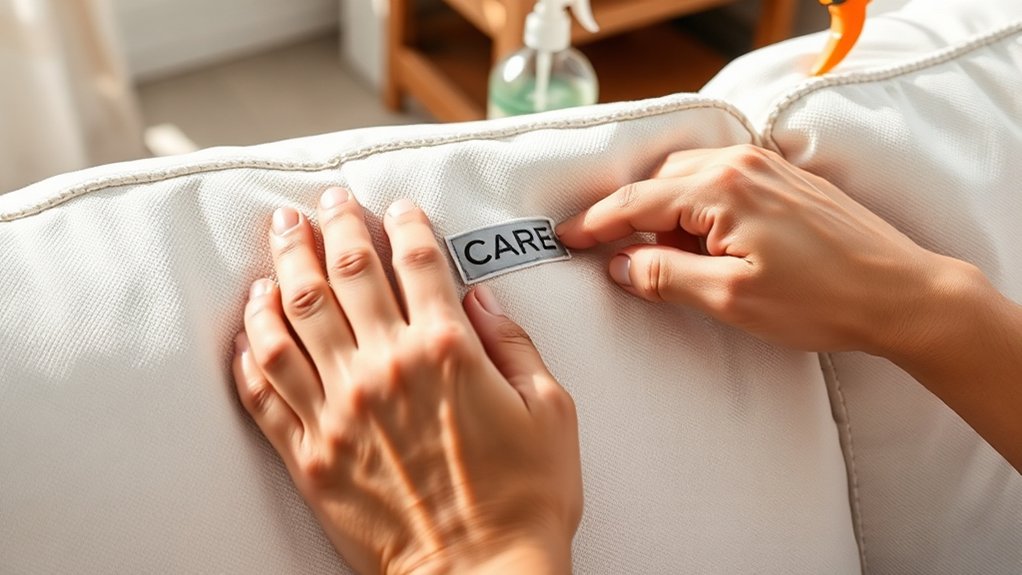
Before you clean your white couch, check its care label to find out which methods and products are safe for the fabric. Look for a tag beneath the cushions, along the frame, or under the sofa. Its cleaning code tells you how to treat the upholstery without causing damage.
A “W” means you can use water-based cleaning methods. An “S” calls for solvent-based cleaning only, while “W/S” allows either option. If the label shows “X,” don’t use liquid cleaners; vacuuming or professional service is the safer choice.
Check the manufacturer’s instructions, too, since some fabrics have special requirements.
If you can’t find a label, contact the manufacturer or consult an upholstery professional before cleaning. Don’t assume a product is suitable just because the couch is white. Following the care code helps prevent discoloration, shrinkage, and damage.
Gather Supplies for Cleaning a White Couch
Once you’ve checked the care label, gather supplies that match its cleaning code. Choose OxiClean upholstery cleaner only if the label permits water-based cleaning, and follow the product’s directions. You’ll also need a clean, white cloth, a small bowl of cool water, and a soft-bristled brush for gentle application. Keep everything within reach before you begin.
| Supply | Purpose |
|---|---|
| OxiClean upholstery cleaner | Treats suitable fabric |
| White cloth | Applies and blots solution |
| Cool water | Dilutes or rinses as directed |
A white cloth helps prevent dye transfer, while cool water reduces the risk of setting some stains. Don’t substitute laundry powder unless its label specifically approves upholstery use. Avoid bleach, colored towels, and harsh brushes, which can damage or discolor fabric.
Check cleaner instructions for dilution and any required precautions. Keep the room ventilated, and wear gloves if recommended.
Vacuum the Couch Before Using OxiClean
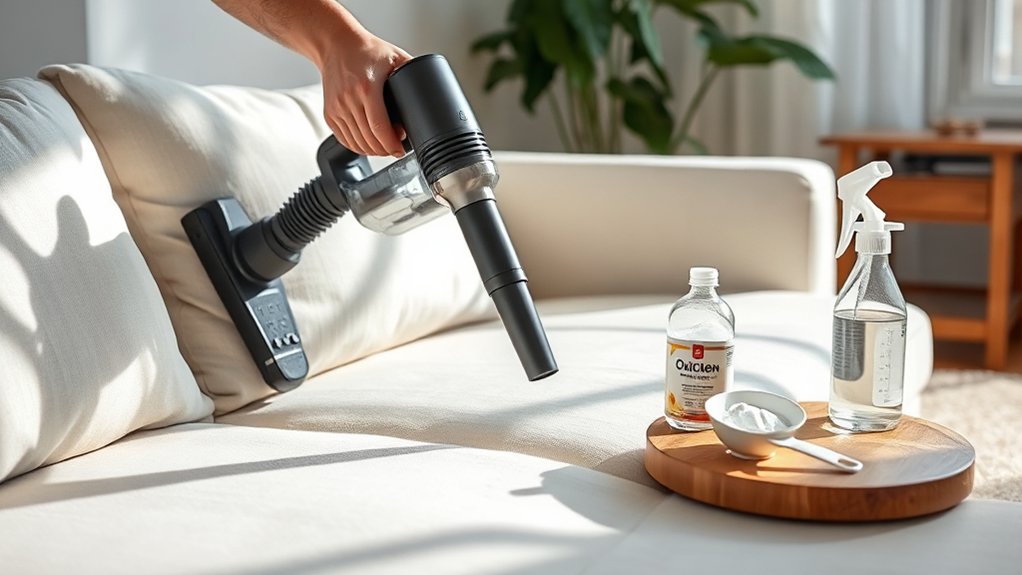
Vacuum the couch thoroughly to remove dust, crumbs, and loose debris before applying OxiClean. This step keeps grit from rubbing into the fabric during cleaning and helps you spot stains more clearly.
Vacuuming first removes grit that could rub into the fabric and makes stains easier to spot before applying OxiClean.
Use an upholstery attachment and move it slowly across each cushion, working from top to bottom. Lift removable cushions and vacuum their surfaces, sides, and the areas beneath them.
For seams, piping, and crevices, switch to a narrow nozzle or a soft brush attachment so you can reach trapped particles without snagging the fabric. Don’t press hard; gentle, steady passes are enough.
Check the vacuum head first to verify it’s clean and won’t transfer dirt or marks onto the white upholstery. If you find loose threads or delicate trim, avoid pulling at them and vacuum around those areas carefully.
Remove any remaining debris by hand.
Mix an OxiClean Solution Safely
After vacuuming, check your couch’s care label and OxiClean’s instructions to confirm the product is suitable for the fabric.
Choose the OxiClean formula specified for upholstery, and follow its package directions for dilution. Don’t assume a stronger mix will clean better; too much product can leave residue or damage fabric.
Wear gloves and work in a well-ventilated area. Measure the recommended amount of powder or liquid with the supplied scoop or a measuring tool, then add it to the stated quantity of water.
Use cool or warm water only if the label permits it. Stir until the product dissolves, and prepare only the amount you need.
Never mix OxiClean with bleach, ammonia, or other cleaners. Keep the solution away from children and pets, and don’t store leftovers unless the product label allows it.
Spot-Test OxiClean on the Fabric
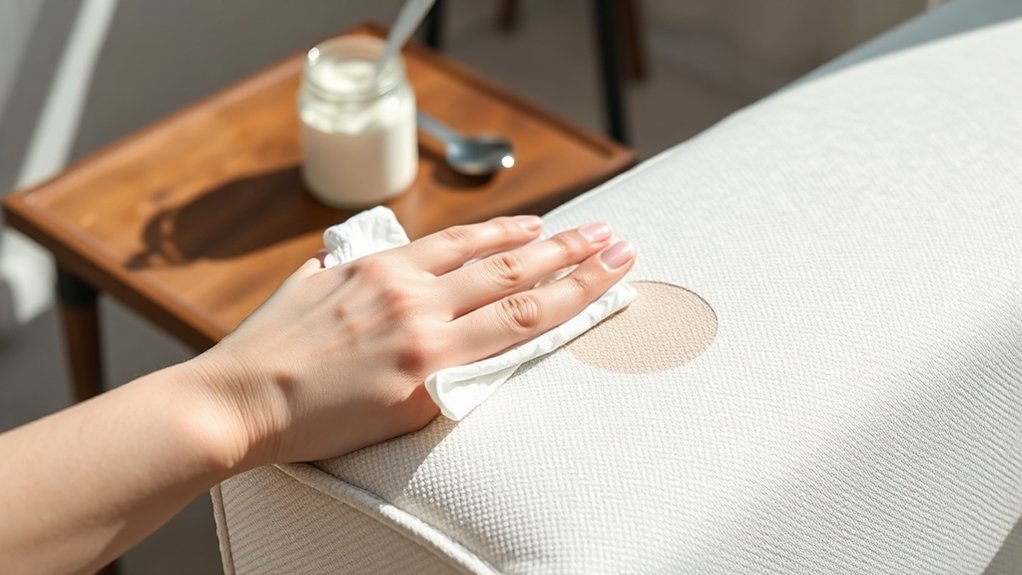
Before treating the whole couch, test the diluted OxiClean solution on a hidden spot, such as the back or underside of a cushion. Check the care label first, and don’t use the solution if the manufacturer advises against water-based cleaners.
Dampen a clean white cloth with a small amount of the mixture; don’t pour it directly onto the fabric. Blot the test area gently, keeping the spot small and avoiding hard rubbing.
Let it air-dry completely, since damp fabric can hide discoloration or texture changes. Once dry, inspect the area in good light. Look for fading, yellowing, color transfer, stiffness, or damage to the fibers.
If you notice any change, stop and use a cleaner approved for your couch’s fabric. If the test spot looks unchanged, you can proceed cautiously.
Clean the White Couch One Section at a Time
Start by focusing on one small section of your white couch at a time.
This way, the cleaning solution won’t dry unevenly. Make sure to rinse each section thoroughly before moving on to the next one.
Doing this helps prevent any residue or water marks from forming.
Work In Small Sections
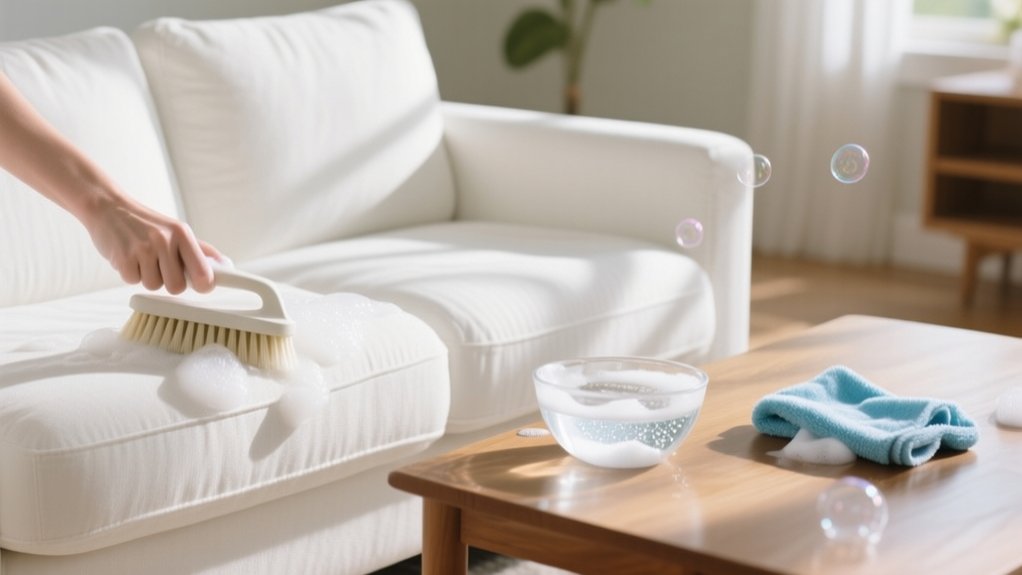
To prevent streaks and keep the fabric from getting too wet, clean your white couch one small section at a time. Divide each cushion, arm, and back panel into manageable areas, about a foot square. This lets you apply the OxiClean solution evenly and track where you’ve already worked.
Dip a clean cloth into the prepared solution, then wring it out until it’s damp, not dripping. Blot or gently wipe one section, working from the outside of any stain toward its center. Use light, consistent strokes rather than scrubbing, which can roughen fibers or spread soil.
Check the fabric as you go, and avoid saturating seams or cushions. Move methodically across the couch, treating each small area before starting the next.
Keep your cloth clean so you don’t transfer grime onto the white upholstery.
Rinse Before Moving On
Rinse each cleaned section before moving on so detergent residue doesn’t leave a dull film.
After lifting soil with your Oxiclean solution, dampen a fresh white cloth with clean, cool water. Wring it out well; the fabric should feel damp, not wet.
Blot the section gently, working from the outside toward the center to avoid spreading loosened dirt. Rinse the cloth often, and replace the water when it looks cloudy.
Don’t scrub or saturate the upholstery, since excess moisture can cause water marks or seep into the cushion.
Once the area feels free of suds, press it with a dry towel to absorb moisture.
Check the fabric in good light. If you still see foam or feel slickness, repeat the rinse before cleaning the next section.
Rinse, Dry, and Prevent Watermarks
Once the stain lifts, remove any cleaner residue with a cloth dampened in clean water, taking care not to soak the upholstery.
Blot gently, working from the outside toward the center, and rinse the cloth often so you don’t spread detergent or soil.
Then press a dry, white towel against the area to absorb as much moisture as possible.
Press a clean, dry white towel gently against the area to absorb as much moisture as possible.
Don’t rub, wring, or use colored towels, which may damage the fabric or transfer dye.
Let the couch air-dry completely before sitting on it.
Open windows or run a fan to improve airflow, but keep the fabric away from direct heat and sunlight, which can cause fading or shrinkage.
To prevent watermarks, feather the damp area’s edges with a clean, barely damp cloth, blending moisture evenly.
Avoid leaving a sharp wet boundary.
Frequently Asked Questions
Can Oxiclean Damage Colored or Patterned Upholstery?
Yes, OxiClean can damage colored or patterned upholstery by fading dyes, bleeding colors, or leaving light spots.
Check the care label first, and don’t use it on fabrics marked “S” or “X” unless the manufacturer approves.
Test a hidden area with a diluted solution, then wait until it dries to check for changes. If you see fading or color transfer, stop immediately.
For valuable upholstery, ask a professional cleaner before treating it yourself.
How Often Should I Clean a White Couch?
Treat your white couch like a bright window: a little regular care keeps it shining.
Vacuum it weekly to remove dust, crumbs, and pet hair, and spot-clean spills as soon as they happen.
Give the upholstery a deeper clean every six to twelve months, or more often if you use the couch heavily, have pets, or notice stains and odors.
Always check the care label and test cleaners in a hidden spot first.
Can I Use Oxiclean on Leather or Suede Couches?
No, you shouldn’t use OxiClean on leather or suede couches. Its water-based formula and cleaning agents can discolor, dry out, or damage these materials.
Check your couch’s care label, then use a cleaner specifically approved for its leather or suede type.
Test any product on a hidden spot first, and follow the manufacturer’s instructions.
For stains or delicate finishes, contact a professional upholstery cleaner instead of risking permanent damage with household products.
What Should I Do if Oxiclean Discolors My Couch?
If OxiClean leaves a mark, treat it like a warning flag: stop cleaning before the damage spreads.
Blot the area gently with a clean, damp, white cloth to remove residue; don’t rub or add more cleaner.
Check your couch’s care label, then let the spot air-dry away from heat.
If discoloration remains, contact the manufacturer or an upholstery professional.
Don’t try bleach or dye; they could worsen the damage.
Are There Safer Alternatives for Cleaning a White Couch?
Yes, you can choose gentler alternatives for cleaning your white couch. First, check the care tag and test any cleaner on a hidden spot.
For water-safe fabric, blot stains with a microfiber cloth and a small amount of mild, dye-free dish soap diluted in cool water.
For delicate or solvent-only upholstery, use an approved upholstery cleaner or call a professional.
Avoid bleach, scrubbing, and soaking, which can damage fabric or leave water marks.
Conclusion
With the right care, you can refresh your white couch without turning cleaning into a chore. Check the label, vacuum first, mix OxiClean as directed, and spot-test before treating small sections.
Rinse away residue and let the fabric dry fully to help prevent watermarks. Take your time. Gentle, even cleaning is your best ally.
A little patience can make your couch look brighter and feel more inviting, so you can enjoy a cleaner space with confidence.