How Much Downy Fabric Softener To Use – The Right Amount
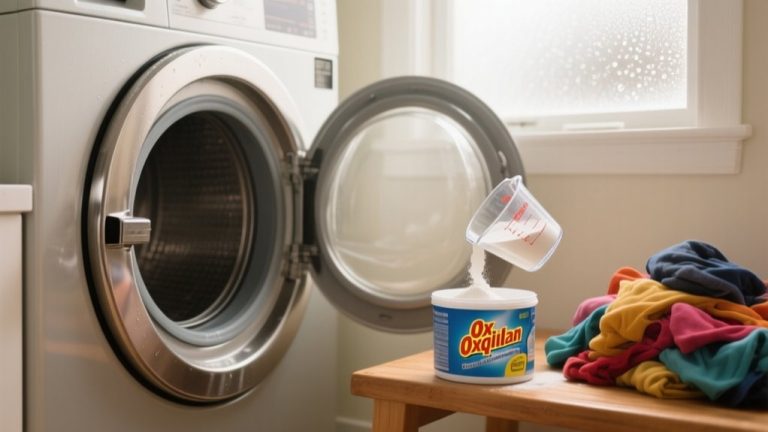
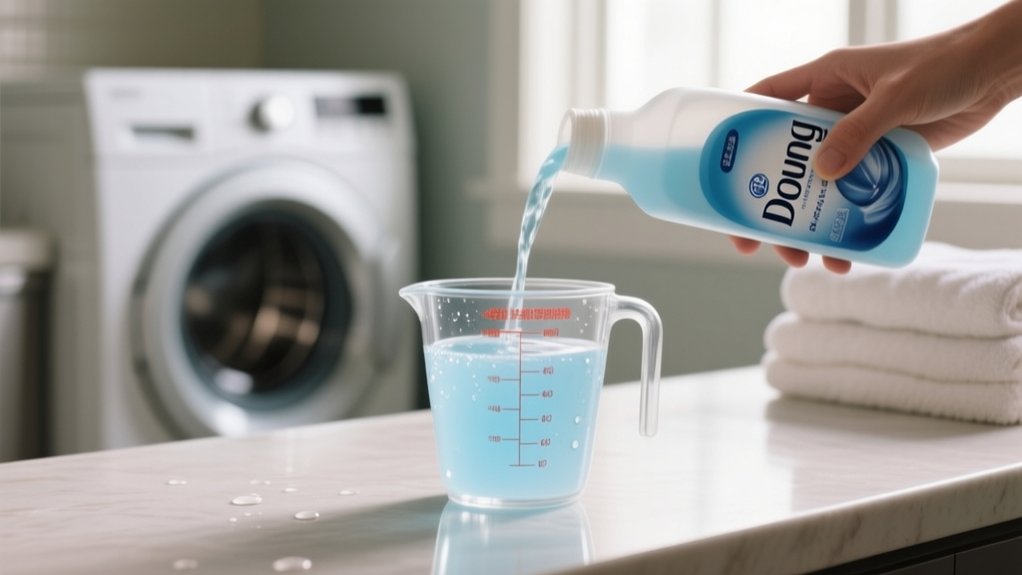
Use the amount of Downy listed on your bottle for your washer and load size. Measure it with the cap’s marked line instead of pouring by eye. Small loads generally need less than full loads.
In an HE washer, pour Downy into the fabric-softener dispenser, follow your washer’s manual, and don’t exceed the dispenser’s fill line. Too much can leave residue, while too little may reduce softness and scent.
Keep a few simple tips in mind for better results.
How Much Downy Should You Use?
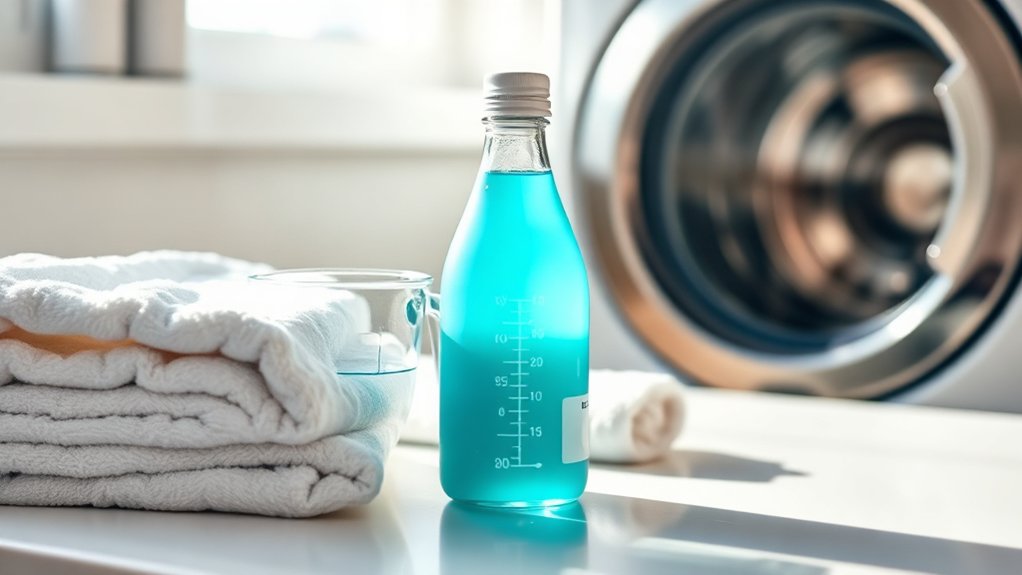
How much Downy you need depends on your washer size and the product’s instructions. The right amount also varies by formula, so check the label on your specific bottle rather than relying on a general rule.
Use the amount of Downy specified on your bottle’s label, since recommendations vary by formula and washer size.
Downy offers concentrated and nonconcentrated options, and their recommended amounts aren’t interchangeable. Using more than directed won’t necessarily make clothes softer or fresher. It can leave residue on fabrics, create excess suds, or cause buildup in your washer.
Using too little may reduce the softening or scent you want. Your machine matters, too: some washers have a dispenser, while others require you to add softener at a particular point in the cycle.
Follow your washer manual as well as the product label. Together, those instructions help you use Downy effectively and protect your laundry and machine.
Measure Downy for Your Load Size
Once you’ve checked your bottle’s directions, measure Downy according to the size of your load. A small load needs less softener than a full one, while an extra-large load may need more. Matching the amount to the laundry helps distribute the product evenly without leaving residue on clothes.
Use your washer’s load size as a practical guide. If you’re washing just a few items, choose the smaller amount shown for your product. For a typical load, use the standard amount. For a packed washer, use the larger amount only if the label allows it.
Don’t estimate by pouring directly into the machine. Instead, use the cap or another suitable measuring tool, and pour carefully to avoid spills.
Keep the load size consistent with your washer’s capacity so clothes have room to move.
Check Your Downy Product’s Dose
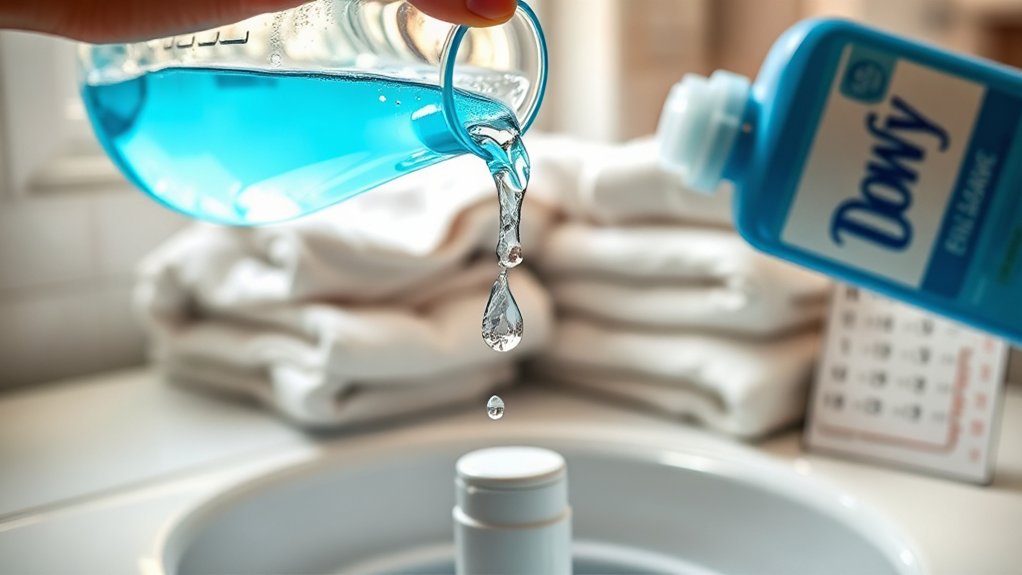
Check your Downy bottle’s dosing chart before measuring, since formulas and cap markings can vary. Match the directions to your exact product, not a different Downy bottle you’ve used before. Read the label for the recommended amount and identify which cap line corresponds to that dose.
- Find the dose chart on the bottle’s back or side label.
- Check whether the instructions specify a load size or another condition.
- Locate the matching fill line inside the cap; don’t assume each line marks the same amount across products.
- Pour to that line, and use the bottle’s directions if the chart gives a range.
If the label’s print is hard to read, check Downy’s product information online using the name on your bottle.
Following the correct chart helps you avoid using too much or too little softener.
Use Downy in an HE Washer
After measuring the dose for your Downy product, add it to the HE washer’s fabric softener dispenser, not directly to the drum. The dispenser releases the softener during the wash cycle, helping it spread through the load.
Check your washer’s manual to find the correct compartment because dispenser layouts vary by model. Don’t pour Downy into the detergent compartment, bleach dispenser, or an empty drum.
If your machine has no fabric softener dispenser, follow its manual and the product label for an approved alternative. Use only the amount specified for your load and product.
HE washers use less water than traditional machines, so adding extra softener can leave residue on clothes or inside the washer. Clean the dispenser regularly, and wipe away spills to prevent buildup.
Don’t exceed the dispenser’s fill line.
Add Downy at the Right Time
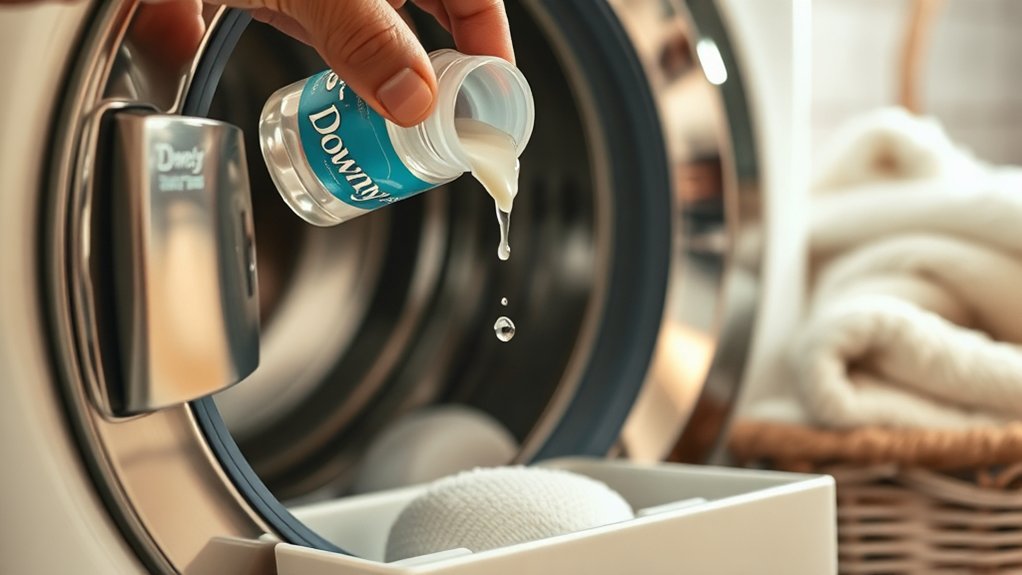
Add Downy when your washer’s fabric softener dispenser calls for it, usually before you start the cycle. Your machine releases the softener during the rinse, so you don’t need to pause the wash or pour it directly onto clothes.
Check your washer’s manual if you’re unsure when or where to add it.
- Measure the amount listed on the Downy label for your load size.
- Pour the softener into the dispenser’s marked compartment.
- Close the drawer or lid, then select your wash cycle.
- Let the washer release Downy automatically during the rinse.
If your washer doesn’t have a dispenser, consult its instructions for the recommended timing.
Some models require you to add softener manually at a specific point in the cycle. Just follow the machine’s guidance for the best results.
Prevent Residue and Fix Stiff Clothes
Using the right amount of Downy and letting your washer dispense it during the rinse can help prevent residue. Check the label for the dose that matches your load size, and don’t pour softener directly onto dry fabric.
Add it to your washer’s dispenser, or dilute it as directed if your machine doesn’t have one.
Too much softener can leave oily-looking spots or a coating that makes clothes feel stiff. If you spot residue, don’t add more softener to the next wash.
Rewash the affected items with detergent, following the care labels and your washer’s instructions.
For a buildup that doesn’t come out, wash the items again without softener. Keep loads appropriately sized so water can circulate and rinse garments thoroughly.
Clean the dispenser regularly, too; dried product can block it and interfere with proper dispensing.
What If Clothes Still Feel Stiff?
If clothes still feel stiff after you’ve rinsed away softener residue, check the care label and consider other causes, such as detergent buildup, hard water, or air-drying.
Try these steps to find what’s affecting your laundry:
- Use less detergent: Too much can cling to fibers. Measure the amount for your load size and water conditions.
- Check water hardness: Minerals can leave fabric rough. Try a detergent formulated for hard water or a suitable water softener.
- Improve rinsing: Don’t overload the washer; give clothes room to move. Run an extra rinse if needed.
- Adjust drying: Shake items before hanging, or tumble-dry them with enough space. Remove them promptly to prevent stiffness.
If the care label allows, test a small change on one load. Skip extra softener until you identify the cause.
Frequently Asked Questions
Can Downy Fabric Softener Cause Skin Irritation?
Yes, Downy fabric softener can irritate your skin, especially if you’re sensitive to fragrance or other ingredients. You might notice itching, redness, or a rash where clothing touches your skin.
Stop using the product and wash affected clothing with detergent and an extra rinse.
If irritation continues, worsens, or causes swelling or trouble breathing, contact a healthcare professional promptly.
Check the product label for ingredients and consider a fragrance-free alternative if you’re prone to reactions.
Is Downy Safe to Use on Baby Clothes?
Yes, you can use Downy on baby clothes, but you may want to skip it if your baby has sensitive skin or eczema.
Fabric softeners can leave fragrance and other residues that irritate some babies.
Wash new clothes before your baby wears them, and choose a fragrance-free, dye-free detergent.
If you use Downy, follow the label and use the recommended amount.
Stop if you notice redness, itching, or a rash.
Can Downy Be Used With Towels?
Yes, you can use Downy with towels, but softness comes with a trade-off.
Fabric softener can coat fibers and reduce absorbency. If you love plush towels, use it sparingly and occasionally rather than with every load.
For towels that dry you effectively, skip softener and add white vinegar to the rinse cycle instead.
Don’t combine vinegar with bleach. Always check your towel’s care label, and follow the Downy bottle’s directions for your washer.
Does Downy Expire or Lose Effectiveness Over Time?
Yes, Downy can lose effectiveness over time, though it doesn’t usually have a strict expiration date.
If you store it properly, an unopened bottle can last for years. Heat, freezing, or prolonged storage may change its texture or scent.
Check for clumps, separation that won’t mix when shaken, an unusual smell, or a damaged container.
If you notice these signs, don’t use it. Replace old fabric softener to help guarantee consistent results.
Can Downy Fabric Softener Damage a Washing Machine?
Downy fabric softener usually won’t damage your washing machine when you use it as directed.
However, excess softener can leave residue in the dispenser, drum, or hoses. This buildup may cause odors or drainage problems over time.
Don’t pour it directly onto clothes, and clean the dispenser regularly.
If your washer has a fabric-softener compartment, follow its fill markings and your machine’s manual.
High-efficiency washers need HE-compatible products.
Conclusion
Use the right amount of Downy for your load, check the label, and follow your washer’s instructions. Add softener at the proper time to help prevent residue and stiff clothes.
A little care can make laundry feel softer, fresher, and more comforting. You deserve that cozy feeling when you pull on a favorite shirt or wrap up in a warm towel.
Measure mindfully, wash wisely, and let every load bring a small, soothing touch of softness to your day.