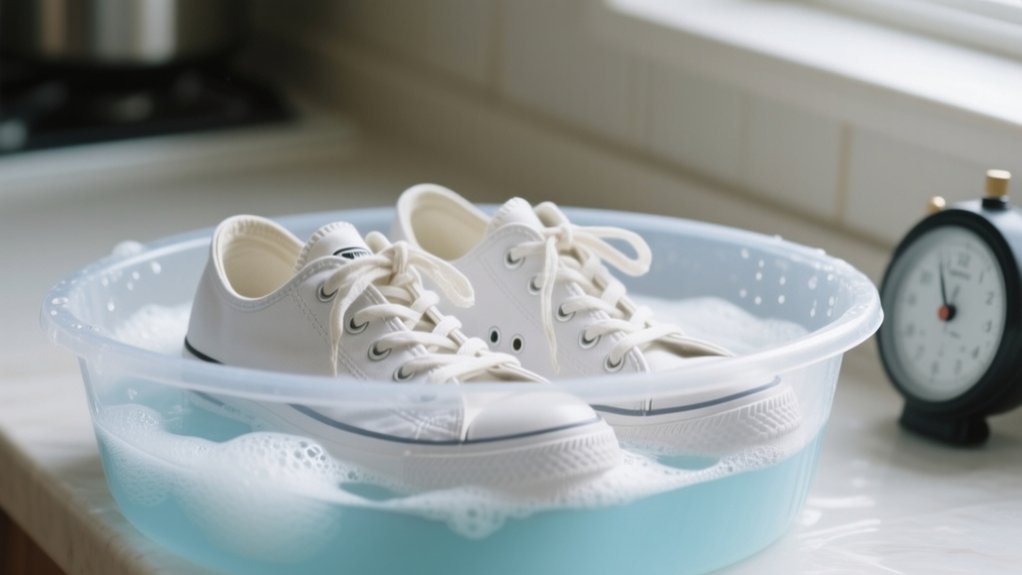
How Long To Soak Sneakers In Oxiclean – Quick Answer
You can soak canvas or many synthetic sneakers in OxiClean for 1 to 6 hours, checking them every 30 to 60 minutes. Start with one hour for light dirt or unfamiliar materials. Don’t soak them overnight unless the care label says it’s safe.
Avoid soaking leather, suede, or nubuck. Mix OxiClean as directed and test a hidden spot first. Rinse thoroughly, then air-dry away from heat and direct sunlight.
A few simple precautions can help protect your sneakers.
How Long Should You Soak Sneakers in OxiClean?
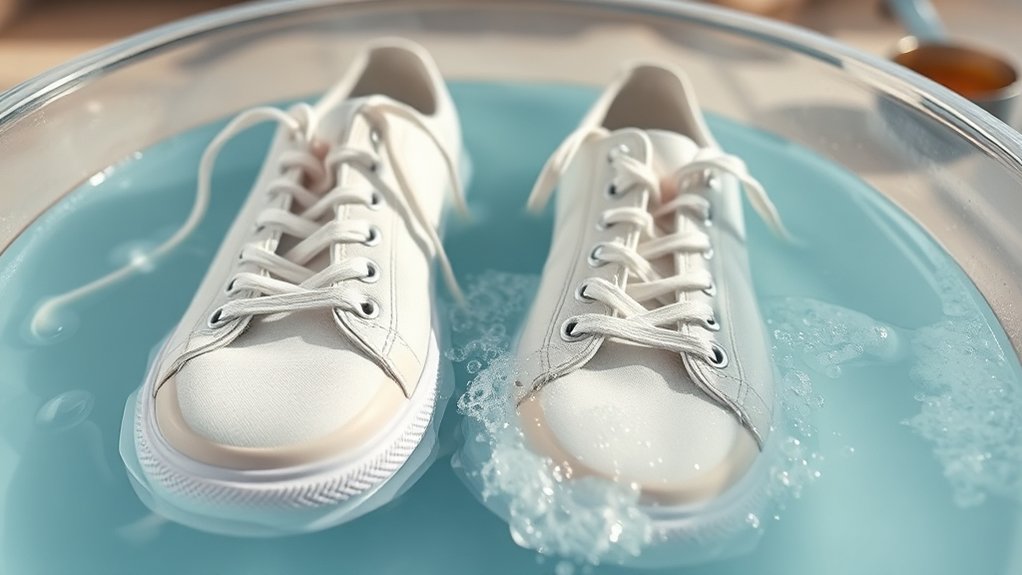
Soak sneakers in OxiClean for about 1 to 6 hours, checking them periodically and following the product label.
Start with a shorter soak if you’re unsure how your pair will respond. For light dirt, an hour may be enough; tougher stains may need several hours.
Don’t leave your sneakers soaking overnight unless the label specifically allows it.
Check your shoes every 30 to 60 minutes. Lift them from the solution and see whether the stains have faded.
If they look clean, take them out rather than extending the soak unnecessarily. If stains remain, let them soak longer within the recommended range, then check again.
When you’re done, rinse the sneakers thoroughly with clean water to remove the cleaner.
Let them air-dry completely before wearing them. Avoid heat because it can damage or warp your shoes.
Which Sneaker Materials Can You Soak?
Before soaking sneakers in OxiClean, check their material and care label. Canvas and many synthetic fabrics, like polyester or nylon, usually tolerate a brief soak when the manufacturer allows water-based cleaning.
Check the care label first; canvas and many synthetic sneakers may tolerate a brief soak if water-based cleaning is allowed.
You can often soak removable fabric laces separately, too. Use cool water and follow the product label’s dilution directions.
Avoid soaking leather, suede, nubuck, or shoes with cork, wood, or other water-sensitive components. Water can stiffen, discolor, or damage these materials, so spot-clean them with care instead.
Don’t submerge sneakers with glued or delicate construction unless their care instructions say it’s safe. Prolonged immersion can weaken adhesives or affect shape.
If you can’t identify the material or find reliable care guidance, skip soaking and choose a gentle surface-cleaning method.
Always test a hidden area first to check for color transfer or finish changes.
How Should Stains Affect Soaking Time?
Stain type matters more than stain severity when you decide how long to soak sneakers in OxiClean. Fresh, water-based marks such as mud or juice may loosen quickly, so a shorter soak can be enough.
Older stains often need more time, but extending the soak won’t necessarily remove them. Set-in marks may respond better to repeated treatment than one prolonged session.
Grease and oil can resist oxygen-based cleaners, while grass, food, and sweat stains may lift more readily. For mixed stains, judge the soak by the most stubborn mark, then check the fabric periodically.
Don’t assume a darker stain needs the longest soak because pigment and material affect results, too. If a stain remains after the recommended soaking period, stop rather than leaving your sneakers submerged for hours.
A longer soak may weaken fibers or affect color.
How Do You Mix and Use OxiClean Safely?
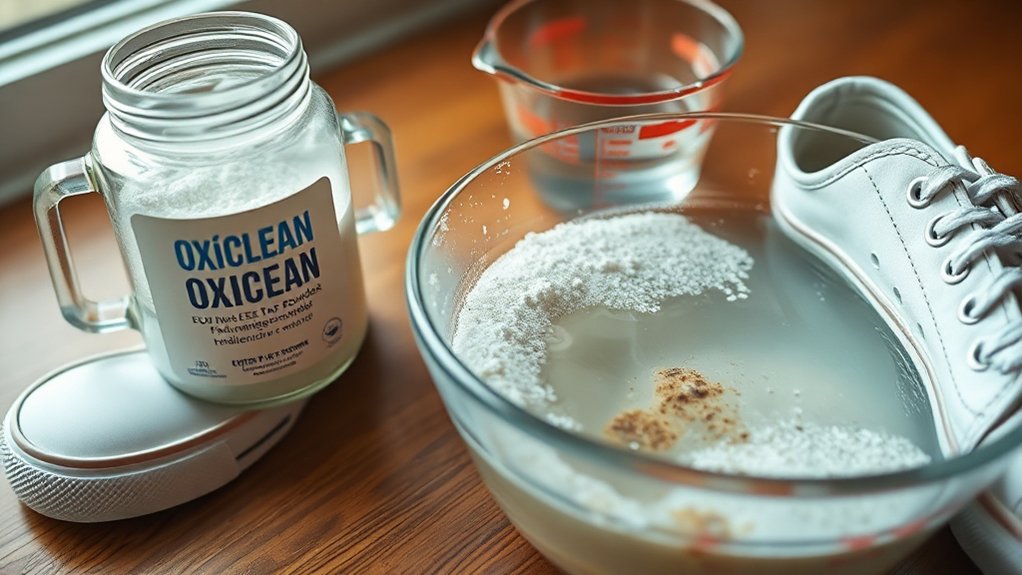
Mix OxiClean according to the package directions, using the recommended amount of powder and water. A stronger solution isn’t necessarily more effective and may harm some materials.
Dissolve the powder fully before adding your sneakers, and use a clean container large enough to hold them without crowding.
Check the care label first, and test the solution on a hidden spot to see whether the color or fabric changes.
OxiClean may not suit leather, suede, wool, or other delicate materials, so check the product label and shoe maker’s guidance before treating them.
Wear gloves if you have sensitive skin, avoid breathing powder dust, and keep the product away from children and pets.
Don’t mix OxiClean with chlorine bleach, ammonia, or other cleaners because combining products can create dangerous reactions. Use the solution in a well-ventilated area.
How Do You Rinse and Dry Sneakers Safely?
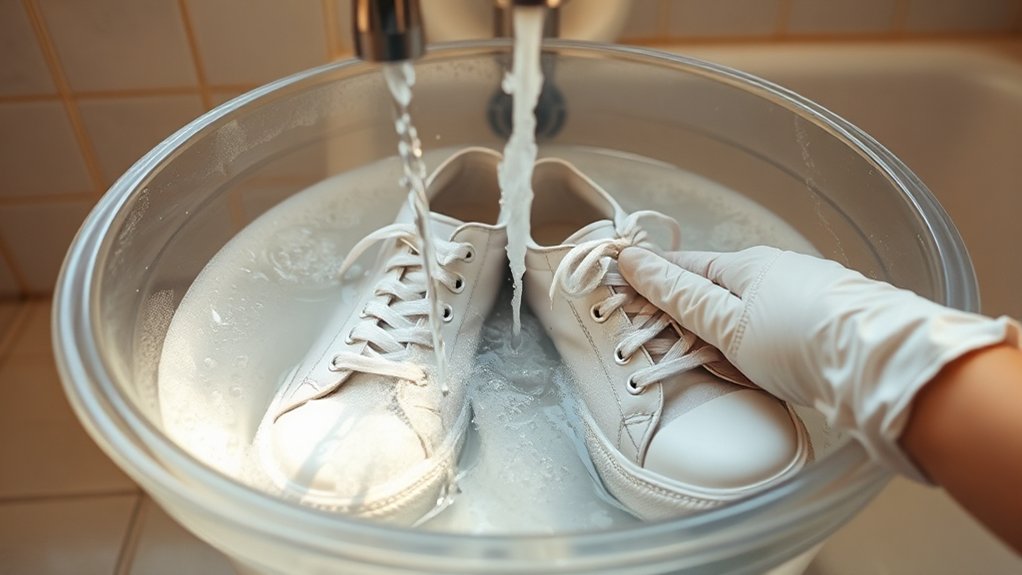
Once the soak is over, rinse your sneakers thoroughly with cool, clean water until no OxiClean residue remains. Press the fabric gently to release suds, but don’t twist or wring the shoes, which can distort their shape. Rinse removable laces and insoles separately, if the care label allows.
Blot excess water with a clean towel, then stuff each sneaker loosely with white paper towels to help absorb moisture and maintain its shape. Avoid newspaper, since ink may transfer.
Set your sneakers in a well-ventilated spot at room temperature, away from direct sunlight, radiators, and dryers. Heat can weaken adhesives, shrink materials, or cause fading.
Replace damp paper towels as needed, and let the shoes dry completely before wearing them. Don’t put them away while they’re still damp; lingering moisture can encourage odors and mildew.
Frequently Asked Questions
Can Oxiclean Remove Odors From Sneakers?
Yes, OxiClean can help remove odors from sneakers by lifting sweat and grime that cause smells.
Check the product label first, since formulas and shoe materials vary.
Mix the recommended amount with water, then soak only washable sneakers for the label’s suggested time.
Rinse thoroughly and air-dry completely before wearing.
Don’t use OxiClean on leather, suede, or other delicate materials unless the care instructions specifically allow it.
Will Oxiclean Discolor Colored Sneakers?
Yes, OxiClean can discolor colored sneakers, especially if the dye isn’t colorfast or you use a strong solution.
Check the care label and test a hidden spot first; wait until it dries to judge any color change.
Use the product’s directions, avoid prolonged soaking, and don’t mix cleaners.
If you’re unsure, clean the shoes with mild soap and cool water instead.
Keep OxiClean away from leather, suede, and delicate materials unless the label says it’s safe.
Can You Use Oxiclean on Sneaker Laces?
Yes, you can use OxiClean on sneaker laces, and you don’t need to worry that cleaning them is complicated.
Remove the laces first, then check the product label and test a hidden spot, especially on colored laces.
Mix OxiClean with water as directed, soak the laces for the label’s recommended time, and rinse them thoroughly.
Don’t use hot water unless the care instructions allow it.
Air-dry laces completely before relacing your sneakers.
How Often Can You Clean Sneakers With Oxiclean?
You can clean sneakers with OxiClean whenever they’re visibly dirty, but don’t use it as a routine after every wear. Frequent soaking or strong solutions may weaken adhesives, fade colors, or damage delicate materials.
Check your sneakers’ care label first, and test the solution on a hidden spot.
For regular upkeep, brush off dirt and wipe them with mild soap and water. Save OxiClean for tougher stains, and rinse thoroughly after each treatment.
Is Oxiclean Safe for Sneakers With Leather Accents?
Yes, you can use OxiClean on some sneakers with leather accents, but don’t soak the shoes or let the solution touch the leather.
Worried that a quick clean won’t work? Treat only the fabric areas with a diluted solution, applying it carefully with a cloth or soft brush.
Wipe away residue with a damp cloth, then air-dry the sneakers away from heat.
Check the care label and test a hidden spot first.
Conclusion
Soak washable sneakers in OxiClean for about 30 minutes, checking them often; don’t leave them submerged for hours. Your shoes’ material and stain type may call for less time, and delicate leather or suede shouldn’t be soaked.
Follow the product label, rinse thoroughly, and air-dry away from heat. Think of soaking like steeping tea: a short, watched dip can lift grime, while too long may spoil the result. Start gently, inspect, and repeat only if needed.