Does Persil Have Lipase – Straight Answer
Many people want a detergent that can actually tackle greasy, stubborn stains without making laundry harder than it needs to be. If you’ve ever wondered whether Persil has the right enzymes for the job, you’re not alone.
Yes, Persil does contain lipase enzymes, especially in its ProClean range, to effectively break down fat- and oil-based stains. This enzyme works well at lower temperatures, boosting grease removal and conserving energy.
You’ll find lipase in both liquid and powder formulations, mainly in North American products. It’s tailored for durable fabrics and tough food stains, enhancing cleaning efficiency while preserving garment integrity.
Understanding how Persil uses lipase reveals more about its stain-fighting and eco-friendly benefits.
What Is Lipase and How Does It Work in Persil Detergents?
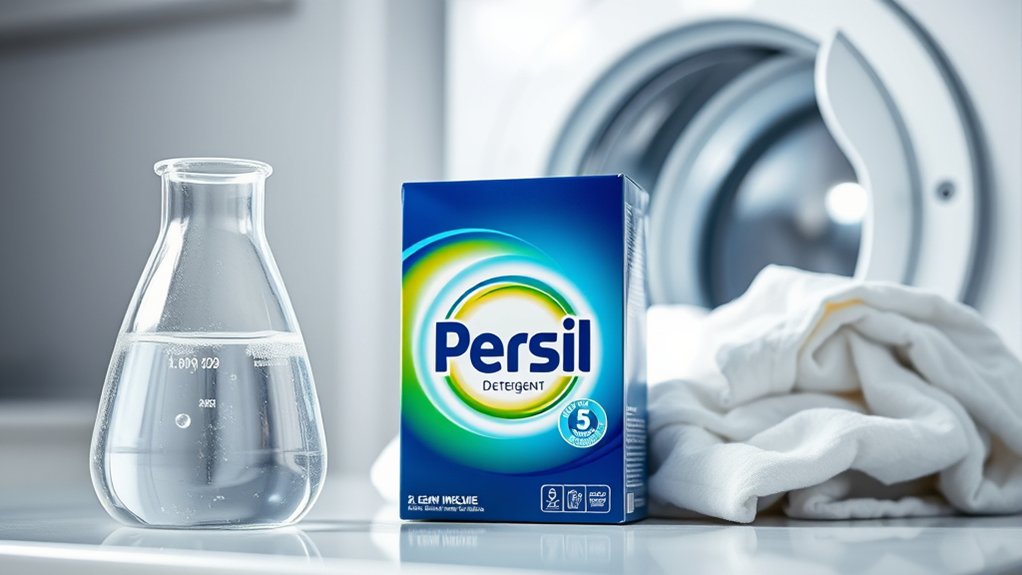
Lipase is a specialized enzyme that targets and breaks down fat- and oil-based stains, such as grease and butter, enhancing Persil’s cleaning efficiency.
Lipase expertly breaks down grease and oil stains, boosting Persil’s cleaning power.
When you use Persil, lipase acts by catalyzing the hydrolysis of triglycerides into glycerol and free fatty acids, effectively disintegrating oily residues on fabrics. This biochemical action enables Persil to remove stubborn grease without compromising fabric integrity.
You’ll also benefit from lipase’s effectiveness at lower temperatures, which reduces energy consumption during washing.
Persil’s enzyme formulation, including lipase, is optimized to perform across various washing conditions, ensuring consistent stain removal even in cold water.
Does Persil Contain Lipase in Its Formulation?
You’ll find that Persil formulations frequently include enzymes designed to tackle specific stain types, with lipase playing a key role in breaking down fat- and oil-based residues.
Lipase works synergistically with other enzymes to enhance Persil’s overall stain removal efficiency, especially on greasy and oily fabrics.
This enzyme remains effective across a range of temperatures, enabling Persil to clean efficiently in both cold and warm water, which supports energy conservation during laundry cycles.
Incorporating lipase reflects Persil’s commitment to advanced enzymatic technology, targeting diverse stains with precision.
You can expect lipase to be present in various Persil products, including both liquid and powder detergents, ensuring a thorough approach to removing lipid-based stains while maintaining fabric care and cleaning performance.
What Persil Products Contain Lipase Enzymes?
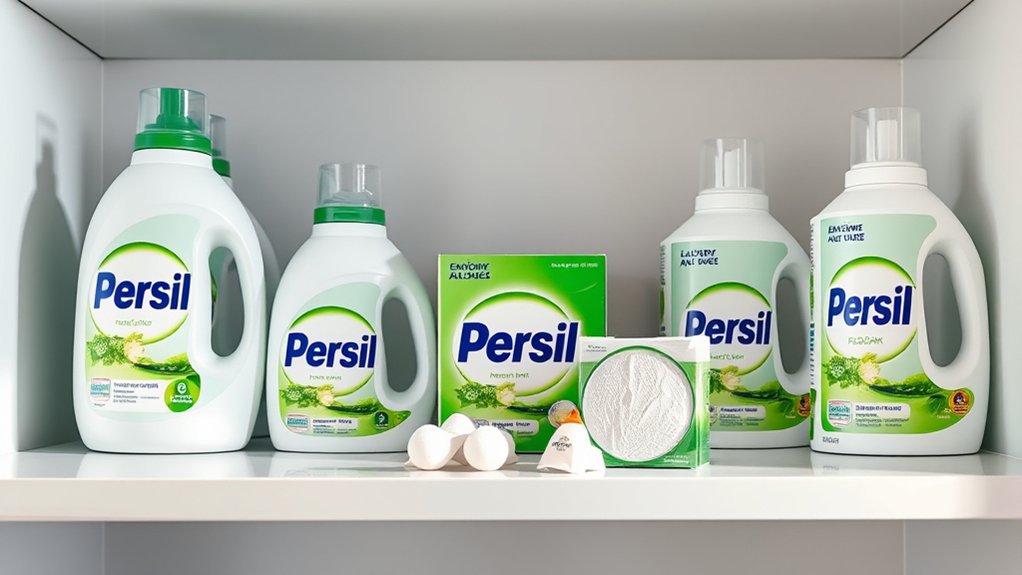
These enzymes are most effective when matched to the right wash temperature and fabric care.
Lipase Presence In Persil
Which Persil products incorporate lipase enzymes to tackle stubborn fat-based stains?
Primarily, the Persil ProClean range contains lipases that enzymatically break down triglycerides in grease and oil stains, enhancing stain removal efficiency. This enzymatic action is especially effective in cold water, supporting energy-saving laundry practices.
Additionally, Persil Small and Mighty formulations include lipases to address tough fat-based soils while preserving fabric integrity.
The inclusion of lipases elevates Persil’s cleaning performance and positions the brand as a premium detergent option.
To verify lipase presence, you should examine ingredient lists on packaging or consult product details on the Persil website.
This approach guarantees you select formulations explicitly designed to combat lipid-based stains through targeted enzymatic activity.
Specific Persil Formulations
Where can you find lipase enzymes within Persil’s product lineup?
Primarily, Persil ProClean formulations include lipase enzymes designed to break down fat- and oil-based stains like grease and butter. This enzymatic activity enhances cleaning efficiency, especially at lower wash temperatures.
Additionally, Persil Small and Mighty often contains lipase, offering broad stain removal while preserving fabric integrity.
It’s important to note that the inclusion of lipase varies by region; for example, North American Persil products are more likely to contain these enzymes compared to other markets.
To verify lipase presence, you should check the ingredient list on the packaging. This targeted approach helps you select the right Persil product for effective removal of lipid-based stains without compromising fabric care.
Enzyme Benefits For Stains
Because lipase enzymes target and break down fat- and oil-based stains at a molecular level, they greatly improve Persil’s cleaning power on greasy residues.
Persil ProClean products contain lipase, enhancing stain removal efficiency, especially for grease, butter, and similar substances. This enzyme technology guarantees effective cleaning even in cold water, promoting energy savings and fabric care.
When you choose Persil with lipase, you benefit from:
- Superior removal of fat-based stains compared to traditional detergents.
- Preservation of fabric integrity, extending garment lifespan.
- Eco-friendly cleaning via efficient cold water performance.
These advantages position Persil as a premium detergent, leveraging advanced enzymes like lipase to deliver consistent, heavy-duty stain removal without compromising fabric quality.
How Lipase Enhances Persil’s Stain Removal Power
Although many detergents struggle with oily stains, Persil incorporates lipase enzymes that specifically target and break down fat- and oil-based residues like grease and butter.
Lipase hydrolyzes triglycerides into glycerol and free fatty acids, facilitating the detachment of oily substances from fabric fibers. This enzymatic action enhances Persil’s stain removal power by enabling more effective cleaning, even in cold water, which conserves energy without compromising performance.
Additionally, the engineered lipases in Persil maintain stability across varying pH levels, ensuring consistent efficacy in diverse washing conditions.
Which Fabrics and Stains Does Lipase Target Best?
Different fabrics respond differently to cleaning agents, so stain treatment comes next.
Lipase Stain Targets
Where does lipase perform best when tackling stains? Lipase excels at breaking down fat and oil-based stains, making it ideal for greasy residues on fabrics such as cotton and polyester. It targets common food-related stains effectively, ensuring cleaner results without harsh wash settings.
You should note these primary stain targets for lipase:
- Cooking oils – including vegetable and olive oils.
- Butter and margarine – solid fats that leave persistent marks.
- Salad dressings – oil-based dressings that often cause difficult stains.
Lipase operates efficiently at moderate temperatures (20-40°C), allowing effective fat breakdown without requiring high heat. This makes it particularly suitable for everyday laundry where grease removal is necessary.
Avoid using lipase on delicate fabrics, as it’s formulated for robust stain removal rather than gentle care.
Suitable Fabrics for Lipase
Since lipase targets fat- and oil-based stains, it performs best on durable fabrics like cotton and polyester blends that can tolerate enzymatic action. You’ll find lipase highly effective on kitchen towels, work uniforms, and sportswear, which frequently accumulate grease, butter, and cooking oil stains.
Avoid using lipase on delicate fabrics such as silk and wool, as enzymatic activity may cause damage. Lipase operates efficiently within 20-60°C, allowing stain removal in both warm and cold washes.
Below is a summary of its suitable fabric and stain applications:
| Fabric Type | Stain Targeted |
|---|---|
| Cotton | Grease, butter, cooking oil |
| Polyester Blends | Grease, butter, cooking oil |
| Delicate Fabrics | Not recommended |
Use lipase-based detergents accordingly for ideal cleaning results.
Using Persil With Lipase on Delicate Clothes
Although Persil contains lipase enzymes that effectively break down fat and oil stains, using it on delicate fabrics like silk or wool requires caution.
These enzymes can degrade delicate fibers, potentially causing damage.
When washing delicate clothes with Persil formulations containing lipase, you should:
- Always follow the garment’s care label instructions to avoid unintended fabric damage.
- Conduct a patch test on a small, hidden area to detect any adverse reactions before full washing.
- Consider using a gentler, non-enzymatic detergent specifically designed for delicate materials to preserve fabric integrity.
Persil’s lipase-containing products excel in removing robust stains on everyday garments, but they may be too aggressive for delicate textiles.
Prioritize fabric safety by opting for suitable detergents and testing before use.
How Persil’s Lipase Formulation Supports Fabric Care and Sustainability
By incorporating lipase enzymes into its formulation, Persil enhances stain removal efficiency, especially for fat- and oil-based soils, while supporting fabric integrity. Lipase targets grease and butter stains effectively, enabling thorough cleaning at lower temperatures and thereby reducing energy consumption.
This enzymatic action operates across diverse pH levels, maintaining consistent performance without compromising fabric fibers. Consequently, you preserve your garments’ appearance and longevity.
Additionally, Persil’s lipase formulation minimizes reliance on harsh chemicals, aligning with sustainable laundry practices. By optimizing stain removal and fabric care simultaneously, Persil offers an eco-conscious solution that meets everyday cleaning demands.
This approach exemplifies how enzyme technology can balance effective cleaning with environmental responsibility, making Persil a practical option for those prioritizing sustainability and fabric maintenance.
Frequently Asked Questions
Can Lipase in Persil Cause Allergies or Skin Irritation?
Yes, lipase in Persil can cause skin irritation or allergic reactions in sensitive individuals. If you have sensitive skin or a known enzyme allergy, do a patch test before using it to help avoid an adverse reaction.
How Does Persil’s Lipase Compare to Other Brands’ Enzymes?
Persil’s lipase is designed to stay stable and effective in both cold and warm washes, and it breaks down grease well. That can support consistent stain removal across different fabric types, but results can still vary by wash conditions and fabric.
Is Persil With Lipase Safe for Washing Baby Clothes?
Yes, you can wash baby clothes with Persil containing lipase. Its enzymatic action helps remove greasy stains, and the product is dermatologically tested and formulated for sensitive skin, but you should still check the specific label for baby-safe use.
Does Temperature Affect Lipase Effectiveness in Persil Detergents?
Yes. Lipase in Persil works efficiently at 30–40°C, where it breaks down fats faster. Modern formulas still clean well in cooler water, but this is the range where the enzyme tends to perform best.
Can Lipase in Persil Break Down Synthetic Oil-Based Stains?
Yes, lipase in Persil can break down synthetic oil-based stains, but how well it works depends on the specific formulation. For best stain removal, choose Persil variants engineered to target synthetic oils during your laundry cycles.
Conclusion
If you want Persil to conquer greasy stains like a microscopic superhero, its lipase enzymes are your secret weapon. They break down stubborn fats with surgical precision, boosting stain removal without wrecking your fabrics. Not every Persil product contains lipase, so check the label carefully.
Using Persil with lipase means you’re not just cleaning, you’re engaging advanced biochemical technology that protects your clothes and the planet simultaneously. It’s stain removal elevated to an art form.