Is Persil A Mild Detergent – What to Know
If you’ve ever wondered whether Persil is gentle enough for sensitive skin, you’re not alone. Many people want a detergent that cleans well without leaving behind irritation, residue, or a strong fragrance. It can be frustrating to find the right balance between powerful cleaning and skin-friendly ingredients.
Persil isn’t usually classified as a mild detergent because its strong surfactants and fragrances can irritate sensitive skin. However, Persil offers sensitive formulas like Free & Clear that avoid dyes and fragrances, reducing allergy risks and rinsing cleaner.
Proper dosing and water quality also impact residue and irritation. Hard water tends to increase residue, while soft water allows lower detergent use. If you want to understand how to balance Persil’s cleaning power with skin sensitivity, keep exploring these factors.
What Does “Mild Detergent” Really Mean?
Understanding what qualifies a detergent as “mild” helps you make informed choices for your laundry and skin care needs. A mild detergent usually features a gentler formula, containing fewer harsh chemicals than standard detergents.
It often has a lower pH level, which reduces the risk of irritation, especially for sensitive skin. These detergents frequently include natural surfactants and enzymes that clean effectively without damaging fabric fibers.
Additionally, many mild detergents avoid dyes and synthetic fragrances, lowering the chance of allergic reactions or sensitivities. However, the cleaning performance of a mild detergent can depend on factors like water quality and the degree of soil on your clothes.
As a result, you might need to adjust the detergent dosage to achieve ideal results while maintaining fabric and skin gentleness.
How Gentle Is Persil Compared to Other Detergents?
How does Persil’s gentleness stack up against other detergents on the market?
Persil is known for strong cleaning power but often isn’t as mild as brands like Method or Seventh Generation. Its formulation includes potent surfactants that can irritate sensitive skin and has caused allergic reactions in some users, especially due to its strong scent.
Persil delivers powerful cleaning but may irritate sensitive skin more than gentler brands like Method or Seventh Generation.
You’ll want to dose carefully, as overuse can leave sticky residue on fabrics, particularly in hard water areas.
However, in soft water, Persil’s effectiveness means you can use less detergent, potentially reducing residue and irritation.
While many find Persil effective without fabric softeners, you should be cautious if you have sensitive skin or are prone to allergies, as it generally ranks as less gentle compared to milder, plant-based alternatives.
Which Persil Formulas Are Mild Enough for Sensitive Skin?
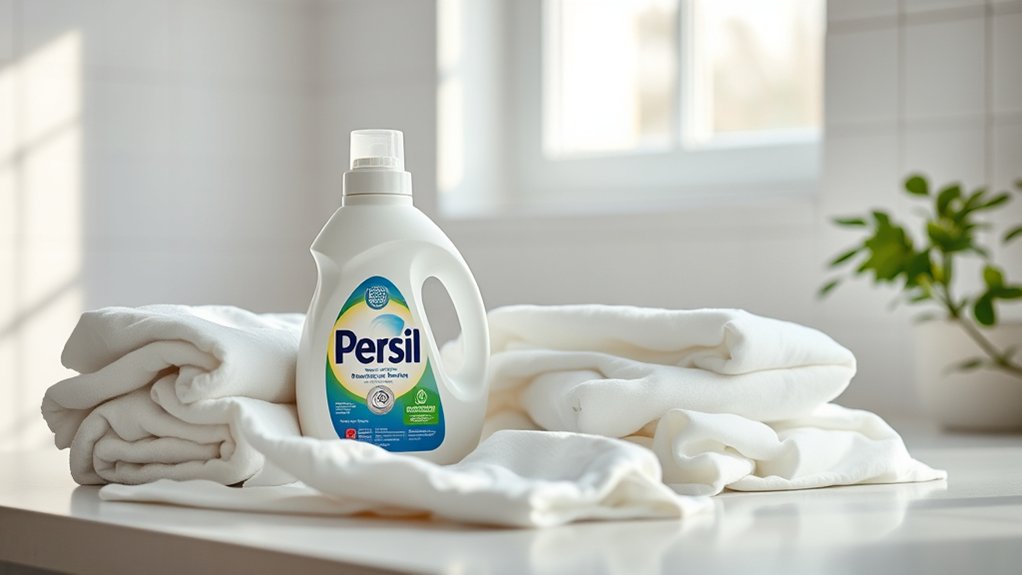
Liquid formulas often rinse cleaner, which can leave less residue on sensitive skin.
Sensitive Skin Formulas
Although many detergents can irritate sensitive skin, Persil offers specific formulas designed to minimize this risk. The Persil Free & Clear formula is free of dyes and fragrances, reducing the chance of irritation.
Users with sensitive skin often report positive experiences with the Persil Sensitive formula, highlighting its mildness combined with effective cleaning power.
Both formulas are crafted to minimize allergens, making them suitable for households with skin sensitivities. While some Persil products feature scents, those prone to irritation usually prefer the unscented options to avoid reactions.
To protect your skin, it’s essential to follow dosing instructions carefully, as excessive detergent can leave residue that may cause irritation.
Allergen Considerations
Anyone with sensitive skin needs to evaluate allergen content when choosing a detergent like Persil.
The Persil Sensitive formula is specifically designed to be mild and suitable for sensitive skin, as it excludes added fragrances and dyes, reducing allergenic potential.
However, some users report allergic reactions to the scent in Persil’s standard formulas, so if you’re prone to irritation, you should proceed cautiously.
Your skin’s response may also depend on factors like local water quality and how thoroughly you rinse clothes, since detergent residues can cause irritation.
To minimize allergen exposure, choose fragrance- and dye-free Persil variants and rinse garments well.
This approach helps balance effective cleaning with reduced risk of skin reactions, making Persil Sensitive a preferable option for those with sensitivities.
Fragrance Impact
How does fragrance affect the suitability of Persil formulas for sensitive skin? Fragrance can trigger allergic reactions, making some Persil versions less ideal for sensitive skin. If you’re sensitive, choosing the right formula matters.
The Persil ProClean Sensitive Skin formula is fragrance-free and hypoallergenic, designed specifically for you.
Also, your water type influences residue and scent retention. Lower doses in soft water can reduce irritants.
However, some original Persil formulas leave a sticky residue on natural fabrics, potentially irritating sensitive skin, though synthetic fibers may react differently.
- Persil ProClean Sensitive Skin: fragrance-free, hypoallergenic
- Original formulas: may leave residue on natural fabrics
- Soft water conditions: allow effective cleaning with less residue
- Fragrance level varies, affecting skin sensitivity differently
Careful formula selection is key for minimizing fragrance impact.
What Do Users Say About Persil and Skin Sensitivity?
What do users reveal about Persil’s impact on skin sensitivity? Many acknowledge Persil’s strong cleaning power but highlight sensitivity issues, particularly with its pronounced fragrance.
Some report allergic reactions and discomfort linked to the scent, prompting them to seek milder detergent options.
Additionally, users note that leftover sticky residue on cleaning rags, especially synthetic fabrics, can cause skin irritation.
Your experience may also depend on local water quality; those in soft water regions often use lower Persil doses without irritation, suggesting water conditions influence sensitivity.
How Water Quality Affects Persil’s Mildness and Residue
Local water conditions also affect how much detergent remains on your clothes after washing.
Water Hardness Impact
Although Persil is formulated for effective cleaning, the hardness of your water plays a crucial role in determining both its mildness and the amount of residue left on fabrics.
Hard water contains minerals like calcium and magnesium that interfere with detergent performance, often requiring you to use more Persil to achieve the desired cleanliness.
This increased dosage can lead to more residue buildup, which some users report as reducing the detergent’s mild feel.
Conversely, softened water helps Persil work efficiently at lower doses, reducing residue risks.
Consider these impacts of water hardness on Persil’s performance:
- Hard water demands higher detergent amounts for effective cleaning
- Mineral deposits in hard water may increase fabric residue
- Softened water allows for less detergent and fewer suds
- Local water chemistry requires tailored detergent usage for best results
Residue Formation Factors
Since water quality directly influences how Persil interacts with fabrics, understanding residue formation factors is essential for optimizing its mildness and cleaning performance.
Hard water, rich in minerals, often requires you to use larger doses of Persil to clean effectively, but this can increase residue buildup on fabrics, especially natural fibers.
Conversely, if you have soft water, you’ll likely need less detergent, which reduces suds and residue formation.
Residue issues don’t stem solely from Persil’s formulation; the mineral content in your water plays a significant role.
Using incorrect doses, either too much or too little, can lead to ineffective cleaning and sticky residue, regardless of the detergent.
Adjusting Persil amounts based on your local water hardness and soil levels helps maintain its mildness and prevents unwanted buildup.
How to Use Persil Without Causing Irritation or Residue
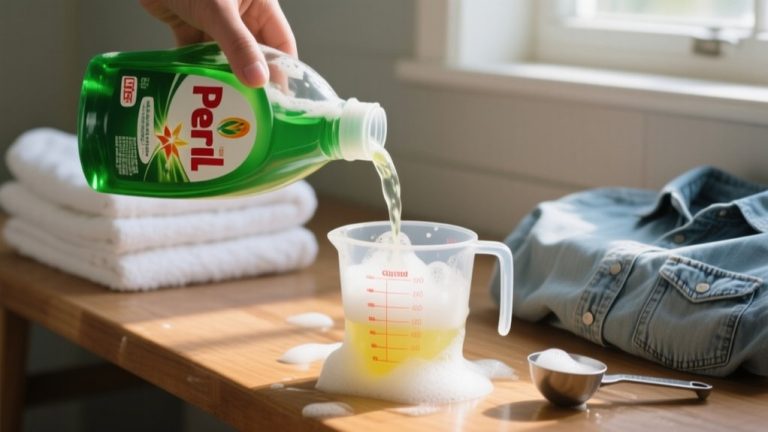
When aiming to use Persil without causing skin irritation or fabric residue, start by adjusting the detergent amount according to your water quality and load size. You should begin with a lower dose if you have sensitive skin or allergies, then adjust based on washing results.
Consider these tips:
Consider these tips to optimize detergent use and protect your skin and fabrics during washing.
- Measure detergent carefully to match load size and soil level to prevent residue.
- Increase dosage slightly in hard water areas to guarantee effective cleaning.
- Use Persil’s unscented or lightly scented variants to reduce allergic reactions.
- Rinse clothes thoroughly to remove any leftover detergent and minimize irritation.
Frequently Asked Questions
Can Persil Remove Stains Without Pre-Soaking Clothes?
Yes, Persil can remove stains without pre-soaking clothes. It works quickly and effectively on common stains, especially in soft water.
Adjusting the dosage based on soil levels can help optimize its cleaning performance.
Is Persil Safe for Use in High-Efficiency Washers?
Yes, you can safely use Persil in high-efficiency washers. It produces fewer suds and helps prevent residue build-up, but you should still use a lower dose and adjust the amount based on your local water hardness for the best cleaning performance.
How Does Persil Perform on Different Fabric Types?
Persil is suitable for synthetic and natural fabrics, but results can vary by fabric type and water quality. Dose it carefully to help avoid sticky residue on cleaning rags.
For the best residue-free results, follow the dosage directions closely and adjust if your water is hard or soft.
Does Persil Have Any Environmental Certifications?
No, Persil doesn’t prominently display recognized environmental certifications like EPA Safer Choice or EU Ecolabel. It does use some biodegradable ingredients, but you should verify eco-claims carefully. If certifications matter to you, consider alternatives.
Can Persil Be Used for Hand Washing Clothes?
Yes, Persil can be used for hand washing clothes if you dilute it well in warm water and use less than you would in a machine. Rinse thoroughly afterward to help prevent residue on the fabric.
Conclusion
When choosing a detergent, you want to avoid adding fuel to the fire if you have sensitive skin. Persil offers several mild formulas that balance effective cleaning with gentle ingredients, making it a solid choice for many users.
However, water quality and proper use play vital roles in minimizing irritation and residue. By understanding these factors, you can confidently use Persil without worrying about harsh effects, ensuring your laundry routine stays smooth and irritation-free.