What Is The Best Disinfectant For Laundry? – Meaning & More
You want a laundry disinfectant that kills 99.9% of bacteria, is safe on all fabrics, and works effectively in your washing machine. Chlorine bleach is the gold standard but can damage colors and delicates.
Lysol Laundry Sanitizer offers broad germ elimination without fabric harm, working well in cold water across all machine types. Alternatives like hydrogen peroxide are milder but less potent.
Understanding these factors guarantees peak hygiene and fabric care as you explore best practices.
Key Takeaways
- Chlorine bleach is the most effective disinfectant, killing a broad spectrum of germs but can damage colored and delicate fabrics.
- Lysol Laundry Sanitizer kills 99.9% of bacteria, is safe for all fabrics, works in cold water, and deodorizes laundry.
- Hydrogen peroxide is a gentler alternative but less effective in cold washes and on heavily soiled items.
- Using two capfuls of sanitizer during the rinse cycle with warm water ensures optimal bacterial elimination.
- Machine type and cycle settings affect disinfectant performance; front loaders with agitators maximize chlorine bleach effectiveness.
Why Laundry Sanitizing Matters for Your Health
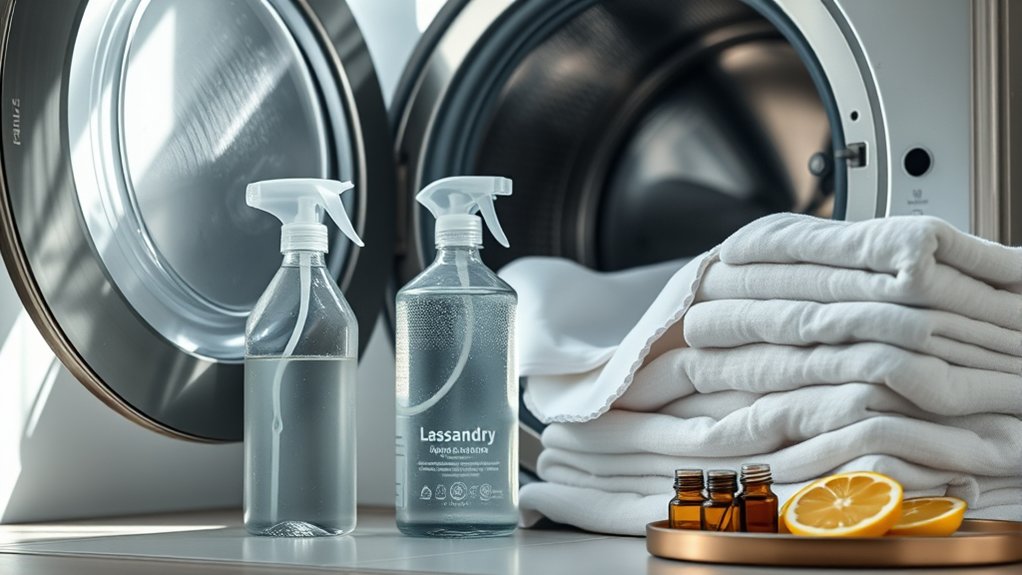
Although regular washing removes visible dirt, it doesn’t always eliminate harmful bacteria and germs that can persist on fabrics for hours to weeks. You need a reliable laundry sanitizer to kill bacteria effectively, especially on items like towels, sheets, and children’s clothing.
Regular washing removes dirt but not all bacteria; use a laundry sanitizer for effective germ elimination.
These pathogens pose a significant health risk, particularly for individuals with weakened immune systems. Disinfect laundry by incorporating products such as Lysol Laundry Sanitizer, which reduces bacteria by 99.9%, providing enhanced protection during cold and flu seasons.
While bleach is the gold standard for disinfection, it can damage delicate fabrics, making alternatives like hydrogen peroxide and vinegar valuable for safe sanitizing.
Utilizing sanitize cycles and appropriate detergents further improves hygiene, ensuring your fabrics are both clean and safe for daily use.
Chlorine Bleach: The Laundry Disinfectant Benchmark
You’ll find chlorine bleach is really effective at getting rid of a wide range of germs, as long as you use the right concentration.
Just be careful when using it on colored or delicate fabrics because bleach can cause fading and damage.
Effectiveness Against Germs
Because chlorine bleach consistently kills a broad spectrum of germs and pathogens, it remains the benchmark disinfectant for laundry.
When used at a recommended dosage of 1/2 cup per large load, chlorine bleach demonstrates superior germicidal efficacy, often outperforming alternatives like Lysol laundry sanitizer, which also claims to kill 99.9% of bacteria.
Its effectiveness depends on the washing machine type; for example, older Whirlpool machines with agitators facilitate ideal bleach dispersion and disinfection.
However, in modern Samsung HE top loaders without agitators, chlorine bleach shows minimal germ-killing results, emphasizing the interaction between disinfectant and machine design.
Understanding these variables helps you maximize chlorine bleach’s disinfecting power while recognizing its limitations, ensuring you choose the best method for thorough laundry sanitization.
Fabric Compatibility Issues
When you choose chlorine bleach as your laundry disinfectant, you must consider its compatibility with different fabrics to avoid damage. Bleach is highly effective at sanitizing laundry but can cause significant fading and deterioration in colored or delicate fabrics.
To prevent this, never apply bleach directly to these materials. Instead, add the recommended 1/2 cup of bleach to the designated bleach compartment, not the fabric softener compartment. This guarantees proper dilution and distribution during the wash cycle.
Keep in mind that bleach performs best in front-loading or traditional top-loading machines with agitators, which mix the solution well to sanitize laundry effectively.
Some high-efficiency machines may yield minimal disinfecting results, so you might need alternative methods for safe fabric care.
Why Lysol Laundry Sanitizer Is Effective Against Germs
You’ll find Lysol Laundry Sanitizer kills 99.9% of bacteria, including tough strains like Staphylococcus aureus, so it’s really effective for germ control.
To get the best results, just add two capfuls to the fabric softener compartment or during the rinse cycle. Make sure your rinse lasts at least 16 minutes to give it enough time to work.
The great thing is, it’s safe to use on all kinds of fabrics, even delicates and colored clothes.
Plus, it works well in cold water and doesn’t require bleach, which makes it super convenient.
Germ Killing Power
How does Lysol Laundry Sanitizer achieve its high germ-killing efficacy? As an EPA-registered disinfectant, it eliminates 99.9% of bacteria, including resilient strains like Staphylococcus aureus and Klebsiella pneumoniae. This level of effectiveness makes it a trusted choice for sanitizing laundry.
Its formulation works efficiently in cold water, supporting energy-saving washing without compromising germ-killing power. You can use it safely on both colored and white fabrics, as it acts as a bleach alternative without damaging fibers.
By adding it during the rinse cycle, Lysol Laundry Sanitizer guarantees thorough disinfection.
Beyond bacteria elimination, it also deodorizes fabrics, leaving a fresh scent. This precise combination of broad-spectrum bactericidal action and fabric safety underscores its superior germ-killing power in laundry disinfection.
Usage Instructions
Although Lysol Laundry Sanitizer targets 99.9% of bacteria, including tough strains like Staphylococcus aureus and Klebsiella pneumoniae, its germ-killing effectiveness depends heavily on proper usage. You should add two capfuls to the fabric softener compartment or during rinse cycles, never mixing it with detergent.
It works efficiently in cold water, making it a safe alternative to bleach for colored and white fabrics. A rinse cycle of at least 16 minutes maximizes sanitation by guaranteeing thorough contact time.
| Step | Action | Importance |
|---|---|---|
| 1 | Add sanitizer to fabric softener | Prevents dilution by detergent |
| 2 | Use cold water | Maintains fabric integrity |
| 3 | Set rinse cycle to 16 minutes | Guarantees effective germ elimination |
| 4 | Avoid mixing with detergent | Preserves sanitizer’s antimicrobial activity |
| 5 | Use regularly | Supports consistent hygiene |
Fabric Compatibility
Proper usage of Lysol Laundry Sanitizer guarantees its germ-killing power is fully realized, but its effectiveness also depends on how well it interacts with various fabric types. This product demonstrates superior fabric compatibility, being safe to use on delicates, colored items, workout clothes, sheets, towels, and baby clothes.
Unlike bleach, it avoids fabric damage or fading, preserving the integrity of textiles during laundry using. Its EPA-registered formula kills 99.9% of bacteria, such as Staphylococcus aureus and Klebsiella pneumoniae, even in cold water, ensuring thorough sanitization without compromising fabric quality.
The gentle yet potent composition makes Lysol Laundry Sanitizer ideal for sensitive skin and households with pets or recovering individuals. It provides a scientifically validated balance between effective germ elimination and fabric safety.
Can Hydrogen Peroxide and Other Sanitizers Replace Bleach?
Why consider hydrogen peroxide or other sanitizers as alternatives to bleach? You might seek less harsh options for delicate fabrics or environmental reasons.
However, hydrogen peroxide at 3% concentration shows limited bacterial efficacy in cold washes and doesn’t match bleach’s germ-killing power.
While it can serve as a natural laundry disinfectant, its performance declines in heavily soiled loads or short cycles.
Other sanitizers like vinegar and pine oil are even less effective, primarily addressing minor bacterial presence rather than serious pathogens.
Lysol Laundry Sanitizer reduces bacteria but requires warm water and detergent to approach bleach’s effectiveness.
How Washing Machines Impact Laundry Disinfectant Performance
When selecting a disinfectant for laundry, you also need to take into account how your washing machine affects its performance. Different machines impact disinfectant efficacy, especially with chlorine bleach, the gold standard for germ killing.
Consider these factors:
- Machine Type: Front loaders and top loaders with agitators enhance bleach effectiveness, unlike some Samsung HE top loaders where bleach underperforms.
- Sanitize Cycle: While designed to increase cleanliness, this cycle doesn’t match chlorine bleach’s germicidal power but supports disinfection when combined with effective laundry detergent.
- Wash Conditions: Warmer water and longer cycles optimize disinfectant action, essential for eliminating bacteria effectively.
Understanding your machine’s compatibility with disinfectants helps you maximize laundry hygiene without damaging fabrics or compromising cleaning power.
Detergents and Additives That Reduce Laundry Bacteria
Although chlorine bleach remains the benchmark for disinfecting laundry, its limitations with colored and delicate fabrics mean you’ll often need alternative detergents and additives.
Lysol Laundry Sanitizer offers a robust option, killing 99.9% of bacteria and working effectively in both standard and HE machines.
In contrast, detergents like Kirkland Free and Clear show negligible bacteria reduction, underscoring the importance of additives in disinfecting laundry.
OdoBan, combined with Tide Free and Clear during a sanitize cycle, yields some bacterial reduction but lacks strong efficacy.
Hydrogen peroxide and OxiClean demonstrate minimal germ-killing power, reinforcing that most detergents alone don’t achieve significant disinfection.
To optimize laundry hygiene, select detergents with proven antibacterial additives or use specialized sanitizers when bleach isn’t suitable for your fabrics.
How to Use Laundry Sanitizers Safely and Effectively
Selecting an effective laundry sanitizer is only part of guaranteeing hygienic laundry. Applying it correctly determines its success in eliminating bacteria.
To sanitize your laundry effectively, especially during cold and flu seasons, follow these steps precisely:
- Add the recommended dose, usually two capfuls, to the fabric softener compartment or during the rinse cycle wash. This helps maximize sanitizer efficacy without interacting with detergents.
- Pre-soak heavily soiled items to reduce microbial load before washing. This step enhances sanitizer performance.
- Use the warmest water safe for fabrics and consider the machine’s sanitizing or extra rinse cycles. These help ensure thorough germ elimination.
Tips for Choosing the Right Laundry Disinfectant for You
Because laundry disinfectants vary widely in composition and application, choosing the right one requires careful evaluation of your specific needs.
First, assess fabric compatibility. Chlorine bleach offers superior disinfection but can damage delicate textiles. So, opt for gentler agents like hydrogen peroxide or white vinegar when necessary.
Use the dosing cup provided to measure the precise amount of disinfectant, ensuring efficacy without fabric harm. Follow manufacturer instructions carefully. They often recommend adding disinfectants during the rinse cycle or via the fabric softener compartment to optimize performance.
For sensitive skin or allergies, select hypoallergenic or natural sanitizers. Incorporate an extra rinse cycle to remove residual chemicals, enhancing safety and comfort.
Finally, wash with warm water when possible, as elevated temperatures increase germ-killing efficiency and improve overall disinfection outcomes.
Frequently Asked Questions
Can I Use Laundry Disinfectants on Delicate Fabrics Like Silk?
You can use laundry disinfectants on delicate fabrics like silk, but only if you follow the manufacturer’s guidelines carefully.
Avoid mixing disinfectants with detergents to prevent fabric damage, and never use bleach-based products.
Conduct a patch test on a hidden section to check for adverse effects on color or texture.
Opt for disinfectants labeled safe for delicates, adding them during the rinse cycle to protect silk’s integrity and appearance.
Do Laundry Sanitizers Remove Odors as Well as Bacteria?
Yes, laundry sanitizers remove odors as well as bacteria. They contain active ingredients that kill 99.9% of bacteria and neutralize odor-causing compounds.
When you use them alongside regular detergents, they enhance both sanitization and deodorization. This dual action is especially effective for workout clothes or pet bedding.
To maximize odor removal and bacteria reduction, you should follow the manufacturer’s dosage and usage instructions precisely.
Are Laundry Disinfectants Safe for Septic Systems?
Yes, many laundry disinfectants are safe for your septic system if you use them as directed.
You should avoid bleach-based products in large amounts since they harm beneficial bacteria essential for septic function.
Liquid sanitizers tend to be gentler on septic systems compared to powders with fillers.
Always follow dosage instructions carefully to guarantee effective disinfection without disrupting your septic balance, helping maintain system longevity and proper operation.
How Do Laundry Sanitizers Affect the Color of Clothes?
Think of your clothes’ colors as delicate paintings; laundry sanitizers can either preserve or alter their vibrancy.
Most specialized sanitizers, like Lysol Laundry Sanitizer, maintain hues without fading when used correctly.
However, harsh agents like chlorine bleach can strip colors, like harsh sunlight bleaching a canvas.
Alternatives like hydrogen peroxide and vinegar offer safer options but may still subtly lighten fabrics.
Always test on a hidden spot to safeguard your clothes’ true colors.
Can Laundry Disinfectants Be Used in Hand Washing?
Yes, you can use laundry disinfectants in hand washing by adding the recommended amount to your wash water.
You need to follow product instructions carefully for dilution and contact time to guarantee effective germ elimination.
Make sure the disinfectant suits your fabric type to avoid damage or discoloration.
After soaking, rinse thoroughly to remove any chemical residues that might irritate your skin.
This method is ideal for delicate or non-machine washable items.
Conclusion
When it comes to disinfecting your laundry, you can’t put all your eggs in one basket. Chlorine bleach remains the gold standard, but Lysol and hydrogen peroxide offer effective alternatives, especially for sensitive fabrics.
Your washing machine and detergent also play key roles in eliminating bacteria. By understanding these factors and using sanitizers correctly, you’ll guarantee your clothes are not only clean but truly germ-free, safeguarding your health with precision and care.