How To Use Powder Laundry Detergent In Front Loader – Guide
To use powder laundry detergent in your front loader, always check garment care labels first. Add the detergent directly to the drum, not the dispenser, for full dissolution.
Measure carefully, about ½ tablespoon for HE machines, and adjust for load size and soil. Use water at least 60°F to dissolve powder effectively. Consider water hardness and increase detergent if needed.
Store powder in a sealed, dry place below 80°F. Keep these tips in mind to guarantee great cleaning results and machine care as you explore more detailed advice.
Key Takeaways
- Add powder detergent directly into the drum before loading clothes, not in the dispenser drawer, for complete dissolution.
- Measure detergent accurately, typically 1/2 tablespoon for HE washers, adjusting for load size and soil level.
- Use water at least 60°F to ensure proper powder detergent dissolution and optimal cleaning.
- Pre-soak heavily soiled clothes in warm water with detergent to improve stain removal before washing.
- Store powder detergent in a cool, dry place below 80°F with a tightly sealed container to prevent clumping and maintain effectiveness.
Checking Fabric Care Labels Before Using Powder Detergent
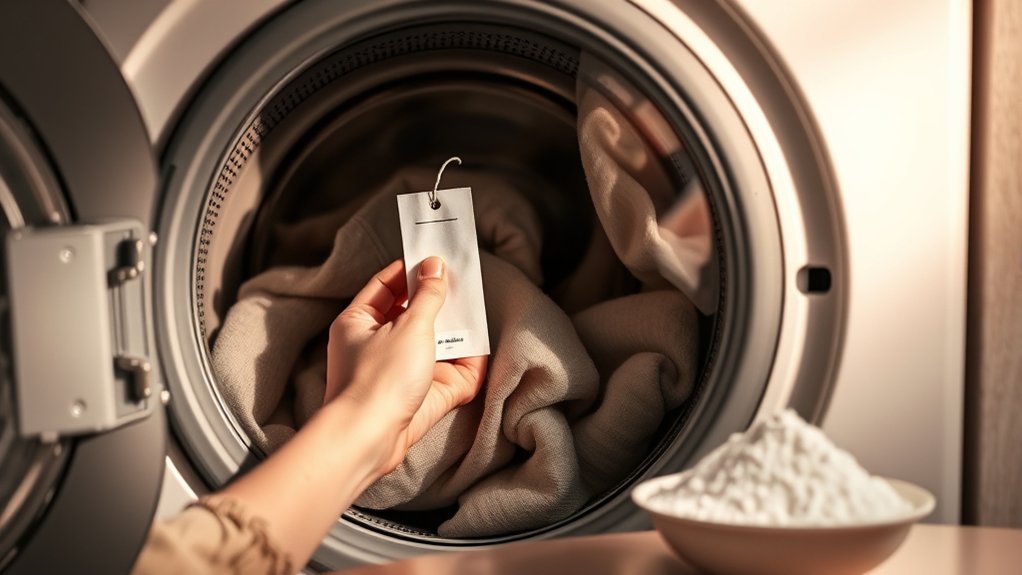
Before using powder laundry detergent, you should always check the fabric care labels on your clothes. These labels provide essential information about washing temperatures and detergent types suitable for each fabric. You’ll find symbols indicating whether the garment can handle machine washing and if powdered detergent is appropriate.
Delicate fabrics often require gentler care; many labels recommend liquid detergents to avoid damage. Also, watch for warnings about bleaching agents, which some powder detergents contain. These can harm colors and fabric integrity.
Delicate fabrics need gentle care; liquid detergents are often safer, as some powders contain bleaching agents that can damage colors.
By carefully reading fabric care labels, you guarantee you select the right washing temperatures and appropriate detergent choices, protecting your clothes while maximizing cleaning efficiency.
This step helps avoid costly mistakes and keeps your laundry routine effective and safe.
Where to Put Powder Detergent in Front Loaders
Once you’ve confirmed your clothes can handle powder detergent, the next step is knowing exactly where to add it in your front-loading washing machine.
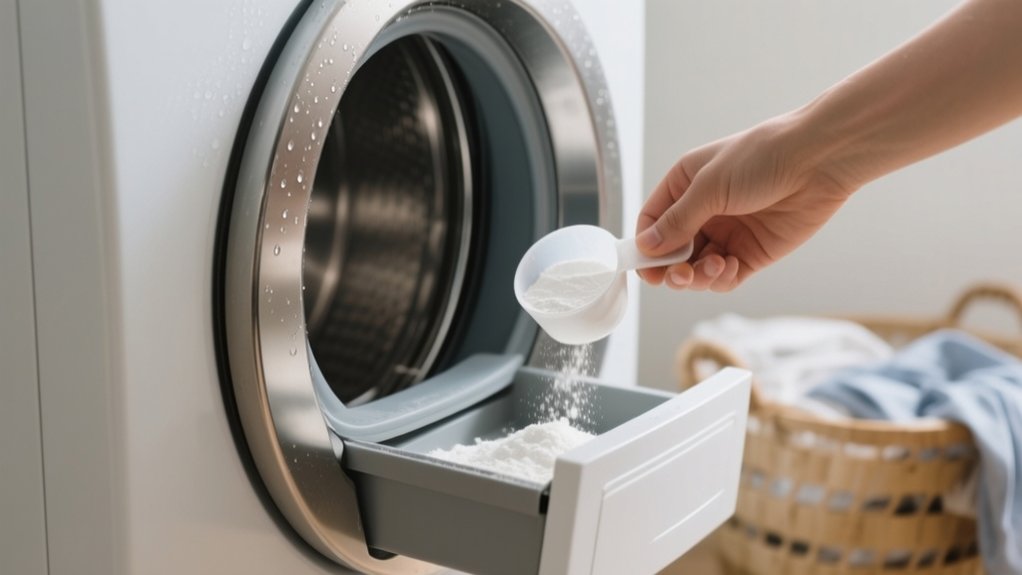
For front-loading machines, you should add the powder detergent directly into the drum before loading your clothes. This guarantees the powder dissolves completely during the wash cycle, preventing clumps or buildup that often occur if placed in the dispenser drawer, which is usually designed for liquid detergents.
Make sure your washing machine is set to at least 60°F (15.56°C) to maximize powder effectiveness.
Always follow fabric care instructions, as most fabrics tolerate powder detergent well. By adding powder detergent directly to the drum, you optimize cleaning performance and protect your garments throughout the wash.
Measuring Powder Detergent for Front Loaders
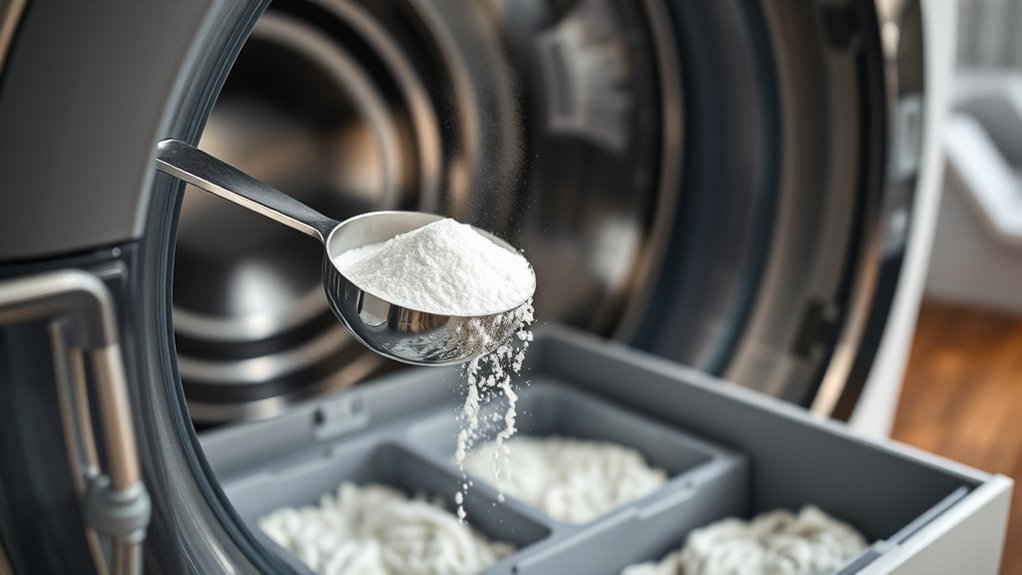
You should always measure powder detergent according to your front loader’s manufacturer guidelines.
Usually, that’s about 1/2 tablespoon for HE washers.
Just remember to adjust the amount based on your load size and how dirty your clothes are.
This way, you avoid using too much detergent or not enough to get your clothes clean.
Doing this guarantees the best results without wasting detergent or damaging your machine.
Accurate Dosage Guidelines
Accurate measurement plays an essential role in getting the best results from your front-loading washer. For powder detergent, use an accurate dosage to optimize cleaning and avoid residue.
In a front loader, 1/2 tablespoon suits high-efficiency (HE) machines, while standard washers require about 1 tablespoon. Adjust the amount if your clothes are heavily soiled but avoid overusing detergent.
Always add powder detergent directly into the drum before loading clothes to guarantee it dissolves properly. Maintain a water temperature of at least 60°F (15.56°C); this helps the powder detergent dissolve effectively and enhances cleaning performance.
Check your machine’s manual for any specific instructions, as some models may have designated compartments for powder detergent.
Following these guidelines assures efficient washing and prolongs your washer’s life.
Adjusting For Load Size
Although front-loading washers require smaller amounts of powder detergent, adjusting the quantity based on your load size ensures ideal cleaning. You’ll want to measure detergent accurately to guarantee it fully dissolves during the cycle.
For typical front loaders (3.1–4 cu. ft.), use about 1/2 tablespoon for HE washers and 1 tablespoon for standard machines, then tweak amounts for soil level and water hardness. Here’s a quick guide:
| Load Size | Detergent Amount (HE) | Detergent Amount (Standard) |
|---|---|---|
| Small (≤8 lbs) | 1/4 tablespoon | 1/2 tablespoon |
| Medium (8-12 lbs) | 1/2 tablespoon | 1 tablespoon |
| Large (12-16 lbs) | 3/4 tablespoon | 1 1/2 tablespoons |
Adjust detergent accordingly to optimize laundry results and protect your washing machines.
How to Choose the Best Water Temperature for Powder Detergent
Choosing the right water temperature really makes a difference in how well your powder detergent cleans and takes care of your clothes.
It’s important to check the fabric care labels and match the temperature accordingly. At the same time, you want to be mindful of energy use to keep things efficient.
By understanding these simple guidelines, you can get the best cleaning results without wasting energy or harming your fabrics.
It’s all about finding that perfect balance!
Temperature Impact On Cleaning
When you pick the right water temperature for your powder detergent, you not only boost cleaning efficiency but also protect your clothes.
Cold water preserves delicate fabrics and colors but may struggle with tough dirt stains.
Warm water, between 90°F and 110°F, hits the sweet spot, offering strong cleaning power for most daily grime while being gentle enough for regular use.
Hot water, at 130°F or above, excels at removing heavy dirt stains but can damage fabrics if used too often and wastes energy.
Keep in mind, powder detergent needs at least 60°F to dissolve properly and work effectively.
If your machine’s cold setting doesn’t reach this, cleaning suffers.
Always balance temperature with fabric needs for ideal results.
Fabric Care Temperature Guidelines
How do you determine the best water temperature for washing your clothes with powder detergent?
First, always check the fabric care labels to pick the right water temperatures. Cold water suits delicate fabrics, preventing shrinkage and color fading, while warm water (90°F to 110°F) handles everyday stains effectively.
Hot water (130°F and above) works for heavily soiled items but use it sparingly to protect fabrics. For ideal results, make sure the water is at least 60°F so the powder detergent dissolves properly and cleans effectively.
Also, consider water hardness, as it affects detergent performance.
Adjusting water temperature not only improves cleaning efficiency but also preserves your clothes’ quality, ensuring you get the best from your powder detergent every wash.
Energy Efficiency And Temperature
Although higher water temperatures can boost cleaning power, you’ll save energy and protect your clothes better by selecting the right temperature for your load.
Choosing ideal water temperatures improves energy efficiency and guarantees your powder detergent dissolves effectively, especially in high-efficiency washers.
Here’s what to keep in mind:
- Use at least 60°F (15.56°C) water for proper powder detergent activation.
- Cold water preserves delicate fabrics and colors while saving energy.
- Warm water (90°F–110°F / 30°C–40°C) works well for everyday stains.
- Reserve hot water (130°F / 55°C+) for heavily soiled items, but check fabric care labels to avoid damage.
Ensuring Powder Detergent Fully Dissolves in Front Loaders
To make sure your powder detergent fully dissolves in a front-loading washer, add it directly to the drum before loading your clothes so water can reach it immediately. This method helps the detergent activate right away, preventing residue buildup.
Always select a wash cycle with enough water to fully dissolve and wash your laundry effectively, as low water levels can leave undissolved powder.
Use water temperatures of at least 60°F (15.56°C) or warmer since most powder detergents require this to dissolve properly and maximize cleaning power.
Avoid putting powder detergent in the dispenser drawer; it’s designed for liquids and may cause clogs or odors if the powder doesn’t dissolve.
If you notice undissolved detergent, try increasing the water level or adjusting the wash cycle temperature to improve dissolution.
Pre-Soaking Heavily Soiled Clothes
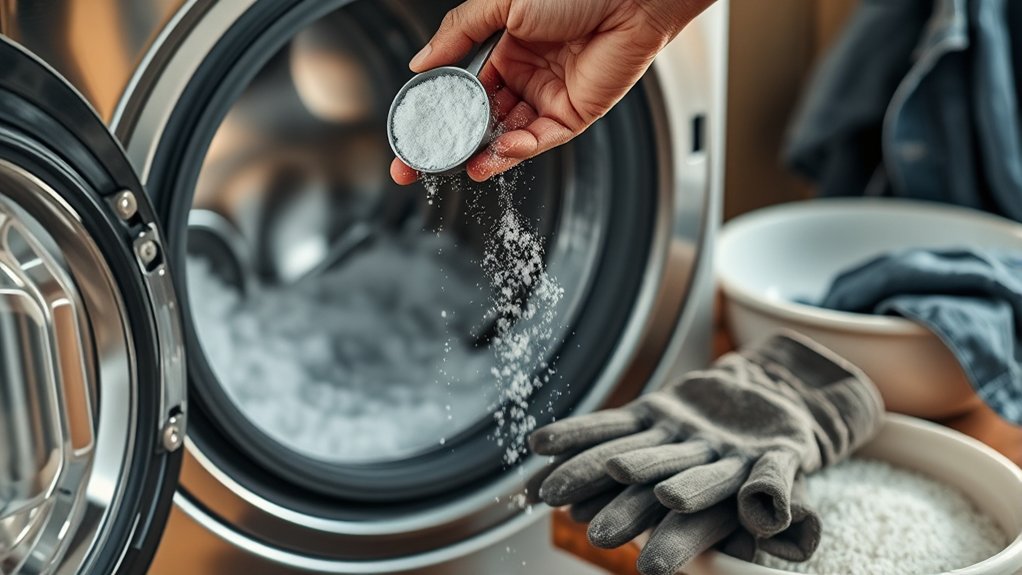
When dealing with heavily soiled clothes, you’ll want to dissolve powder detergent in warm water first to guarantee it fully activates. This step boosts the cleaning power during your pre-soak, loosening dirt and stains effectively.
Here’s how to do it right:
Use warm water at least 60°F (15.56°C) to enhance detergent activation. Dissolve about 1 tablespoon of powder detergent per gallon of water. Soak heavily soiled garments in the solution for around one hour.
After soaking, wash clothes in your front loader following the manufacturer’s guidelines.
Pre-soaking with powder detergent in warm water assures better stain removal and prepares your clothes for a thorough wash cycle. This simple step maximizes the detergent’s effectiveness on tough stains.
How Water Hardness Impacts Powder Detergent Cleaning
Pre-soaking your clothes properly sets the stage for effective cleaning, but the quality of your water also plays a significant role in how well powder detergent performs.
Water hardness, caused by minerals like calcium and magnesium, can reduce cleaning efficiency by reacting with powder detergent to form soap scum. This residue not only hampers stain removal but may leave fabrics dull.
To combat hard water, many powdered detergents include washing soda, which softens the water and prevents mineral buildup.
If you live in an area with hard water, you should increase your detergent dosage to maintain ideal cleaning performance.
Testing your water hardness helps you adjust the detergent amount accurately, ensuring your laundry comes out fresh and spotless every time despite challenging water conditions.
Storing and Handling Powder Detergent Safely
Properly storing and handling powder detergent involves a few key steps that keep it effective and safe to use.
To store powder detergent correctly, you should:
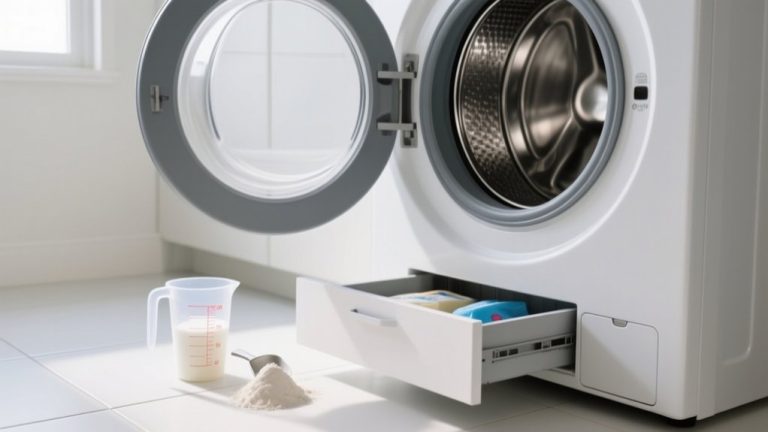
To store powder detergent correctly, keep it cool, dry, sealed, and use a dry scoop.
Keep the detergent in a cool, dry place, ideally below 80°F. This helps prevent clumping and keeps its cleaning power strong.
Always make sure the container is tightly sealed to protect it from moisture and pests.
Use a dry measuring scoop when handling detergent to avoid adding moisture that causes clumps.
Regularly check the expiration date to ensure peak performance, and discard any expired product.
Frequently Asked Questions
Can Powder Detergent Damage Front Loader Seals Over Time?
Yes, powder detergent can damage front loader seals over time if it doesn’t dissolve properly.
When undissolved powder builds up, it creates soap scum that sticks to seals, causing leaks and wear.
To avoid this, you should add powder directly to the drum and follow dosage instructions.
Also, clean the detergent drawer and seals regularly.
Staying on top of these steps helps protect your machine and keeps it running smoothly.
Is It Safe to Mix Powder Detergent With Liquid Fabric Softener?
Mixing powder detergent with liquid fabric softener isn’t safe or smart. They simply don’t sync well and can sabotage your suds.
Powder needs water to dissolve, while softener coats fabrics. Combining them may cause clumping, residue, or ineffective cleaning.
Instead, add powder detergent directly into the drum and pour fabric softener in its dedicated compartment.
Following these steps helps your washer work wonderfully without buildup or bad odors.
How Often Should I Clean the Detergent Dispenser in Front Loaders?
You should clean the detergent dispenser in your front loader at least once a month. This prevents buildup of detergent residue and mold, ensuring your machine works efficiently.
Use warm soapy water and a soft brush to scrub all compartments, then rinse thoroughly.
Don’t forget to check and clear any clogs in the drainage holes. Regular maintenance keeps your washer fresh and detergent flowing properly during each cycle.
Can I Use Powder Detergent for Delicate or Wool Fabrics?
You can definitely use powder detergent for delicate or wool fabrics, but treat it like a knight guarding a fragile treasure.
Use a gentle cycle and a smaller amount to avoid damage.
Make sure the powder fully dissolves before adding your items to prevent clumps.
Always check care labels and consider a formula made specifically for delicates or wool.
Doing a colorfastness test first helps protect your clothes from unexpected fading.
What Should I Do if Powder Detergent Causes Skin Irritation?
If powder detergent causes skin irritation, switch to a hypoallergenic or fragrance-free formula made for sensitive skin.
Always do a patch test before fully using a new detergent.
Use the right amount to avoid residue buildup, and rinse your clothes thoroughly after washing.
If irritation continues, consult a dermatologist. They can suggest specific brands or alternatives that suit your skin better.
Taking these steps helps protect your skin while keeping your laundry clean.
Conclusion
Using powder laundry detergent in your front loader is as easy as pie when you follow these simple steps. By checking care labels, measuring detergent correctly, and choosing the right water temperature, you’ll get your clothes sparkling clean without a hitch.
Remember to dissolve the powder fully and handle it safely to keep your washer and wardrobe in top shape. With these tips, your laundry routine will flow smoothly, like a well-oiled machine.