How To Use Liquid Laundry Detergent – Complete Guide
To use liquid laundry detergent effectively, measure the right amount with the cap or dosing ball based on your load and soil level. Pour it directly onto clothes in top-load washers or into the designated dispenser for front-load machines.
Pre-treat stains by applying detergent directly and letting it sit before washing. Adjust dosage for water hardness to avoid residue and guarantee cleanliness.
You can also follow specific tips for storage, proper washing, and stain removal to get superior results.
Key Takeaways
- Measure detergent accurately using the cap or dosing ball based on load size and soil level to avoid overuse and ensure effective cleaning.
- Pour liquid detergent directly into the washer drum for top-load machines or use the designated dispenser for front-load washers.
- Pre-treat stains by applying a small amount of detergent directly on the fabric and letting it sit for 5 to 10 minutes before washing.
- Adjust detergent dosage according to water hardness, increasing for hard water areas and reducing for soft water to prevent residue.
- Store liquid detergent in its original container, tightly sealed, away from children, pets, and direct sunlight to maintain quality and safety.
How to Use Liquid Detergent Step by Step
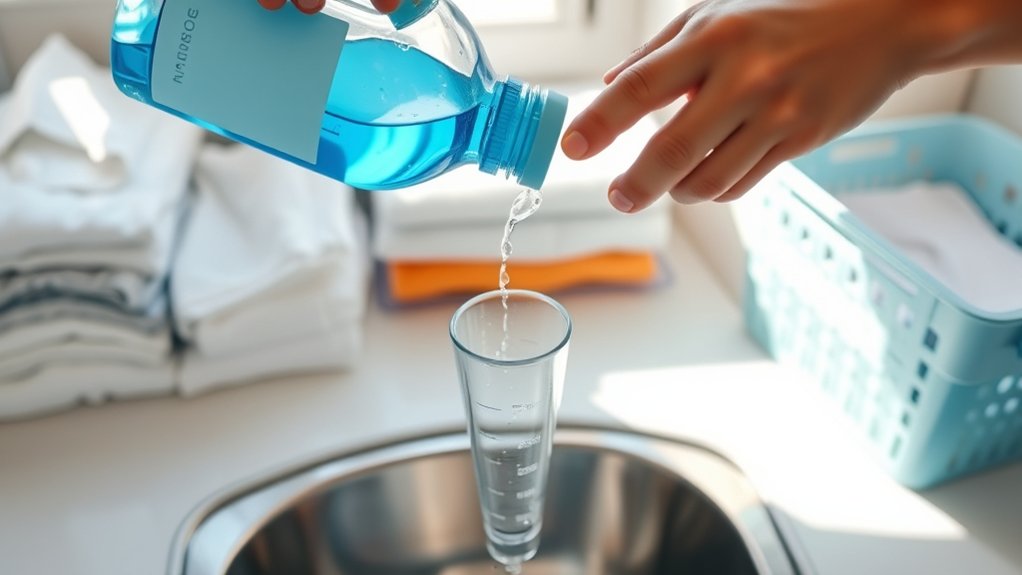
To use liquid detergent effectively, start by measuring the right amount with the cap or dosing ball, based on your load size and soil level.
Always follow the packaging guidelines to avoid overuse and guarantee ideal cleaning.
For heavily soiled clothes, apply a small amount of liquid laundry detergent directly onto the stain before placing the items in the washing machine.
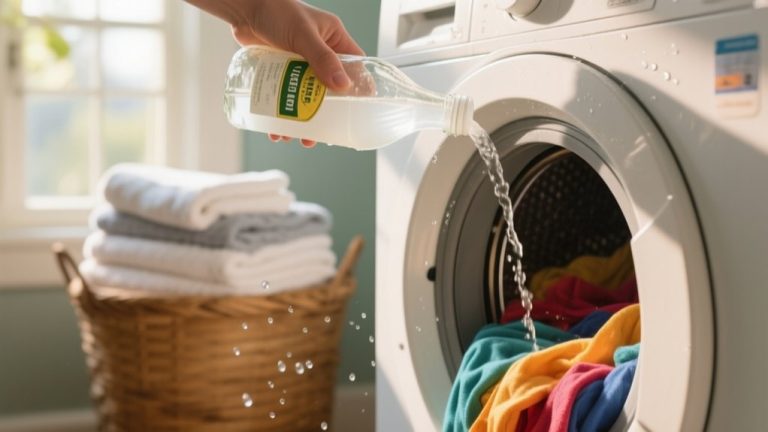
When you’re ready to wash, place the measured detergent directly on top of the clothes inside the washer drum for best results.
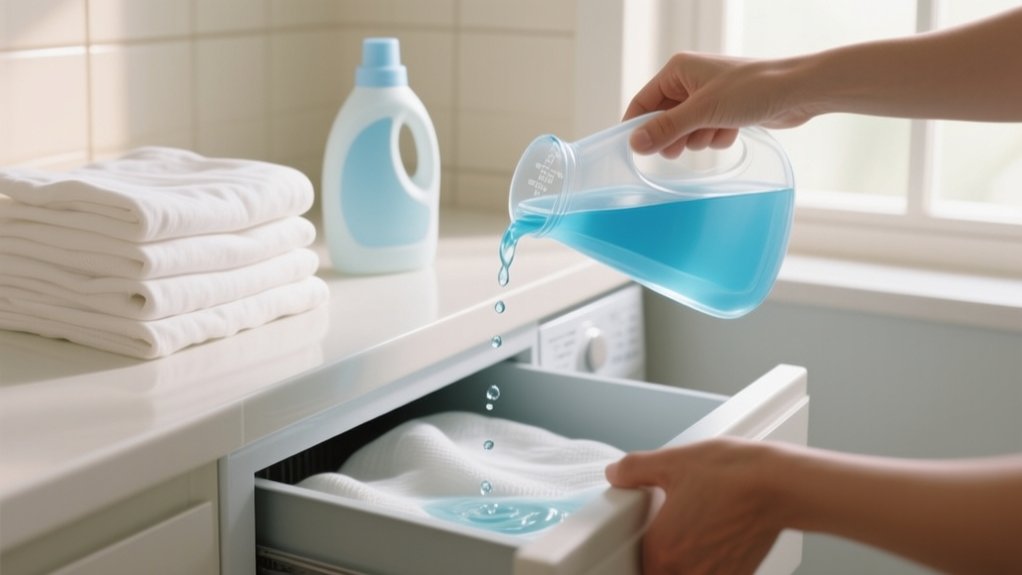
If you use a front-load washing machine, pour the liquid detergent into the designated dispenser compartment, not the drum.
This step-by-step method helps the detergent dissolve properly and maximizes cleaning efficiency every wash cycle.
How to Measure Liquid Detergent Accurately
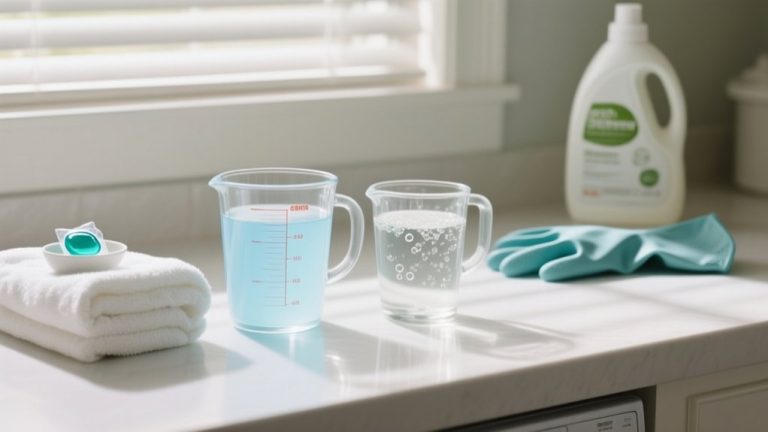
To measure liquid detergent accurately, start by using the measuring cap or a dosing ball that comes with your detergent. These tools are designed to help you pour just the right amount.
Next, think about the size of your load and how dirty your clothes are. You’ll want to adjust the amount accordingly, so be sure to follow the guidelines on the packaging.
By measuring carefully, you’ll avoid using too much or too little detergent.
That way, your clothes get cleaned properly without wasting product or leaving residue behind.
Measuring Tools Overview
Three essential tools can help you measure liquid laundry detergent accurately: the detergent cap, a dosing ball, and the packaging label.
Use the detergent cap as a built-in measuring cup to pour the correct amount based on load size and soil level.
If your detergent lacks a cap, a dosing ball serves as an effective alternative, with marked levels for precision. Always consult the detergent label for specific dosing instructions since formulations vary.
After measuring, toss the dosing ball or cap into the drum with your clothes to avoid residue buildup.
- Use the detergent cap as your primary measuring cup
- Follow the detergent label for recommended amounts
- Employ a dosing ball when no cap is included
- Discard measuring tools into the drum to prevent residue buildup
Dosage Based On Load
Anyone measuring liquid detergent should base the amount on the size and soil level of the load. Use the detergent cap or dosing ball to measure accurately, following the manufacturer’s guidelines tied to load size.
For regular, lightly soiled loads, about 1 ounce (30 mL) of detergent dosage is sufficient. Heavily soiled items may need up to 2 ounces (60 mL) for effective cleaning.
Always check the care labels on your clothing for specific washing instructions that could influence detergent use.
Furthermore, consider water hardness in your area. Hard water may require increasing your detergent dosage to maintain cleaning efficiency.
Adjusting For Soil Level
Measuring liquid detergent accurately depends not only on load size but also on the soil level of your laundry.
Adjusting for soil levels guarantees you use the recommended amount of detergent without waste or residue. Here’s how to tailor your detergent use:
For lightly soiled clothes, use the minimum recommended amount to avoid buildup.
Medium soil levels require a moderate dose, often marked on the dosing cap.
Heavily soiled items need the maximum recommended amount for effective cleaning.
Also, consider water hardness; in hard water areas, increase the liquid detergent slightly for best results.
Where to Put Liquid Detergent in Your Washer
Although washers vary in design, you should add liquid detergent differently depending on your machine type. For top-load washers, pour it directly into the drum after loading your clothes. Front-load machines require placing the detergent in the designated dispenser compartment as specified by the manufacturer.
Always measure the liquid detergent dosage using the provided cap or a measuring cup to prevent residue buildup. Here’s a quick reference:
| Washer Type | Detergent Location | Key Tip |
|---|---|---|
| Top-load | Washer drum | Add after loading clothes |
| Front-load | Dispenser compartment | Use correct dispenser slot |
| All types | Measuring device | Follow dosage instructions |
Check your detergent packaging for fabric-specific guidelines. Also, pre-treat stains with liquid detergent directly on fabric before washing.
Choosing the Right Amount of Detergent
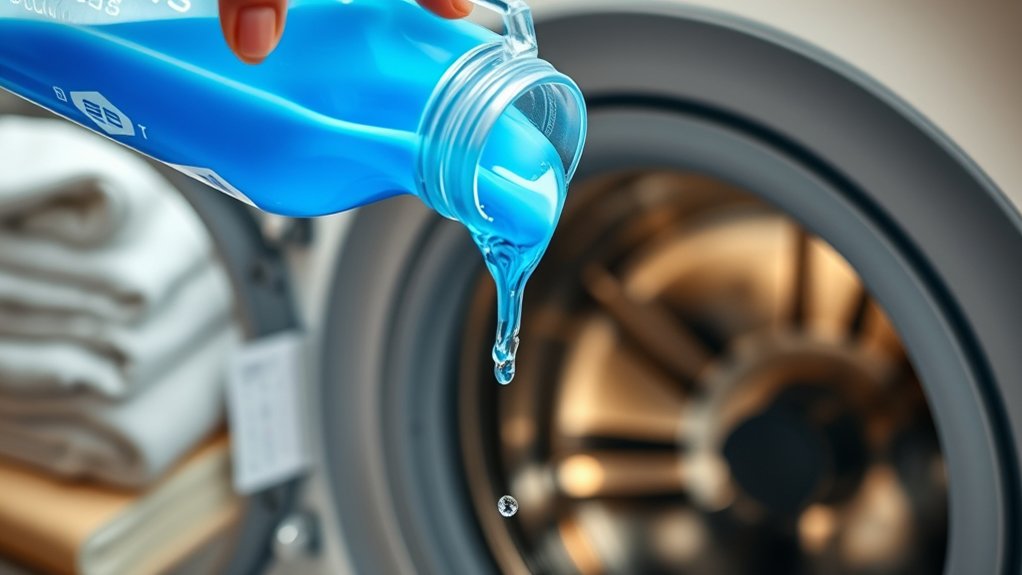
Because the right amount of detergent guarantees effective cleaning without residue buildup, you should tailor the dosage to your load size and washer type.
Using too much laundry detergent can leave residue, while too little may not clean properly.
Follow these tips to determine the correct detergent per load:
- Check the care label on your clothes for specific washing instructions.
- Adjust the amount of detergent based on load size; larger loads need more detergent.
- Use less detergent in high-efficiency (HE) washers to avoid over-sudsing.
- Increase detergent for heavily soiled items to tackle dirt and stains effectively.
Always consult the detergent packaging for precise dosing guidelines to optimize your wash results and protect your fabrics.
How Water Hardness Affects Detergent Use
You’ll want to adjust how much detergent you use depending on how hard your water is. That’s because minerals like calcium and magnesium can make your detergent less effective.
If you live in an area with hard water, you’ll probably need to use more detergent to get your clothes really clean and to avoid soap scum buildup.
Knowing the quality of your water can really help you figure out the right amount of detergent to use.
That way, you get better cleaning results and fresher clothes.
Impact On Detergent Dosage
When water contains high levels of minerals like calcium and magnesium, it influences how much detergent you should use. Hard water requires adjustments in detergent dosage to maintain cleaning efficiency.
Here’s what you need to know:
Increase liquid detergent by 1-2 tablespoons per load in hard water areas to combat mineral buildup.
Soft water allows you to reduce detergent dosage by about 25%, as it enhances lathering and cleaning.
Using too little detergent in hard water can leave residue, making clothes feel stiff or dingy.
Opt for high efficiency (HE) detergents, designed to perform well in both hard and soft water while minimizing excess suds.
Adjusting detergent dosage based on water hardness guarantees peak cleaning and fabric care every wash.
Hard Water Challenges
Although hard water poses unique challenges to laundry, understanding its effects helps you enhance detergent use for cleaner clothes. Hard water contains minerals like calcium and magnesium that reduce the effectiveness of liquid detergent by binding with its cleaning agents.
As a result, you’ll often need to use more detergent to achieve satisfactory cleaning. Moreover, hard water can cause soap scum buildup on fabrics and inside your washing machine, leading to a musty smell and dull appearance.
To maintain peak cleaning performance, consider using detergents formulated for hard water or employing water softeners.
Regularly testing your water hardness allows you to adjust detergent amounts precisely, ensuring your laundry stays fresh and your fabrics well cared for despite the challenges hard water presents.
Adjusting For Water Quality
Since water hardness directly impacts how effectively your detergent works, adjusting your detergent usage based on local water quality is essential for ideal cleaning.
Water hardness is caused by calcium and magnesium ions, and it affects how much detergent you need, especially with liquid detergents.
Here’s how to adjust detergent usage:
Test your water hardness using a kit or check local water reports.
In hard water areas, increase detergent quantity to combat mineral interference.
Use less detergent in soft water to prevent residue and maximize suds.
Adjust gradually to find the best detergent amount for your water quality.
Pretreating Stains With Liquid Detergent
To pretreat stains effectively with liquid detergent, apply a small amount directly onto the affected area and gently rub it in using your fingers or a soft cloth.
Check the care label before pretreating stains to verify the fabric can handle liquid detergent safely and that pretreatment is appropriate.
Always check the care label to ensure your fabric is safe for liquid detergent pretreatment.
Allow the detergent to sit on the stain for 5 to 10 minutes without letting it dry completely.
Use a measuring cap or dosing ball to apply the correct amount. Too much can cause detergent residue buildup, which may be difficult to remove.
After pretreatment, wash the item following the care label’s instructions, selecting the proper water temperature and cycle.
This method enhances stain removal while protecting your fabric’s integrity and avoiding residue issues.
Different Types of Liquid Detergent and When to Use Them
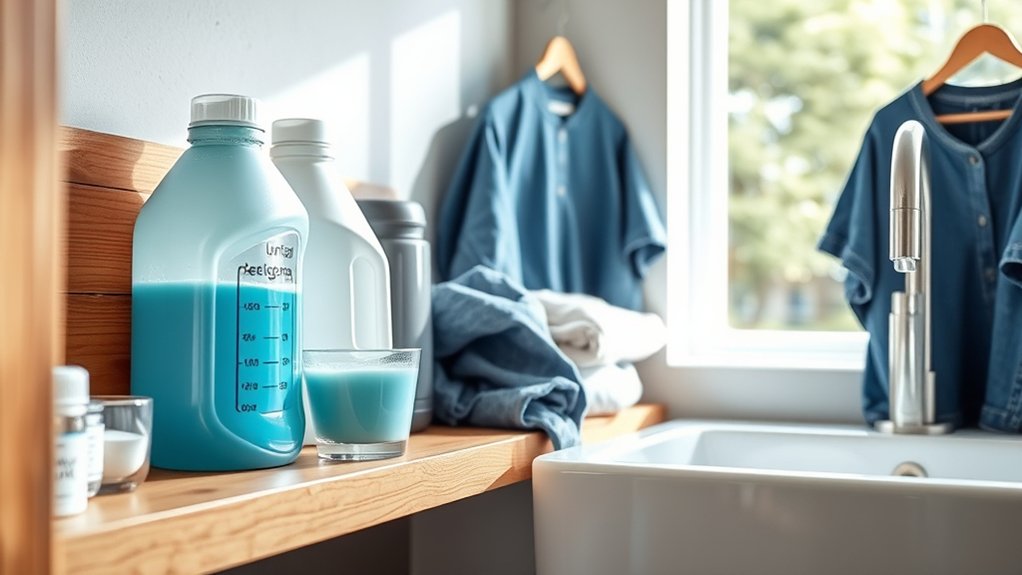
Choosing the right liquid detergent can greatly improve your laundry results by matching the formula to your specific needs. Different types serve distinct purposes, so understanding when to use each guarantees maximum cleaning.
Sensitive skin detergent is perfect if you or your family have allergies or irritation concerns. It cleans gently without harsh chemicals.
Stain-fighting detergent targets tough stains with enzymes designed to break them down. It’s ideal for heavily soiled clothes.
Concentrated liquid detergent lets you use less per load, saving product and reducing waste without sacrificing cleaning power.
For convenience, single-dose packets offer precise measurement, minimizing mess and simplifying your laundry routine.
Selecting the right liquid detergent helps you maintain fabric quality while achieving the best clean.
Storing and Handling Liquid Detergent Safely
While liquid laundry detergent offers convenience and effective cleaning, handling and storing it properly guarantees safety and maintains its quality.
Always keep liquid detergent in its original container to prevent spills and preserve its integrity.
Make certain the cap is tightly sealed after each use to avoid leakage and maintain freshness. For safety, store detergent out of reach of children and pets to prevent accidental ingestion or contact.
Choose a cool, dry place away from direct sunlight, which can degrade the detergent’s effectiveness.
Regularly check expiration dates on the packaging to confirm you’re using detergent at its peak performance.
Frequently Asked Questions
Can Liquid Detergent Be Used for Hand Washing Clothes?
Yes, you can use liquid detergent for hand washing clothes. Just dilute a few drops in a basin of water, following the instructions on the label.
Pre-treat any stains by applying detergent directly to the spot before washing.
Make sure you rinse thoroughly to remove all detergent and avoid residue buildup.
For delicate fabrics, choose a gentle detergent designed specifically for hand washing to protect your clothes from damage.
Is Liquid Detergent Safe for All Fabric Types?
Liquid detergent’s versatility varies. You can confidently clean cotton, polyester, and blends, but caution’s essential with delicate fabrics like silk and wool.
These sensitive surfaces sometimes suffer from stronger solutions. Always assess apparel’s advice by checking care labels carefully.
Conduct a colorfastness check on a concealed corner when trying new detergents. This prudent practice prevents potential problems, ensuring your fabrics stay fresh and flawless without fear of fading or fabric damage.
How Long Does Liquid Detergent Last After Opening?
Liquid detergent typically lasts 6 to 12 months after opening, depending on storage conditions.
You’ll want to keep it in a cool, dry place away from direct sunlight to maintain its effectiveness.
Always check the expiration date on the bottle, and if you notice any changes in smell or consistency, it’s best to discard it.
Using expired detergent can reduce cleaning power and might harm your fabrics.
Can I Mix Liquid Detergent With Fabric Softener?
You shouldn’t mix liquid detergent with fabric softener directly. Over 60% of laundry issues stem from residue left by improper use.
Instead, add detergent during the wash cycle and fabric softener during the rinse cycle using your machine’s separate compartments. This prevents interference and buildup.
Some detergents are compatible with softeners, so always check the label. Following these steps guarantees your clothes come out clean, soft, and fresh without damage.
What Should I Do if I Accidentally Spill Liquid Detergent?
If you accidentally spill liquid detergent, blot it immediately with a clean, dry cloth to absorb as much as possible without rubbing.
For fabric, rinse the area with cold water before washing as usual.
On hard surfaces, wipe with a damp cloth, then clean any sticky residue using mild dish soap and rinse well.
Always follow safety guidelines and store detergent safely to prevent future spills.
Conclusion
By mastering the measurement, method, and placement of liquid detergent, you’ll make laundry less laborious and more lively. Remember, using the right amounts reduces residue, and understanding water hardness helps harness your detergent’s power.
Pretreating pesky stains and choosing the correct type guarantees spotless success every time. Store and handle your detergent safely to keep your space secure.
With these simple steps, you’ll smoothly streamline your laundry routine and savor sparkling, fresh results.