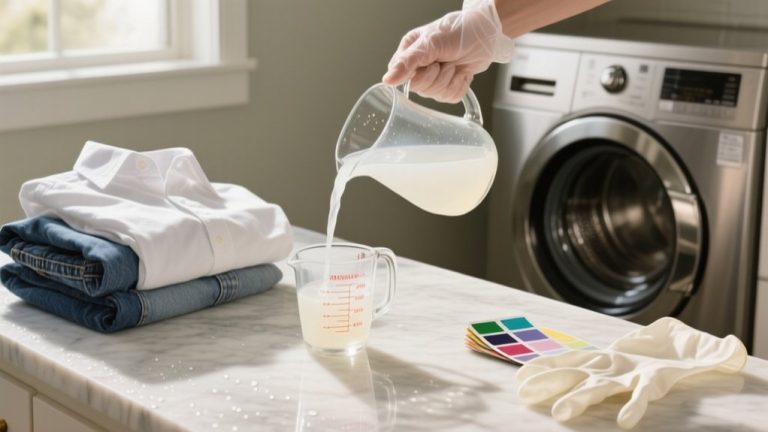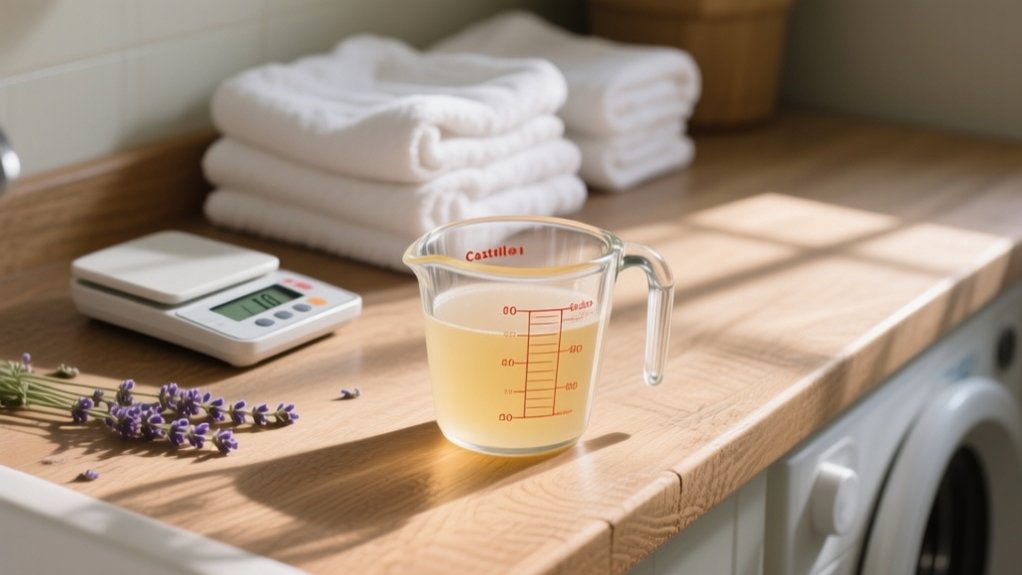
How Much Castile Soap For Laundry – Exact Amounts
You should use 1/3 to 1/2 cup of diluted Castile soap for large laundry loads in standard machines, and just 1 to 1½ tablespoons for high-efficiency (HE) machines to prevent excess suds. Always dilute the soap with water at a 1:10 ratio before adding it to your washer.
For hard water, add ½ cup of vinegar during the rinse cycle to avoid residue. Proper amounts maximize cleaning without damaging your clothes or machine. Keep going to uncover tips for stain removal and machine care.
Key Takeaways
- Use 1/3 to 1/2 cup of Castile soap for large loads in standard machines.
- Use 1 to 1½ tablespoons of Castile soap in high-efficiency (HE) machines.
- Always dilute Castile soap with water at a 1:10 ratio before washing.
- Add ½ cup vinegar in the rinse cycle for hard water to prevent soap scum.
- Adjust soap amounts based on load size, soil level, and fabric type for best results.
How Much Castile Soap To Use Per Laundry Load
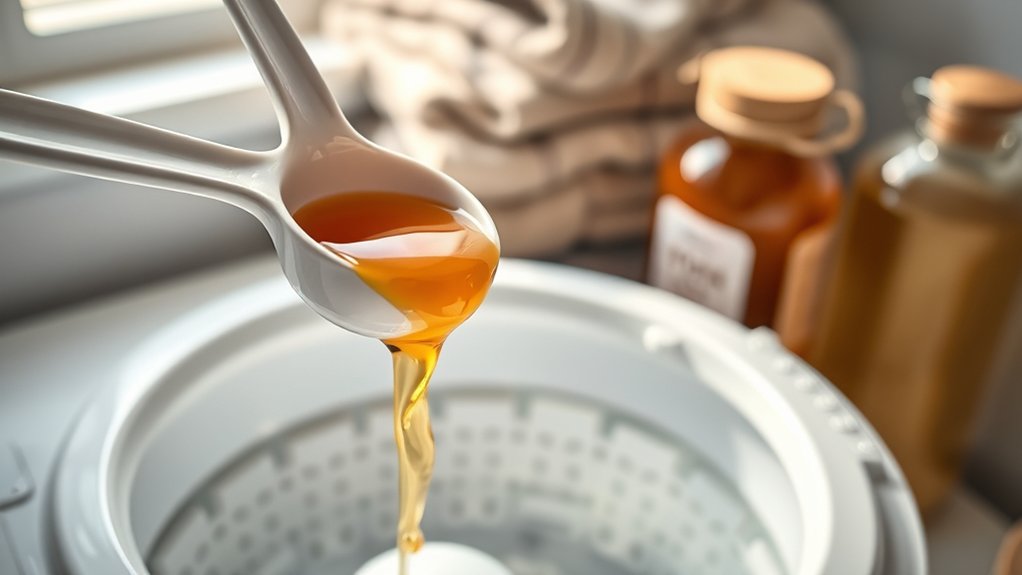
When doing laundry with Castile soap, you’ll typically use between 1/3 and 1/2 cup for a large load in a standard washing machine.
If you have a high-efficiency (HE) machine, reduce this to 1 to 1½ tablespoons to avoid excess suds.
When dealing with hard water, you’ll want to add ½ cup of vinegar to the rinse cycle; this helps soften fabrics and boosts Castile soap’s cleaning effectiveness.
Adjust the soap amount based on how dirty your clothes are and the water hardness to get the best results.
For tough stains, pre-treat by mixing ¼ cup of Castile soap with an equal part of water to create a concentrated solution.
This precise approach guarantees your laundry gets clean without waste.
Avoiding Common Castile Soap Measurement Mistakes
You’ll want to measure Castile soap carefully to avoid overusing it, which can cause suds lock or even damage your machine.
It’s important to always dilute the soap properly—usually one part soap to ten parts water—to keep residue from building up.
Using accurate measuring tools really helps, too.
That way, you stick to the recommended amounts for your specific washer and keep your laundry routine running smoothly.
Proper Soap Dilution
Using the right amount of Castile soap is essential to get your laundry clean without leaving residue or causing fabric damage. Proper soap dilution guarantees you maximize cleaning power while protecting your fabrics.
Always dilute Castile soap with water before adding it to your wash cycle to avoid soap scum buildup. For large loads, use 1/3 to 1/2 cup of liquid Castile soap, but reduce to 1 to 1½ tablespoons for high-efficiency machines.
Incorporate vinegar in the rinse cycle to neutralize soap residue, especially in hard water.
- Dilute 1/4 cup Castile soap with 1 quart warm water for all-purpose use
- Use less soap in HE machines to prevent excessive suds
- Never pour undiluted Castile soap directly into the washer
- Add ½ cup vinegar during rinse for residue removal
- Adjust dilution based on load size and water hardness
Avoid Overuse Risks
Although Castile soap is a natural and effective cleaner, applying too much can cause serious issues like soap scum buildup and damage to your washing machine. For standard machines, stick to 1/3 to 1/2 cup per large load; HE machines need only 1 to 1½ tablespoons.
Overusing Castile soap creates excessive suds that can trigger suds lock errors, interrupting cycles. To prevent residue on clothes, always dilute properly, about 1 part soap to 10 parts water.
Adjust amounts if you have hard water, and include vinegar in the rinse cycle to neutralize buildup and keep fabrics fresh.
Following these guidelines helps you avoid common measurement mistakes and protects both your laundry and your machine.
Measuring Tools Tips
Accurate measurement plays an essential role in getting the best results from Castile soap in your laundry. Using the right measuring cup guarantees you avoid common mistakes like overuse or underuse, which can affect cleaning efficiency.
For large loads, aim for 1/3 to 1/2 cup of Castile soap, adjusting for machine type and soap consistency. Labeling tools clearly helps prevent mix-ups, especially if you use different soaps.
Here are practical tips to keep your measurements precise:
- Use a measuring cup designed for liquid soap.
- Halve amounts for high-efficiency machines to avoid excess suds.
- Label your measuring tools to distinguish soap types.
- Check soap thickness; adjust volume if needed.
- Use a funnel when pouring to reduce spills and waste.
These steps secure effective, hassle-free laundry with Castile soap.
Adjusting Castile Soap Amounts For HE Machines
Since high-efficiency (HE) machines require less soap to prevent suds buildup, you should use only 1 to 1½ tablespoons (15-22 mL) of Castile soap per load. Excessive suds can cause suds lock errors, so keep the soap level below one-third of the detergent window.
Both Dr. Bronner’s Sal Suds and Castile Magic Soap work well in HE machines, offering eco-friendly cleaning without residue. Adjust the amount based on your load size and soil level to optimize cleaning power.
Furthermore, adding ½ cup of vinegar during the rinse cycle combats hard water issues, improving freshness and fabric softness.
This balance guarantees your laundry gets cleaned effectively while protecting your HE machine from soap buildup and operational problems.
How To Pre-Dilute Castile Soap For Laundry

To pre-dilute Castile soap for laundry, just mix one part soap with three parts water. This creates an effective solution that’s easy to use.
When you’re ready to do a large load, go ahead and use about 1/3 to 1/2 cup of this mixture.
And don’t forget to give it a good shake before adding it to your washer—it helps mix everything up nicely.
Once you’ve made your diluted soap, store it in a cool, dark place. That way, it stays fresh.
Try to use it within two weeks for the best results.
Dilution Ratios Explained
When you pre-dilute Castile soap for laundry, mixing one part soap with ten parts water helps prevent residue buildup in your machine. This dilution ratio guarantees the soap distributes evenly, especially for a large load. It optimizes cleaning without overuse.
For standard washers, use 1/3 to 1/2 cup of liquid Castile soap per large load. But reduce to 1 to 1½ tablespoons for high-efficiency (HE) machines to avoid excess suds.
Keep these tips in mind:
- Dilute 1 part Castile soap with 10 parts water before use
- Adjust soap quantity based on load size and washer type
- Use fresh diluted soap within two weeks for best results
- Combine diluted soap with baking soda for tough stains
- Add vinegar in rinse cycle for hard water conditions
Following these dilution ratios protects your machine and improves laundry outcomes.
Mixing Instructions Guide
Start by measuring one part liquid Castile soap and mixing it with ten parts water to create your pre-diluted solution for laundry. This dilution cheat helps you use Castile soap efficiently and avoid overuse.
For large loads, use 1/3 to 1/2 cup of this mix, or 1 to 1½ tablespoons for HE machines. Adding ½ cup vinegar to the rinse boosts cleaning power, especially in hard water.
For delicates, soak fabrics in 1 capful of Castile soap per gallon of cold water.
| Load Type | Castile Soap Amount | Additional Tip |
|---|---|---|
| Large Load | 1/3 to 1/2 cup pre-diluted | Add vinegar to the rinse |
| HE Machine | 1 to 1½ tablespoons pre-diluted | Use less soap |
| Delicates | 1 capful per gallon cold water | Soak and rinse gently |
| Water Type | Add ½ cup vinegar to rinse | Improves cleaning |
| Storage | Use within two weeks | Maintain effectiveness |
Storage And Shelf-Life
Although pre-diluting Castile soap makes it easier to measure and use, you should store the mixture properly to maintain its cleaning power.
When diluted, the soap’s shelf life shortens, so proper storage is key to preserving its effectiveness.
Keep your pre-diluted soap in a cool, dark place and use it within two weeks for best results.
Avoid making large batches to prevent waste, as diluted soap can lose potency quickly.
Remember these storage tips for diluted Castile soap:
- Mix 1 part soap with 10 parts water
- Store in a labeled container
- Keep away from heat and sunlight
- Use within two weeks
- Adjust amount based on load and fabric type
Following these guidelines guarantees your laundry soap stays fresh and effective.
How Vinegar Helps Laundry In Hard Water
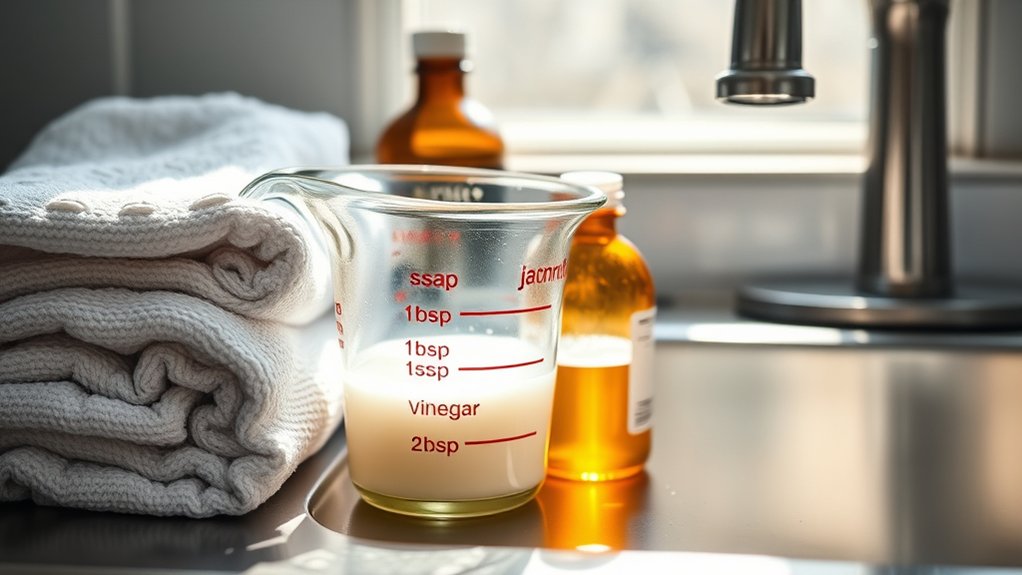
If you’re dealing with hard water, adding vinegar to your laundry routine can greatly improve results. Vinegar acts as a natural fabric softener, breaking down mineral deposits that cause soap scum when using Castile soap.
Adding ½ cup of vinegar during the rinse cycle enhances cleaning power, softens clothes, and neutralizes odors. Regular use protects fabrics from hard water damage and extends their lifespan.
| Benefit | Effect in Hard Water Laundry |
|---|---|
| Mineral Deposit Removal | Prevents soap scum buildup |
| Fabric Softening | Reduces static, makes clothes feel softer |
| Odor Neutralization | Keeps laundry smelling fresh |
Integrating vinegar helps you maximize Castile soap’s effectiveness in hard water conditions.
Combining Castile Soap With Baking Soda For Stains
Building on the benefits of vinegar for hard water laundry, you can tackle tougher stains by combining Castile soap with baking soda.
Use ¼ cup (70 g) of baking soda mixed with ⅓ to ½ cup of liquid Castile soap for enhanced stain removal.
This blend works because baking soda acts as a gentle abrasive to lift stains and deodorizes, neutralizing odors in laundry.
Castile soap provides effective, natural cleansing.
Make sure the mixture is fully dissolved before adding it to the washing machine.
The combo is eco-friendly and safe for most fabrics.
Protect Your Clothes When Using Castile Soap
When you use Castile soap for laundry, take care to dilute it properly to avoid fabric damage and washing machine issues. Use 1/3 to 1/2 cup of liquid Castile soap for large loads in standard washers, and halve the amount for high-efficiency machines to prevent excess suds.
Always test Castile soap on a small fabric swatch first to check for fading or adverse effects.
To protect your clothes and maintain fabric softness, add ½ cup of vinegar during the rinse cycle, especially in hard water areas.
Vinegar helps prevent soap residue buildup on clothes and inside your washer.
Regularly cleaning your washing machine also protects against Castile soap scum.
Extending Washing Machine Life With Castile Soap
Although many detergents can harm your washing machine over time, using Castile soap correctly helps extend its life. You should use 1/3 to 1/2 cup of liquid Castile soap per large load to avoid excessive suds and residue buildup.
Using the right amount of Castile soap protects your washing machine and prevents excessive suds and residue buildup.
High-efficiency (HE) machines need about half that amount to prevent suds lock errors.
Overusing Castile soap creates soap scum, which harms your washing machine’s performance. To keep your appliance running smoothly, regularly clean it with a vinegar and water solution to break down any buildup.
Remember these key points:
- Use recommended Castile soap amounts for your machine type
- Avoid overusing to prevent soap scum buildup
- Clean your washing machine regularly with vinegar and water
- Choose Castile soap as a gentler detergent alternative
- Monitor suds levels to maintain machine efficiency
Frequently Asked Questions
Can I Use Castile Soap for Hand-Washing Delicate Fabrics?
Yes, you can use Castile soap for hand-washing delicate fabrics. Just add about one capful to a gallon of cold water.
Soak your items for a few minutes, then gently agitate to remove dirt.
Rinse thoroughly with cold water to avoid soap residue. Always check your garment’s care label first, and avoid hot water since it can damage delicate fibers.
This method keeps your fabrics clean and safe.
Is Castile Soap Safe for All Fabric Types?
Castile soap isn’t safe for all fabrics. You can use it on cotton, linen, and synthetic blends without issues, but avoid delicate materials like silk or cashmere since it might damage them.
Always test a small hidden spot first to check for any reaction.
To prevent soap scum buildup, especially in machines, add a vinegar rinse.
This keeps your fabrics fresh and your washer clean while using Castile soap effectively.
How Does Castile Soap Affect Washing Machine Warranty?
You might think using Castile soap is harmless, but it can actually void your washing machine warranty.
Many manufacturers require specific detergents and warn that Castile’s high sudsing could harm components or trigger errors.
If you use it, any damage or residue-related repairs mightn’t be covered.
To avoid surprises, always check your machine’s manual or contact the manufacturer before switching soaps.
Protect your warranty by sticking to recommended detergents.
Can Castile Soap Cause Skin Irritation After Laundry?
Yes, Castile soap can cause skin irritation after laundry, especially if you have sensitive skin or allergies. You should rinse your clothes thoroughly to remove any soap residue, which often causes irritation.
Adding vinegar to the rinse cycle helps eliminate leftover soap.
To minimize risk, dilute the soap properly and test washed clothing on a small skin area before regular use. This way, you can enjoy natural cleaning without discomfort.
What Is the Shelf Life of Liquid Castile Soap?
The shelf life of liquid Castile soap is generally 2 to 3 years if you store it in a cool, dark place away from sunlight.
You should keep it tightly sealed to maintain its quality.
If you mix or dilute it, use that within a couple of weeks for best results.
Always check for changes in smell, color, or texture. Those signs mean it’s time to discard the soap.
Conclusion
Now that you know exactly how much Castile soap to use per load, you might wonder, are you ready to transform your laundry routine? Avoid common measurement mistakes, adjust for your machine type, and pre-dilute for best results.
Plus, discover how vinegar and baking soda can boost cleaning power without harming your clothes. Master these simple steps, and you’ll not only protect your fabrics but also extend your washer’s life. Ready to make the switch?