How Can I Clean A Dry Erase Board – Easy Guide
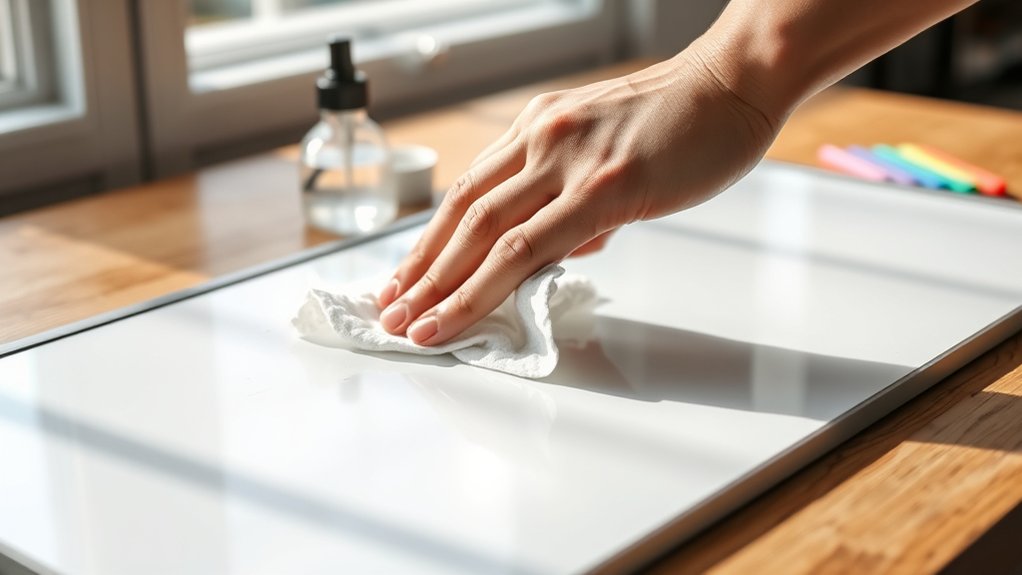
You can clean your dry erase board effectively by erasing all marks immediately after use. Then, wipe it with a microfiber cloth dampened with 30% isopropyl alcohol mixed with water.
For stubborn stains or ghosting, try applying 90%+ isopropyl alcohol. Another trick is to trace over permanent marker with a dry erase marker before erasing.
Avoid abrasive materials, and use WD-40 sparingly to restore the surface smoothness. Regular maintenance prevents residue buildup and helps extend your board’s lifespan.
Keep these tips in mind, and you’ll be able to keep your board spotless and functional without any hassle!
Preparing Your Whiteboard Surface for Cleaning
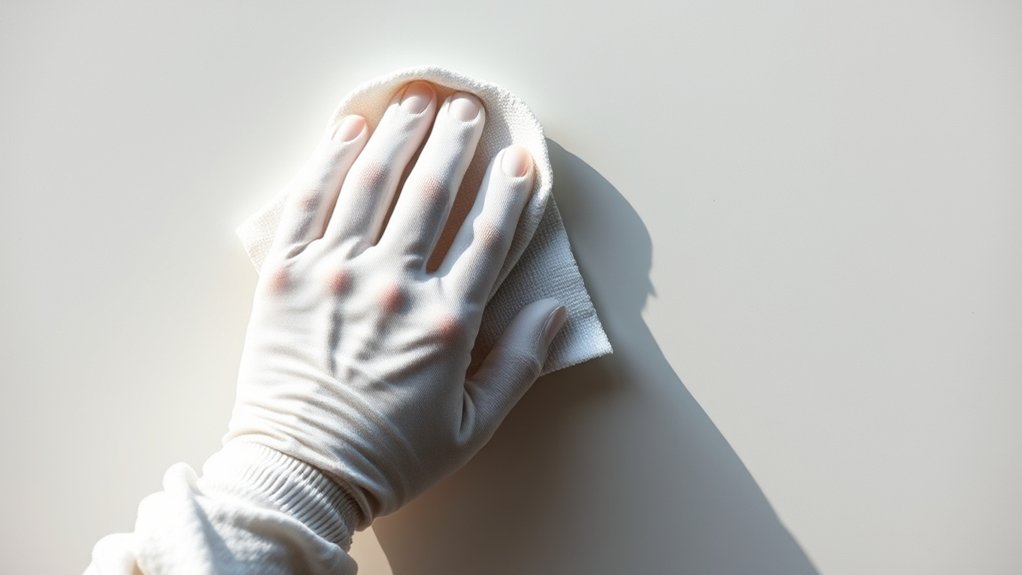
How do you guarantee your whiteboard is properly prepared before cleaning? First, erase as much writing as possible using a standard whiteboard eraser or a microfiber cloth to remove surface smudges. This step minimizes residue and assures a smoother cleaning process.
Next, identify any stubborn ghosting, which means long-term stains that remain after erasing. Apply targeted cleaning solutions like isopropyl alcohol or specialized whiteboard cleaners directly to those areas.
Before applying any cleaner broadly, test it on a small, inconspicuous part of the surface to avoid damage or discoloration.
Use a clean, dry microfiber cloth or washcloth, free of debris, to wipe the surface gently to prevent scratching.
Finally, dry the whiteboard thoroughly to eliminate streaks or residue that can cause ghosting. This guarantees a pristine and ready-to-use surface.
Best Everyday Cleaning Methods for Dry Erase Boards
To keep your dry erase board clear and free of ghosting, try using a microfiber towel along with a simple solution made of 30% isopropyl alcohol and 70% water. This combo works great for everyday cleaning because it lifts the ink without harming the surface.
Just remember to apply it gently in circular motions.
Also, steer clear of abrasive materials—they can mess up the board’s smooth finish. Taking a little extra care like this will help your board look good and last longer.
Alcohol-Based Cleaning Solutions
Although many cleaning options exist, alcohol-based solutions stand out as the most effective everyday method for maintaining dry erase boards. A 30/70 mixture of isopropyl alcohol and water serves as a reliable whiteboard cleaner. It’s proven through long-term testing to preserve whiteboard surfaces.
For tougher ghosting removal, applying 90-99% isopropyl alcohol with a microfiber cloth quickly lifts ink residues and stubborn stains without damaging the board. Rubbing alcohol, used properly and in moderation, is safe and prevents surface deterioration.
Regular use of this cleaning solution helps maintain the board’s integrity and reduces ghosting buildup over time. After heavy usage, just a few wipes with an alcohol-based cleaner will restore your dry erase board to a clean, bright writing surface efficiently and effectively.
Microfiber Towels Usage
Why choose microfiber towels for cleaning your dry erase board? Microfiber towels effectively trap dust and ink particles without scratching the surface, so you get a thorough clean every time. When you dampen them with water or alcohol, they wipe away ghosting and ink residue way better than paper towels.
To clean your dry erase board right, use broad, overlapping strokes. This helps cover the surface evenly and prevents streaks or missed spots. And don’t forget to switch to a clean microfiber towel often during the process—that way, you won’t spread dirt or ghosting residue around.
Since microfiber towels are reusable and washable, they’re a cost-effective choice for daily maintenance. Adding them to your cleaning routine keeps your dry erase board looking great while reducing wear and tear over time. It’s a simple change that makes a big difference!
How to Use Isopropyl Alcohol to Remove Stubborn Whiteboard Stains
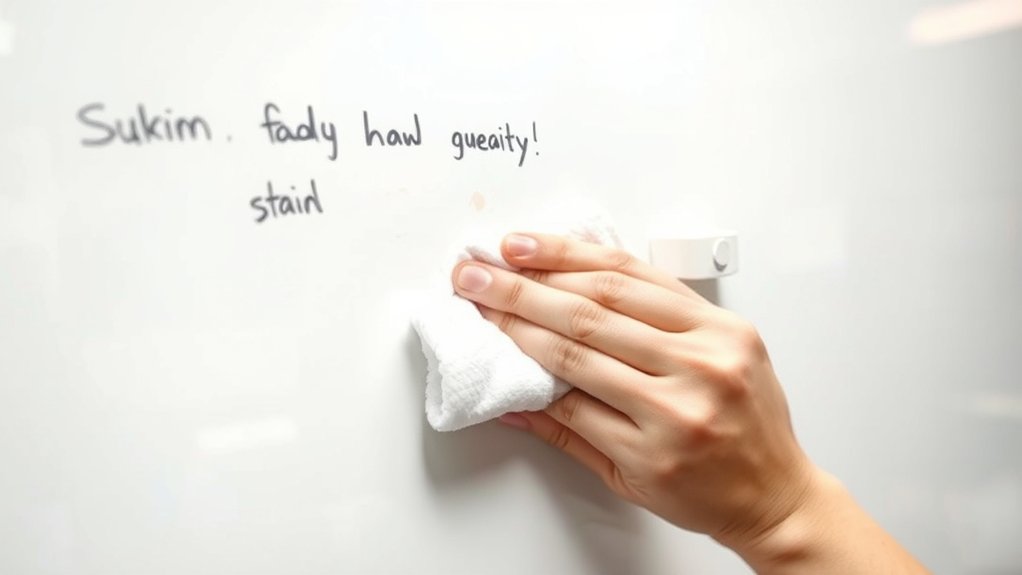
First, make sure your whiteboard is clean and dry, with no loose debris on the surface.
Next, take a microfiber cloth and dampen it with 90-99% isopropyl alcohol.
Then, use gentle circular motions to work on those stubborn stains.
If you come across tougher marks, just let the alcohol sit for a moment to help break down the residue before wiping it away with a dry cloth.
Easy and effective!
Preparing The Surface
How exactly do you tackle those stubborn whiteboard stains that won’t come off with a regular eraser? To prepare the surface properly before applying alcohol, follow these steps carefully to guarantee an effective clean without damaging the whiteboard.
First, spray 90-99% isopropyl alcohol onto a microfiber cloth or paper towel instead of directly on the board. This prevents excess liquid from soaking the surface.
Next, use circular motions to gently scrub the stained areas. Let the alcohol break down ink residue while avoiding harsh rubbing.
Then, allow the alcohol to sit briefly on the surface to dissolve persistent marks. After that, switch to a clean section of the cloth to avoid spreading residue.
This preparation step is essential to guarantee the whiteboard is ready for thorough cleaning without buildup or streaking.
Taking these steps really helps you get the best results.
Applying Alcohol Effectively
Once you’ve prepared the surface with isopropyl alcohol, it’s time to apply it effectively to tackle those stubborn whiteboard stains. Start by dampening a microfiber cloth with 70-90% alcohol.
Apply the alcohol-soaked cloth directly onto the stained area, using firm, circular motions to loosen the ink.
Let the alcohol sit for about 30 seconds to break down dried ink before you wipe.
Next, take a clean, dry microfiber cloth to thoroughly wipe the surface, removing any residual ink and alcohol.
If the stain persists, just repeat this process until the whiteboard is clean.
By methodically using the alcohol and microfiber cloth in this way, you’ll efficiently remove tough stains and restore your board’s pristine condition.
It’s pretty straightforward once you get the hang of it!
How to Remove Ghosting From Your Whiteboard
Although ghosting can be frustrating, you can effectively reduce its appearance by regularly cleaning your whiteboard with a microfiber towel and rubbing alcohol. Ghosting often results from residue buildup, so consistent cleaning prevents permanent marks.
For thorough ghosting removal, follow these steps:
- Use isopropyl alcohol or a specialized whiteboard cleaner on a microfiber cloth to remove stubborn residue.
- Apply a dry erase marker over ghosted areas, then erase immediately to temporarily mask persistent ghosting.
- Periodically coat the board with WD-40 to restore the surface and minimize future ghosting.
Tools and Products to Avoid When Cleaning Whiteboards
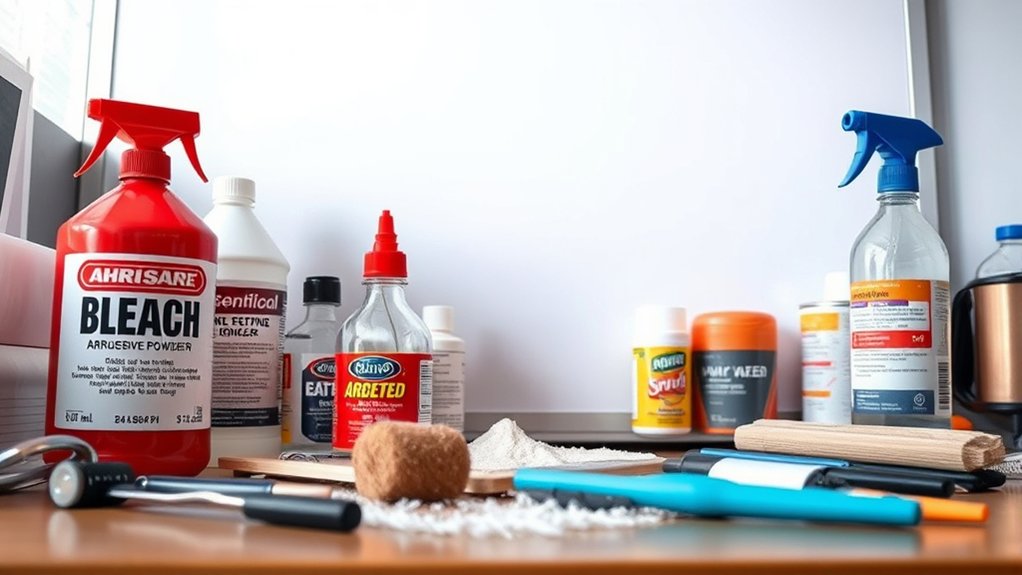
When cleaning your whiteboard, you should avoid certain tools and products that can damage its surface or reduce its lifespan. Steer clear of abrasive scrub pads or grit-based cleaners like steel wool, as they cause micro scratches and embed ink permanently.
Also, avoid wax-based products, including floor waxes and polishing compounds, since they leave residues that interfere with marker erasing and cause ghosting. Household glass cleaners often contain ammonia or harsh chemicals that can discolor or degrade your whiteboard over time, so don’t use them.
Petroleum-based solvents such as mineral spirits or paint thinners can cause bubbling or irreversible surface damage.
Finally, never apply bleach or bleach-based cleaners directly, as they deteriorate the surface and leave harmful residues, compromising your board’s usability and appearance.
Removing Permanent Marker and Adhesive Residue From Whiteboards
If you notice permanent marker stains or adhesive residue on your whiteboard, you can tackle these blemishes effectively with the right approach.
Start by applying a small amount of nail polish remover containing acetone to a microfiber cloth and gently wiping the permanent marker stains. This method lifts ink without damaging the whiteboard surface.
For adhesive residue, use rubbing alcohol (90% or higher) applied with a cloth to loosen sticky buildup. Make sure to test any cleaner on a small area before you apply it fully. That way, you avoid any surprises.
If the adhesive is stubborn, try combining rubbing alcohol with gentle scraping using a plastic scraper. Just be careful to keep the whiteboard surface intact.
These simple steps help keep your whiteboard clean and functional without using harsh treatments. It’s easier than you might think!
How to Use WD-40 for Whiteboard Maintenance
Since maintaining a whiteboard’s surface is essential for clear writing and longevity, applying WD-40 can be an effective solution. Begin by spraying WD-40 generously over the entire whiteboard surface. Use a paper towel to spread it evenly, ensuring full coverage.
Let the WD-40 sit for at least two hours to seal and restore the finish properly. Afterward, use clean paper towels to wipe off all WD-40 residue and smudges thoroughly. This process acts as a cleaner, helping reduce ghosting and maintaining the whiteboard’s clarity.
Remember to ventilate the area during and after application to manage the distinctive odor safely. Periodic reapplication of WD-40 will help preserve your whiteboard surface, keeping it smooth and easy to write on over time.
How Often Should You Clean and Maintain Your Whiteboard?
You should erase your whiteboard daily or right after each use to keep it looking fresh and avoid any ghosting or residue buildup.
If you use it a lot, it’s a good idea to give it a deeper clean every few days with alcohol-based solutions. This helps maintain its clarity and keeps the surface in good shape.
Also, keep an eye out for stubborn stains or areas that seem faded—those are signs your board might need a bit more frequent attention.
Taking care of it regularly will definitely make a difference!
Cleaning Frequency Guidelines
Although it may seem simple, maintaining a consistent cleaning schedule is essential for preserving your whiteboard’s clarity and functionality. Proper cleaning frequency prevents ghosting and residue buildup. This ensures smooth whiteboard cleaning and long-term maintenance.
To optimize your cleaning routine, follow these guidelines:
- Clean the surface weekly with a microfiber cloth and alcohol-based cleaner to avoid ghosting and residue buildup.
- Perform deep cleaning monthly using stronger solutions like isopropyl alcohol to restore surface clarity.
- Avoid leaving marks on the board for more than 24-48 hours to prevent permanent stains and maintain writing quality.
Maintenance for Heavy Usage
When dealing with heavy usage, maintaining your whiteboard requires more frequent attention to prevent ghosting and residue buildup. You should clean your whiteboard at least once daily, using a microfiber cloth and an alcohol-based cleaner to remove whiteboard markers effectively and maintain surface clarity.
This regular cleaning minimizes residue, preventing marker adherence that leads to ghosting.
Also, try to schedule deep cleaning weekly or bi-weekly with stronger solutions like WD-40 or isopropyl alcohol, depending on how often you use it. This thorough maintenance helps preserve the whiteboard’s performance and lifespan. It also reduces the need for aggressive scrubbing or surface reconditioning.
Signs To Clean
Since maintaining a clear and functional whiteboard depends heavily on timely cleaning, recognizing the signs that indicate it’s time to clean is essential. You should clean the board when:
- You notice ghosting or stubborn ghosting, which are faint marks that don’t erase easily. This means the ink has had time to sit and leave residue.
- Residue left after erasing builds up, making the surface feel sticky or dull. This can make writing smoothly a real challenge.
- Heavy usage causes ink buildup, so you’ll need to clean more often to keep the board clear and avoid permanent stains.
Try to clean your whiteboard every few days or at least once a week using alcohol-based cleaners. Catching these signs early helps your board stay crisp and last longer.
Tips to Extend Your Whiteboard’s Lifespan
If you want to keep your whiteboard looking and performing like new, regular maintenance is vital. Start by erasing marks within 24-48 hours to prevent ghosting buildup.
Use a quality cleaner and a microfiber cloth with isopropyl alcohol for thorough cleaning.
Avoid abrasive scrub pads or old erasers, as they cause micro scratches that damage the surface.
Periodically apply surface treatments like WD-40 or MB10W to restore and protect the whiteboard’s finish. This helps maintain surface clarity and prevents permanent ink embedding.
Consistent, gentle cleaning and proper eraser use considerably extend the whiteboard’s lifespan.
Fixing Common Whiteboard Cleaning Issues
Although regular cleaning prevents many issues, you might still encounter stubborn stains, ghosting, or permanent marker marks on your whiteboard. To fix these common problems, follow this methodical approach:
First, combat whiteboard ghosting by using alcohol-based cleaning solutions and microfiber towels to gently remove residual ink. Avoid using abrasive erasers too much because they can cause micro scratches that actually make ghosting worse.
Use alcohol-based cleaners and microfiber towels to gently remove ghosting; avoid abrasive erasers to prevent scratches.
Next, for stubborn and heavy marker stains, try applying 90-99% isopropyl alcohol or specialized cleaners. These are strong enough to break down built-up residue without damaging the surface.
When it comes to permanent marker stains, you can trace over them with a dry erase marker and then erase.
Another option is to carefully apply nail polish remover. You can also use WD-40 occasionally to restore surface smoothness, but be sure to use it sparingly so it doesn’t leave any residue.
This targeted care will help keep your whiteboard clean and functional for the long haul.
Frequently Asked Questions
Can I Use Regular Household Cleaners on My Dry Erase Board?
You can use some regular household cleaners like vinegar or lemon juice for light cleaning, but they won’t remove stubborn stains or ghosting effectively.
Avoid bleach, abrasive cleaners, or ammonia-based products, as they can damage your board’s surface over time.
Instead, stick to dedicated whiteboard cleaners or isopropyl alcohol (90-99%) for safe, thorough cleaning that preserves the board’s lifespan.
Always apply cleaners carefully to avoid residue buildup.
Is It Safe to Clean My Whiteboard With Vinegar?
You know what they say: “Don’t put all your eggs in one basket.” Vinegar is safe to use on your whiteboard when diluted, about one teaspoon per cup of water.
But it’s not the best for heavy stains or ghosting.
It gently dissolves residue but can wear down the surface if you overuse it. So, use vinegar sparingly as a mild cleaner.
For more thorough and effective cleaning, rely on isopropyl alcohol instead.
How Do I Prevent Marker Ink From Staining Permanently?
To prevent marker ink from staining permanently, you need to erase the board promptly after writing. Use high-quality, easily erasable markers to reduce ink absorption.
Regularly clean the board with alcohol-based solutions to remove residue buildup.
Avoid leaving ink on the surface for long periods, especially on older boards.
Applying a thin layer of WD-40 occasionally can create a protective barrier. This helps minimize ink adhesion and keeps your board looking good longer.
Can Heat Help Remove Stubborn Whiteboard Stains?
Yes, heat can help remove stubborn whiteboard stains. You can use a hairdryer or a heat gun on low settings to gently warm the affected area. The warmth softens dried ink, making it easier to wipe away.
Just be careful not to overheat the surface, as excessive heat might damage the board. Applying heat before cleaning can reduce your effort and improve stain removal efficiency, especially for ghosted or persistent marks.
Give it a try next time you’re dealing with tough stains!
Are There Eco-Friendly Whiteboard Cleaning Alternatives?
Yes, you can use eco-friendly alternatives to clean your dry erase board effectively. Try a vinegar and water solution or a 30/70 mix of isopropyl alcohol and water to remove ghosting gently.
Use reusable microfiber cloths to minimize waste and protect the environment.
Plant-based solvents or biodegradable cleaners also work well, helping maintain your board without harsh chemicals.
Regular use extends your board’s life by preventing damage from strong cleaners. It’s a simple way to keep things clean and green!
Conclusion
Keeping your dry erase board clean not only improves clarity but also extends its lifespan. Did you know that regular cleaning can reduce ghosting by up to 80%? By preparing your surface properly and using the right cleaners like isopropyl alcohol, you’ll keep it in great shape.
Avoid using harmful tools that can scratch or damage your board. Stick to soft cloths and gentle cleaning solutions to maintain a smooth, streak-free surface.
Follow these detailed methods consistently, and your whiteboard will stay in top condition. That way, it’s always ready for clear, effective communication every day.