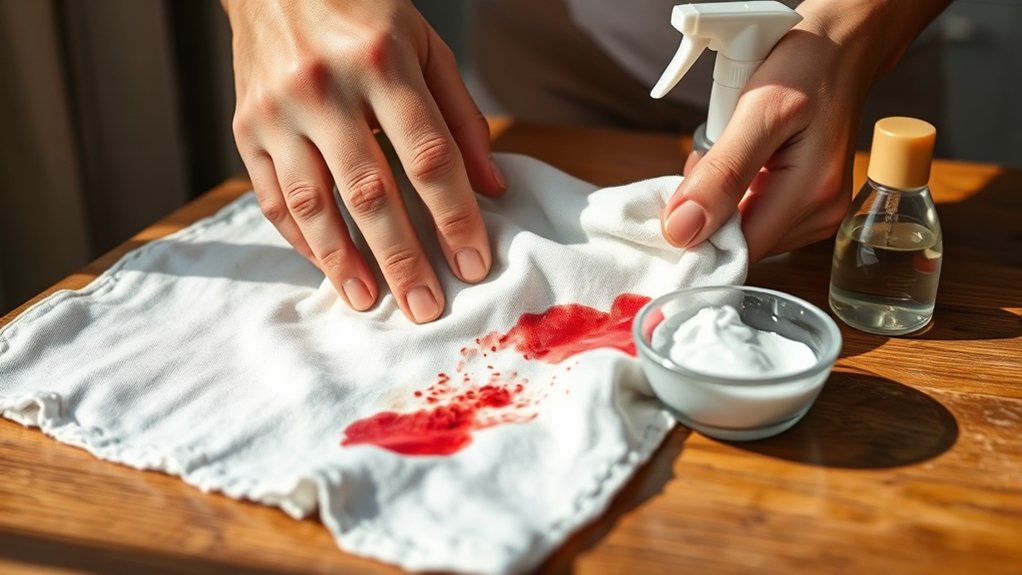
How To Clean Dry Blood – Easy Methods
To clean dry blood, first gently remove loose residue without pushing it deeper. Then soak the fabric in cold water to prevent the protein from setting. Apply an enzyme-based detergent directly to break down proteins effectively.
For light fabrics, a baking soda paste followed by cautious hydrogen peroxide application helps lift stains. Avoid heat and harsh scrubbing to protect the fibers. Persistent or old stains may require multiple treatments.
Understanding these steps guarantees precise stain removal. You can explore further for tailored fabric care and advanced techniques.
Why Dry Blood Stains Are Hard To Remove
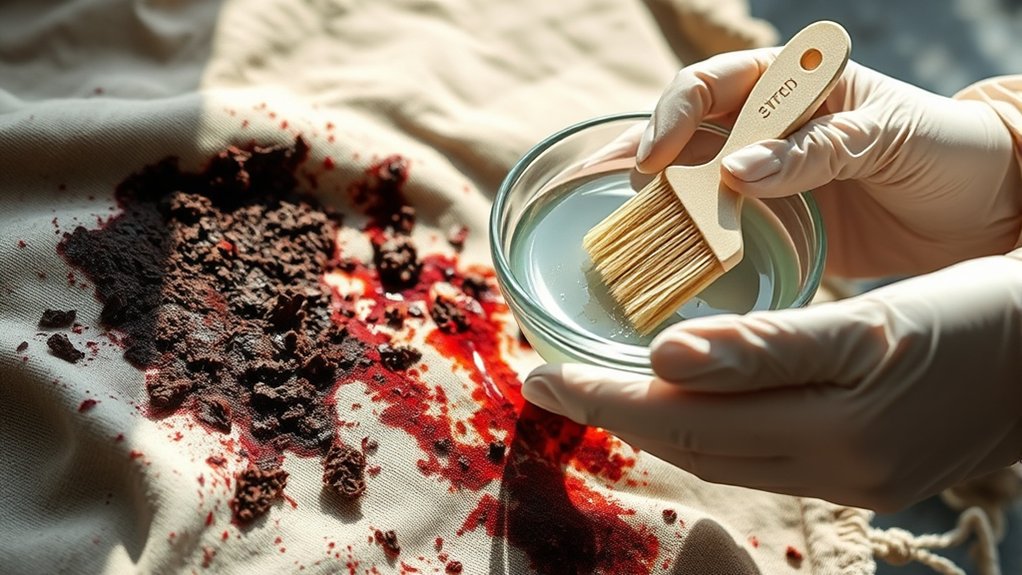
Although fresh blood stains can often be treated with simple methods, dry blood stains are much harder to remove because the hemoglobin proteins bond tightly to fabric fibers during drying.
Dry blood stains resist removal as hemoglobin binds tightly to fabric fibers during the drying process.
As blood dries, chemical changes cause hemoglobin to set permanently into the material, complicating stain removal.
The clotting process makes dried blood stains rigid and deeply embedded, reducing responsiveness to water-based treatments.
Over time, oxidation transforms the stain from bright red to a rusty brown, increasing its resistance.
These factors mean that typical cleaning agents are often ineffective against dried blood stains.
Instead, you’ll need stronger or enzymatic cleaners specifically designed to break down hemoglobin and the protein matrix.
This ensures effective stain removal from fabrics where dry blood has firmly adhered.
Preparing Fabric For Dry Blood Stain Removal
Removing dry blood stains requires careful preparation to get the most out of your cleaning agents. Start by gently removing any excess dried blood using a toothbrush or your fingernail. But if the stain is very old or the fabric is delicate, it’s better to avoid brushing.
Next, pretreat the fabric with cold water to begin loosening the dried blood before you apply any stain removers.
Then, turn the fabric inside out and treat the stain from the back. This helps improve your chances of removing it completely.
Here’s what to do:
- Gently remove excess dried blood without pushing it deeper.
- Pretreat the fabric with cold water to soften the stain.
- Access the stain from the fabric’s reverse side for better penetration.
Following these steps will make sure your fabric is ready for effective dry blood stain removal treatments.
How To Soak Clothes In Cold Water For Dry Blood Stains
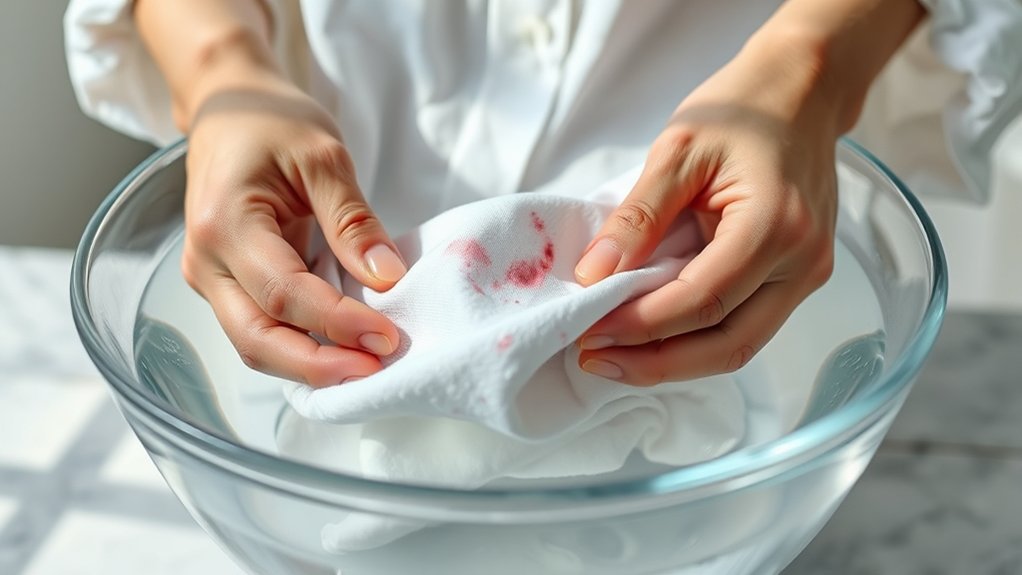
You’ll want to use cold water that’s below 70°F (21°C) because warmer water can make the blood proteins set even more.
Just fully submerge the stained fabric and let it soak for at least an hour. If the stain is really stubborn, leaving it overnight works even better.
Every now and then, give the garment a little gentle shake or swirl to help break down the dried blood before you move on to washing it.
Preparing Water Temperature
When tackling dried blood stains, always use cold water to soak your clothes. Hot water causes blood proteins to coagulate, making the stain harder to remove. Preparing the correct water temperature is essential for effective stain removal.
Follow these steps:
- Fill a basin or sink with cold water, making sure there’s enough to fully submerge the stained fabric.
- Confirm the water remains consistently cold because fluctuating temperatures can set the stain further.
- Gently agitate the garment in the water to help loosen dried blood particles.
Using cold water prevents coagulation and helps break down the stain without embedding it deeper. This preparation optimizes the soaking process and improves your chances of complete stain removal.
Soaking Duration Tips
Although cold water effectively prevents blood from setting, soaking the fabric for at least one hour is essential to loosen dried blood particles thoroughly. Use enough cold water to fully submerge the garment, which allows the blood stain to loosen effectively.
For stubborn stains, extend the soaking duration overnight. During this time, check the fabric periodically and gently agitate it to improve stain removal. Avoid hot water, as it can set the stain further into the fibers.
| Soaking Duration | Water Temperature | Effectiveness |
|---|---|---|
| 1 hour | Cold | Loosens most dry stains |
| Overnight | Cold | Best for stubborn stains |
| Any duration | Hot | Sets stain permanently |
Proper soaking duration with cold water is key to loosening blood stains efficiently. It really makes a difference when trying to get those tough stains out.
Using Enzyme-Based Detergents To Break Down Dry Blood Stains
Since dried blood stains consist mainly of protein clots, enzyme-based detergents containing proteases effectively break down these proteins. This makes stain removal much more efficient.
To use enzyme-based detergents for dried blood stains, follow this methodical approach: First, soak the fabric in cold water to loosen the dried blood stains without setting them further.
Then, apply the enzyme-based detergent directly onto the stain, making sure to cover it thoroughly so the proteins can be targeted.
Let the detergent sit for at least 30 minutes to get the most out of the protease activity before washing.
Enzyme-based detergents work great on organic stains like blood, especially on fabrics like cotton, linen, or polyester. They degrade the clotting proteins effectively.
If the stain is stubborn, repeated application combined with thorough washing can really help.
This way, you’re making the most of the detergent’s protein-breaking power.
Using Hydrogen Peroxide And Baking Soda To Treat Dry Blood Stains
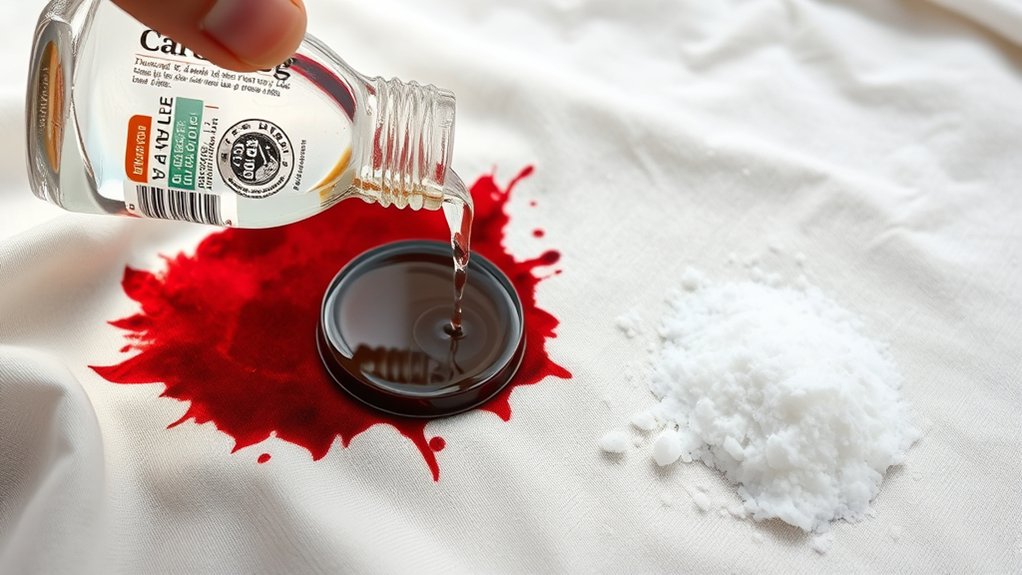
If you want to remove dried blood stains from light-colored fabrics effectively, you can combine hydrogen peroxide and baking soda for a powerful natural treatment.
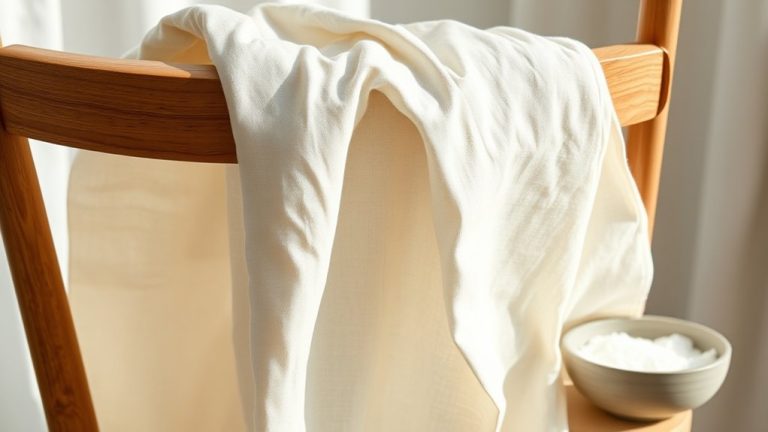
First, create a baking soda paste by mixing baking soda with water until it reaches a spreadable consistency. Apply this paste directly to the dried blood stains and let it sit for about 30 minutes to loosen the protein-based residue.
Make a baking soda paste with water, apply to dried blood stains, and let sit 30 minutes to loosen residue.
Next, gently pour hydrogen peroxide over the treated area. Its oxidation process will bleach and lift the stain. Always test hydrogen peroxide on a small, hidden section first to avoid discoloration.
After treatment, rinse thoroughly with cold water and launder as usual. This method leverages the chemical action of hydrogen peroxide and the abrasive, lifting properties of baking soda to effectively remove dried blood stains without harsh chemicals.
How To Scrub And Gently Lift Dry Blood Without Damaging Fabric
After applying hydrogen peroxide and baking soda to dried blood stains, you’ll need to carefully lift the residue without harming the fabric. To avoid fabric damage, follow these steps to gently scrub and remove dry blood:
Turn the fabric inside out and use a soft toothbrush or your fingernail to gently scrub the stain from the back. This helps loosen the dry blood without causing abrasion.
Next, apply a baking soda paste directly on the stain. Use light, circular motions with a damp sponge or cloth to lift the residue.
For light-colored fabrics, dab hydrogen peroxide with a sponge to break down the dry blood. Try to avoid harsh scrubbing here.
Patience and gentle pressure are key. This way, you prevent fabric fraying while effectively removing dried blood.
When To Skip Hydrogen Peroxide And Use Other Treatments
You should skip using hydrogen peroxide on dark or brightly colored fabrics because it can cause discoloration. Also, avoid it on delicate materials like silk or wool since it might damage them.
If the blood stain is old and has set in deeply, hydrogen peroxide probably won’t work very well. In that case, it’s better to try other treatments.
For example, you can use a baking soda paste or enzymatic cleaners, especially when the fabric type or the age of the stain makes hydrogen peroxide a poor choice.
Fabric Color Sensitivity
Although hydrogen peroxide effectively removes blood stains, it can cause bleaching or discoloration on light-colored and delicate fabrics. Understanding fabric color sensitivity is essential for safe stain removal. Use hydrogen peroxide primarily on white or very light fabrics.
For other fabrics, follow these guidelines:
- Avoid hydrogen peroxide on delicate or pastel fabrics to prevent bleaching. Always test on an inconspicuous area first.
- For dark or vibrant textiles, apply a baking soda paste or enzyme-based detergent to avoid color fading.
- On sensitive materials like silk or wool, skip hydrogen peroxide entirely. Instead, use cold water or enzymatic cleaners.
Sticking to fabric color sensitivity tips guarantees effective stain removal without damaging your garments. It’s all about keeping your clothes looking great while getting rid of those pesky stains!
Stain Age Considerations
Fabric color sensitivity plays a significant role in choosing the right cleaning agent, but the age of the blood stain also dictates the best treatment approach.
When dealing with older stains on stained fabric, hydrogen peroxide often loses effectiveness and risks bleaching or discoloring the material, especially on dark or colored fabrics.
As blood undergoes stain setting, it penetrates deeper into fibers, reducing peroxide’s ability to lift it.
Instead, you should opt for enzymatic detergents, which break down protein-based stains more efficiently over time.
For stains set for days or weeks, avoid peroxide and use cold water soaking combined with enzymatic detergents to minimize fabric damage while improving stain removal.
This methodical shift ensures you treat the stain appropriately, preserving fabric integrity while maximizing cleaning results.
Alternative Cleaning Options
When treating dried blood, skipping hydrogen peroxide becomes necessary if the fabric is dark, colored, or delicate. That’s because peroxide can cause bleaching or damage.
Instead, you’ll want to choose alternative cleaning options that fit the fabric type and how old the stain is.
For delicate fabrics like silk or wool, try applying a baking soda paste or soaking the item in cold water. This helps protect the fibers while loosening the blood residue.
Enzymatic cleaners work well on sensitive materials too. Their protein-breaking enzymes dissolve dried blood without using harsh chemicals, which is great for keeping your fabric safe.
If you’re dealing with light-colored fabrics, vinegar or a baking soda paste can safely lift stains without risking discoloration.
Always check the care labels on your fabric. Avoid hydrogen peroxide if bleaching isn’t recommended or the stain has set in.
Instead, go for enzymatic cleaners or gentle soaking methods to keep your material intact while getting rid of stains.
How To Launder Clothes After Treating Dry Blood Stains
Before laundering clothes stained with dry blood, you should confirm the stain is fully treated to avoid setting it permanently. Check the fabric’s care label and verify all residue is removed before washing.
Use cold water combined with an enzyme-based laundry detergent specifically designed to break down protein stains like blood.
Hot water risks fixing the stain, so always stick to cold water cycles.
If the stain remains after washing, just repeat the treatment process before another wash cycle.
Once washed, air dry the garment to prevent heat from setting any residual stain.
For particularly stubborn or older stains, soak the fabric overnight in cold water mixed with an enzymatic cleaner prior to laundering. This really helps boost removal effectiveness.
How To Remove Persistent Or Set-In Dry Blood Stains
Although dried blood bonds tightly to fibers, making removal challenging, you can improve results by soaking the fabric in cold water for at least an hour to loosen the stain.
To effectively remove blood stains, follow this methodical approach:
- Soak the fabric in cold water to rehydrate dried blood, preventing the stain from setting further.
- Apply hydrogen peroxide cautiously on light-colored fabrics to break down hemoglobin, but avoid use on dark fabrics to prevent discoloration.
- Use enzyme-based detergent with cold water and gently scrub the stain, repeating as needed for persistent residue.
Patience is key. Multiple treatment cycles may be necessary to fully remove dried blood without damaging fabric fibers.
Cold water prevents protein coagulation, which helps improve stain removal.
Just take your time and be gentle with the fabric. This way, you’ll get the best results without causing any harm.
Frequently Asked Questions
Can Dry Blood Stains Be Removed From Leather or Suede?
Yes, you can remove dry blood stains from leather or suede, but you have to be careful. Start by gently scraping off any dried residue with a soft brush or cloth. Don’t apply water directly because that can make things worse.
Instead, use a specialized cleaner or a mild soap solution on a damp cloth. If the stain is stubborn, you can try hydrogen peroxide, but test it first on a hidden spot. That way, you won’t risk ruining the material.
Always finish by conditioning the leather or suede. This helps preserve its texture and prevents any damage from the cleaning process. Taking these steps will keep your material looking good as new!
Is It Safe to Use Bleach on Dry Blood Stains?
You shouldn’t use bleach on dry blood stains, especially on colored fabrics. It can cause discoloration and damage fibers.
Bleach often fails to break down blood proteins effectively, which means it can weaken the fabric or even create holes.
Instead, always test any cleaner on a hidden area first to make sure it won’t ruin your fabric.
For safer removal, try hydrogen peroxide on light or white fabrics. It’s more effective and less damaging than bleach when treating dried blood stains.
How Long Should Enzyme Detergent Soak Time Be for Tough Stains?
You should soak tough stains in enzyme detergent for at least 6 hours. Overnight soaking, up to 12 hours, tends to be even more effective.
For very stubborn or dried blood stains, you might want to extend the soak to 24 hours. This can really help improve removal.
Avoid soaking for less than 2 hours because that usually isn’t enough time.
Always adjust soak time based on the fabric type, and make sure to follow the detergent’s instructions. That way, you prevent damage and get the best stain breakdown.
Can Dry Blood Stains Be Cleaned From Upholstery?
Yes, you can clean dry blood stains from upholstery effectively. Don’t worry about damaging the fabric if you proceed carefully.
Start by brushing off loose particles, then apply a cold water and enzyme-based cleaner to break down proteins.
For light fabrics, test hydrogen peroxide in a hidden spot before use. Avoid hot water or harsh chemicals, as these set stains.
For tough spots, gently blot a cold water and baking soda mix. It’s all about being gentle and patient!
What Household Items Should Be Avoided When Cleaning Dry Blood?
You should avoid using hot water, bleach, ammonia, or strong abrasives when cleaning dry blood. Hot water actually sets blood proteins deeper into the fabric, which makes stains way harder to get out.
Bleach is another no-go because it can discolor or even damage colored fabrics.
Harsh chemicals and scrubbing with metal brushes or rough pads can weaken or fray the fibers, so it’s best to steer clear of those too.
Also, don’t just rely on regular laundry detergents without pre-treating the stain first. They usually aren’t effective on dried blood stains.
Taking these precautions will help you clean blood stains more successfully without ruining your fabrics.
Conclusion
When dry blood leaves its mark, you’re not just tackling a stain. You’re actually restoring the fabric’s integrity. By preparing properly and using targeted treatments like enzyme detergents or hydrogen peroxide, you can handle fabrics gently and get great results.
Sometimes, persistence is key. You might need to try alternative methods if the first ones don’t do the trick.
With methodical care, you’ll erase these unwelcome reminders. Your clothes will be fresh and ready for their next chapter, clean and free of past traces.